Introduction
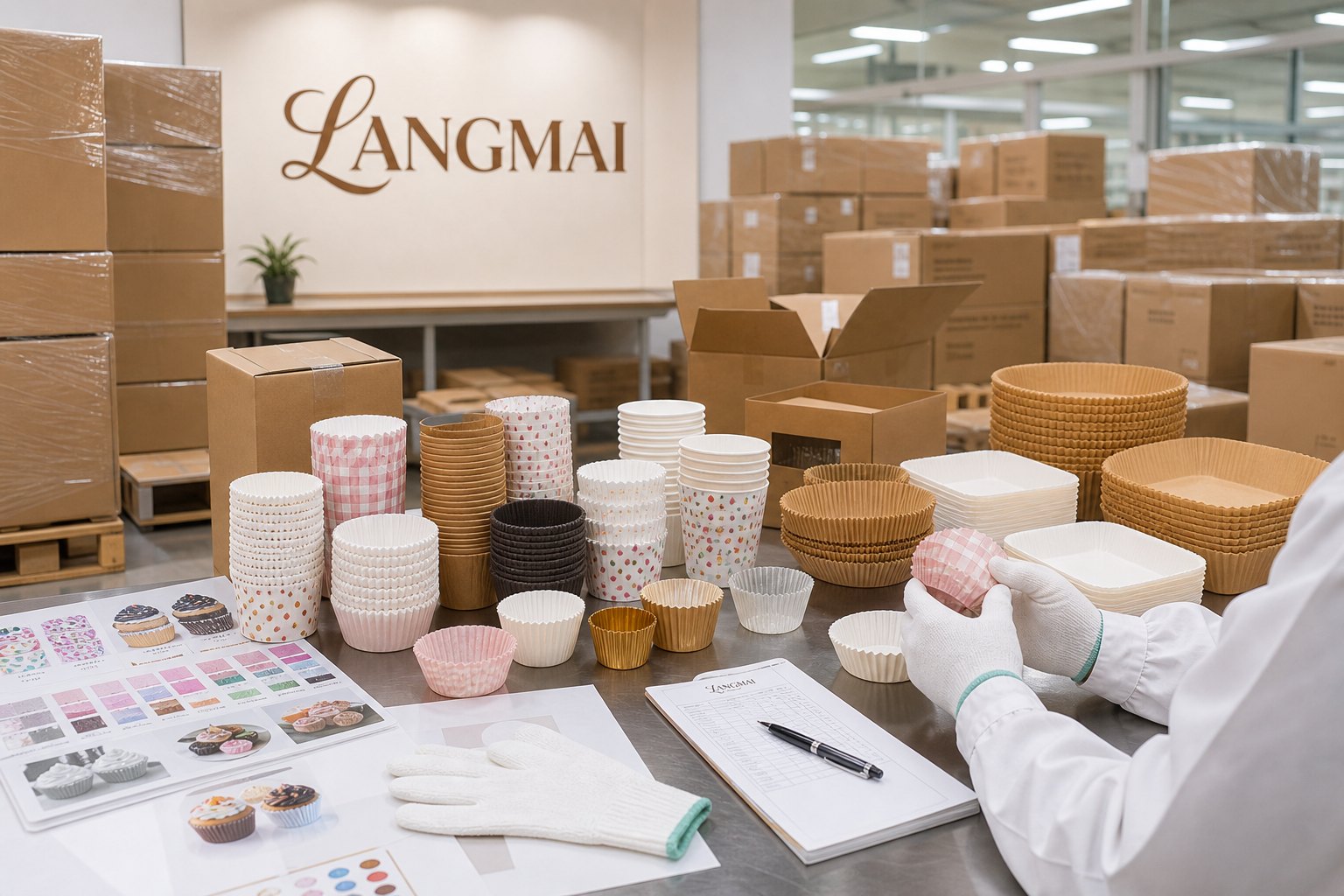
Oven-safe cupcake liners are not approved by a slogan such as "high temperature resistant" or "food grade paper." A wholesale buyer should define the real baking conditions first: product type, batter fat and moisture, pan cavity, fill weight, maximum oven setting, baking time, cooling, packing and destination market. Then the buyer should approve a production-representative sample, review food-contact evidence for the complete liner, and lock the same construction into the purchase specification and inspection plan.
The direct answer: choose oven-safe cupcake liners by validated use conditions, not by a generic heat claim. A suitable liner should keep its shape in the buyer's pan, release as expected after cooling, avoid visible grease failure that would damage the brand presentation, show no unusual odour or colour transfer, and be supported by documents that match the paper, treatment, ink and intended food-contact conditions.
This guide is for importers, bakery chains, foodservice packaging distributors, supermarket private-label teams and ecommerce sellers purchasing cupcake liners or paper baking cups in bulk. It explains how to turn "oven safe" into a controlled buying specification that can be sampled, quoted, inspected and repeated.
1. Define What Oven Safe Means for Your SKU
"Oven safe" should be a use statement, not a decorative label. A liner used for a low-fat sponge cupcake in a metal pan faces different exposure from a liner used for a high-fat muffin, a dense batter, a frozen-to-bake product or a long bake in a commercial deck oven. The same paper may perform well in one condition and disappoint in another.
Start by writing a one-page intended-use statement before you ask for quotations. Include:
- cupcake, muffin or other bakery product type;
- pan material, cavity bottom diameter, top diameter, depth and taper;
- batter weight, fat level, moisture and inclusions;
- maximum oven setting, typical baking time and whether the oven is convection, deck or tunnel;
- whether the liner contacts food during baking, cooling, display or freezing;
- whether print is present and whether it is near the food-contact side;
- finished sales channel: bakery counter, foodservice bulk pack, retail set or ecommerce pack;
- destination countries and buyer-owned compliance requirements.
The US FDA's food-contact reference tables separate food types and conditions of use, including high-temperature cooking categories. That is a useful procurement reminder: a document for room-temperature dry food is not automatically evidence for a fatty batter in a hot oven. See the FDA's Food Types and Conditions of Use tables when defining the US-facing use case.
For EU-facing projects, Regulation (EC) No 1935/2004 requires food-contact materials to be manufactured so that, under normal or foreseeable conditions, they do not endanger health, change food composition unacceptably or impair organoleptic properties. In buying language, that means the oven condition, food type and finished construction matter.
2. Match Paper Construction to the Bakery Application
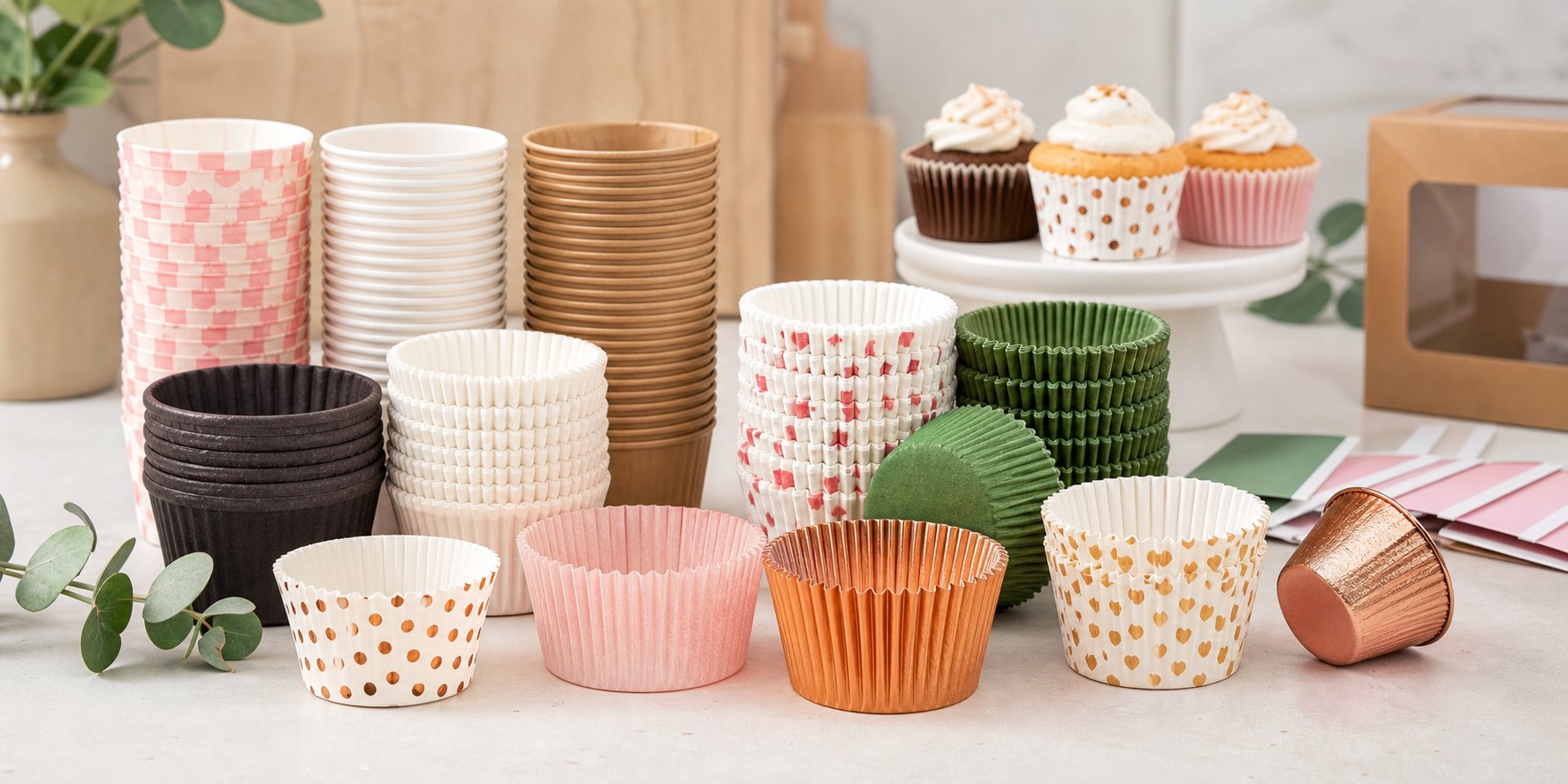
Cupcake liners are simple only from a distance. The buyer may be choosing between white or natural paper, different basis weights, grease-resistant treatments, release options, printed or unprinted paper, pleated geometry and several packing styles. The correct choice depends on the application.
For light sponge cupcakes, a standard fluted liner may only need reliable pan fit, clean release and consistent presentation. For richer muffins, the buyer may place more emphasis on grease resistance, wall stability and colour appearance after baking. For private-label retail packs, the buyer also needs stack height, nesting, count accuracy, barcode labels and carton protection to survive distribution.
Paper weight alone does not prove oven performance. A heavier liner can feel stronger in the hand but still absorb oil, buckle in the wrong pan or denest poorly on the line. A lighter paper may work well when the pan support and batter profile are suitable. Treat grammage as one variable in a tested construction, not as a substitute for a bake trial. LANGMAI's baking paper grammage buyer guide explains how to compare paper weight without turning it into the only decision criterion.
Ask the supplier to identify the construction in practical terms:
- paper grade or internal material code;
- colour and whether optical brightening or dye considerations are relevant to the buyer's market;
- grease-resistant or release treatment, if any;
- print process and ink coverage;
- formed dimensions and allowable tolerances;
- packing count, inner pack, carton and lot identification;
- change-control rules for paper mill, treatment, ink, forming site and packaging.
3. Compare Options by Use Case
The table below helps buyers compare common cupcake-liner decisions before sampling. It is not a universal pass/fail matrix. It shows what to test and document for each project.
| Buying decision | Good fit when | Main risk to check | Evidence to request |
|---|---|---|---|
| Standard pleated liner | Pan-supported cupcakes, efficient bulk packing and familiar sizes | Wrong diameter causes buckling, flaring or poor release | Drawing, pan-fit sample, bake notes and food-contact evidence |
| Grease-resistant paper | Higher-fat recipes or visible retail presentation | Unsupported greaseproof claims or changed treatment | Construction statement, representative bake test and compliance basis |
| Printed liner | Brand, seasonal or private-label retail pack | Set-off, rub, colour shift, odour or ink not covered by evidence | Artwork revision, print-side control, ink evidence and packed sample |
| Natural brown paper | Rustic or unbleached appearance | Buyer assumes it is automatically safer or compostable | Material statement, food-contact review and claim-control wording |
| Higher wall or tulip format | Taller muffins or premium display | More carton volume, point deformation or denesting difficulty | Pan drawing, filled-product photos and transport packing test |
If buyers are comparing tall tulip cups with standard muffin liners, they should separately review format and packaging effects. The existing tulip baking cups comparison covers that geometry decision in more detail.
4. Review Food-اتصل بنا Evidence for the Complete Liner
A credible compliance file should connect the exact product to the intended use. For a cupcake liner, this usually means the paper, any grease barrier or release treatment, inks, coatings, adhesives if relevant, forming process and finished article identity. A test report for a raw paper sheet can be helpful, but buyers should ask whether it represents the formed, printed, finished liner being purchased.
In the EU, Commission Regulation (EC) No 2023/2006 establishes good manufacturing practice rules for food-contact materials and articles. For printed articles, the GMP mindset is especially important because buyers need control over formulation, print-side handling, set-off prevention and records. Documentation should show a controlled system, not only a certificate image.
For paper and board, German BfR recommendations are often used as technical references in international trade. BfR explains that its food-contact recommendations are not binding legal standards, but represent current science and technology for specified materials and conditions. Buyers can review the BfR database page for context: BfR Recommendations on Food اتصل بنا Materials. BfR also announced in April 2026 that the paper and board recommendations are being converted into a consolidated tabular revision, with no substantive revision planned at that first step. Buyers should therefore confirm the current version and applicable section with their laboratory or compliance adviser instead of copying an old recommendation number into a purchase order.
For the US, the regulatory review should identify the status of components that may reasonably migrate under the intended use. FDA explains that the regulatory status of a food-contact material depends on the status of each individual substance in the article. See FDA's page on determining regulatory status of components. Paper and paperboard components are commonly reviewed against 21 CFR Part 176, including 21 CFR 176.170 for aqueous and fatty foods and 21 CFR 176.180 for dry foods when applicable.
5. Run a Production-Representative Bake Trial
Do not approve oven-safe cupcake liners from empty-cup photos. Run a controlled bake using the buyer's recipe or a realistic surrogate, the intended pan and the agreed filling weight. If the buyer operates several bakeries, test the most demanding reasonable condition rather than the easiest oven profile.
A useful trial records:
- sample code, dimensions and supplier lot;
- batter or test recipe and fill weight;
- pan type and cavity measurements;
- oven type, preheat, set temperature and actual profile if available;
- baking time, cooling time and handling method;
- release after cooling and after any freezing or display step;
- visible grease staining, wall collapse, pleat opening and bottom deformation;
- odour, taste concern, colour transfer, print rub and appearance after packing;
- photos before filling, after baking, after cooling and after transport simulation.
The buyer should test more than one cup from the same sample pack and should include edge cases that matter commercially: dark printed colours, high-fat batter, long bake, chilled display or retail box compression. If a liner is approved only for a narrow use, write that limitation into the specification.
6. Build the RFQ Around Evidence and Repeatability
A vague RFQ such as "quote 50,000 oven-safe cupcake liners" invites mismatched offers. A better RFQ describes the product and the evidence package the buyer expects. That helps the supplier quote the right paper and prevents later disputes about whether the approved sample and mass production are the same.
Include these fields in the RFQ:
- Product format, bottom diameter, top diameter, wall height and tolerance.
- Paper colour, approximate grammage target or supplier-recommended range.
- Grease-resistance expectation and whether the buyer needs PFAS-related declarations or restrictions.
- Print artwork, ink coverage, print side and colour target.
- Intended food, baking time, oven setting and cooling or freezing steps.
- Destination market and requested food-contact evidence.
- Pack count, inner bag, retail box, export carton and pallet requirements.
- Sample quantity, bake-test deadline and approval record.
- Pre-shipment inspection points and document set.
- Change-control commitments for material, supplier, print and factory changes.
If the project involves a private-label retail pack, connect the liner specification to the box, labels, warnings and barcode approval. The private label cupcake liner packaging guide gives a broader retail-pack checklist.
7. Inspect the Shipment Against the Approved Use
Pre-shipment inspection cannot prove food-contact compliance by sight, but it can prevent many practical failures. Inspectors should compare production to the approved sample and purchase specification. They should not merely count cartons.
Check dimensions, colour, print alignment, cleanliness, odour, deformation, stack height, denesting, count per pack, inner-bag sealing, carton marks, lot codes and document consistency. Pull samples from different cartons and compare them with the approved retain. If possible, run a quick pan-fit and denesting check before release. For critical bakery programs, keep a retained production sample for a repeat bake after arrival.
Documents should reconcile. The invoice, packing list, carton labels, product code, food-contact evidence and inspection report should point to the same item. If the supplier changes paper, treatment, ink, site or packaging after approval, the buyer should treat that as a requalification event unless the contract states otherwise.
8. Watch for Misleading Heat Claims
Buyers should challenge claims that sound precise but have no test basis. Examples include "withstands any oven," "certified oven safe," "high temperature paper" or "safe for all foods." A responsible supplier should state the intended use, provide relevant evidence, supply samples and tell the buyer when a proposed use needs additional review.
Also separate performance from compliance. A liner can look fine after baking but still lack suitable documentation for the destination market. Another liner may have a document package but fail the buyer's bakery line because of pan mismatch, poor release or packing deformation. Wholesale approval requires both document review and application testing.
FAQ
What makes a cupcake liner oven safe?
An oven-safe cupcake liner is one that has been selected and validated for the defined food, pan, time, temperature, packing and destination market. Buyers should confirm both practical bake performance and food-contact evidence for the finished construction.
Can I use one report for all printed cupcake liner designs?
Not automatically. The buyer should confirm whether the report or compliance rationale covers the paper, treatment, ink system, print coverage and finished article. Heavy ink coverage or a changed ink set may need additional review.
Is higher grammage always better for oven baking?
No. Grammage can affect feel, stiffness and opacity, but pan fit, paper construction, grease resistance, release and forming quality also matter. Approve the tested construction, not just the paper weight.
Should oven-safe liners be tested with the buyer's real recipe?
Yes, whenever possible. Real or representative batter helps reveal grease staining, release, wall stability, odour, colour shift and packing effects that an empty-cup inspection cannot show.
What documents should I request from a cupcake liner supplier?
Request the product specification, drawing, material construction, food-contact evidence for the destination market, sample approval record, artwork approval, packaging specification, lot traceability and change-control commitment.
How do I inspect oven-safe cupcake liners before shipment?
Compare production with the approved sample. Check dimensions, forming, cleanliness, odour, colour, print, count, denesting, pack integrity, carton labels, lot codes and document consistency. For critical orders, retain samples for arrival testing.
Conclusion
Sourcing oven-safe cupcake liners wholesale is a controlled purchasing process. Define the intended use, choose a paper construction that fits the product, test production-representative samples in the buyer's real baking conditions, review food-contact evidence for the finished liner and inspect shipments against the approved specification.
That approach gives buyers a defensible way to compare suppliers. It also prevents the common mistake of treating "food grade," "heat resistant" or "oven safe" as standalone proof. The best supplier discussion starts with the buyer's product, oven and market, then works backward to the right paper, sample route, documents and packing plan.
CTA
Send LANGMAI your cupcake or muffin size, pan drawing, batter type, oven conditions, print artwork, packing format, destination market and target quantity. LANGMAI can help prepare a quote-ready specification, sample plan and document review route for oven-use cupcake liners.