

Introduction
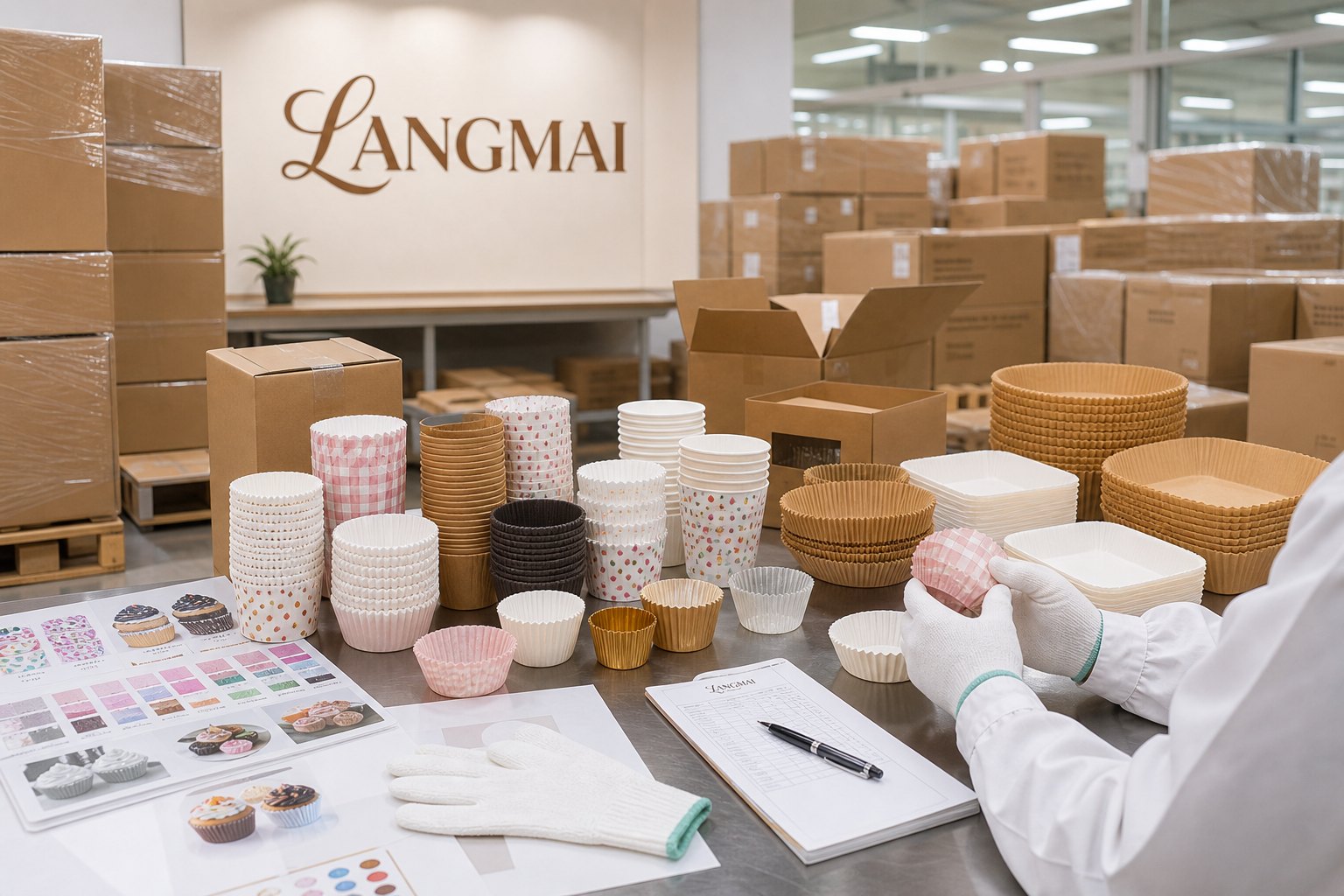
Baking paper grammage is the mass per unit area, normally stated in grams per square metre (g/m²). It is an important purchasing field, but it does not by itself predict release, grease resistance, stiffness, heat performance, print quality or suitability for a finished baking cup. Wholesale buyers should specify grammage with a test method and tolerance, then approve the complete paper or formed product in the intended application.
The current ISO 536:2019 specifies a method for determining paper and board grammage and was confirmed as current in 2025. TAPPI also publishes TAPPI/ANSI T 410 om-23 for grammage of paper and paperboard. Cite the agreed method in the specification instead of assuming that every supplier's stated gsm was measured under the same sampling and conditioning procedure.
1. Separate Grammage From Thickness and Stiffness
Two papers with the same grammage can differ in thickness, density, fibre structure, surface treatment, coating and stiffness. ISO 534 covers methods for paper and board thickness and calculations for apparent density and specific volume. That distinction matters when a paper must feed through converting equipment, hold a pleat or fit a cavity.
Use separate specification fields for:
- grammage in g/m² and the applicable test method;
- thickness or caliper and measurement method;
- paper grade, color and fibre description;
- greaseproofing, release treatment or coating;
- moisture or conditioning state where relevant;
- machine and cross direction if converting depends on them; and
- finished-sheet or formed-cup dimensions.
Do not convert grammage into thickness using a universal formula. The conversion would require the actual apparent density of that grade and may still miss local variation.
2. Choose Grammage From the Finished Application
Start with the product and process, not a competitor sample labelled with a gsm value. Define the intended food, fat and moisture profile, maximum time and temperature, pan or tray, release target, printing, filling line, cooling, freezing, display and distribution.
The same nominal grammage can be used in very different products:
| Finished format | Grammage-related questions | Other evidence needed |
|---|---|---|
| Flat baking sheet | Does it handle, dispense and stay flat? | release, grease resistance, dimensions, curl |
| Pleated cupcake liner | Does it form consistently and fit the pan? | pleat geometry, release, staining, denesting |
| Tulip baking cup | Does the tall wall retain shape? | fold integrity, pan support, presentation |
| Self-supporting cup | Does the complete construction hold batter without a pan? | wall and base design, seam, bake trial, compression |
| Printed liner | Does the surface accept ink consistently? | color, rub, set-off, sensory and food-contact controls |
Increasing grammage is not an automatic fix. More mass can change forming, release, heat transfer, nesting, carton quantity and cost. A lower grammage is not automatically weak or poor quality if the grade and construction meet the agreed performance requirements.
For formed products, compare formats with the tulip versus standard muffin liner guide and self-supporting baking cup guide.
3. Write a Measurable Grammage Requirement
A useful purchase specification identifies the nominal value, units, method, tolerance, sampling locations, lot definition and decision rule. Ask the supplier to explain whether the quoted tolerance applies to individual specimens, sheet averages, roll averages or lot averages. Those are not equivalent.
Use this structure:
- Product and supplier material code.
- Nominal grammage in g/m².
- Test method and current agreed edition.
- Conditioning and specimen preparation requirements from the method.
- Individual and average acceptance limits if both are needed.
- Sampling across rolls, reels, sheets or converting positions.
- Rounding and measurement resolution.
- Nonconformity, retest and disposition rules.
Do not publish a tolerance without confirming that it is feasible for the selected paper, process and method. A buyer-owned limit should be validated with capability data or representative lots before it becomes a contractual release rule.
4. Reconcile Supplier Units and Commercial Weight
Most global paper specifications use g/m², while some North American trade descriptions use basis weight expressed as pounds per ream at a defined sheet size and sheet count. TAPPI T 410 explains that the commercial terms basis weight, ream weight or substance depend on the specified ream convention, while grammage is mass per unit area.
Never convert a pound basis weight without the associated basic sheet size and number of sheets. Two papers described with the same pound value can represent different mass per area if their trade conventions differ.
For quotations, standardize comparisons to:
- g/m² for the paper;
- net material weight and finished piece count;
- finished dimensions and tolerances;
- inner-pack and carton quantities; and
- pallet or shipment configuration.
This avoids selecting a lower price that was based on a different size, treatment, sheet count or pack configuration.
5. Pair Grammage With Functional Testing
Approve the paper or finished cup using application tests. Record sample identity, paper code, production lot, grammage result, dimensions, recipe or food, pan, time, temperature, cooling and evaluation method.
Depending on the product, examine:
- release and tearing after baking;
- grease staining and barrier holdout;
- wet or fatty food exposure;
- curl, flatness and handling;
- forming cracks, pleat consistency and seam behavior;
- stiffness, shape retention and denesting;
- print density, rub and fold performance;
- odor and taste using a controlled comparison; and
- pack compression and transport damage.
FDA's food types and conditions of use tables distinguish bakery products by surface fat and include cooking above 250°F as a condition of use. These tables do not select a grammage, but they show why a food-contact review must match the actual food and thermal use rather than a generic paper description.
Use the greaseproof paper sheets wholesale guide for a full material and converting specification.
6. Match Food-اتصل بنا Evidence to the Grade
Grammage is not evidence of food-contact compliance. A finished paper may include treatments, coatings, colorants, printing inks or other substances whose regulatory status and intended-use limits matter.
The FDA food-contact material guidance says the overall status depends on each relevant substance and the conditions of use. For EU projects, Regulation (EC) No 1935/2004 establishes general safety, labeling and traceability requirements for food-contact materials.
Ask for evidence identifying the exact supplier material code, construction, intended use, limitations, issuing party and date. If the supplier changes grammage by changing paper mill, grade, treatment or coating, repeat the document review and relevant application tests. A statement for one grade should not be silently transferred to another.
7. Inspect Incoming and Finished Lots
At incoming inspection, verify supplier code, lot, roll or pallet identification and packaging condition before sampling. Use a representative plan across the lot, not consecutive specimens from one accessible edge. Record the balance resolution, cutter or specimen area, conditioning, calculations and raw measurements required by the agreed method.
For converted sheets or cups, grammage sampling can confirm the paper but will not replace finished-product checks. Inspect dimensions, piece count, formation, contamination, print, pack integrity and functional properties separately.
Trend results over time. A value inside tolerance may still signal drift when several lots move toward one limit. Compare the trend with thickness, forming, grease resistance and complaints before deciding whether a supplier corrective action is required.
The baking paper quality-control inspection guide provides a pre-shipment workflow for wholesale orders.
8. Control Changes and Approved Equivalents
The purchase agreement should state which changes require notice and approval: paper mill, grade, fibre source, nominal grammage, tolerance, thickness, treatment, coating, color, surface, converting process or test method. A supplier's “equivalent gsm” is not necessarily an equivalent material.
If dual sourcing is required, qualify each grade against the same finished-product specification and application protocol. Keep sample and document identities separate. Approving supplier A's paper does not automatically approve supplier B's paper with the same nominal gsm.
FAQ
What does gsm mean for baking paper?
Gsm means grams per square metre and expresses grammage, or mass per unit area. It does not by itself state thickness, release, grease resistance, coating, stiffness or food-contact suitability.
Is higher gsm baking paper always better?
No. Higher grammage changes material mass but does not guarantee better release, barrier or forming performance. Select a complete grade and construction through specification review and application testing.
Is baking paper grammage the same as thickness?
No. Grammage is mass per area; thickness is a separate measurement. Papers with the same grammage may have different thickness and density.
How should buyers set a gsm tolerance?
Set it with the paper supplier using the agreed method, sampling unit, process capability and application risk. Define whether limits apply to individual specimens, averages or both.
Can basis weight in pounds be converted to g/m²?
Yes, but only when the pound value's basic sheet size and ream sheet count are known. Without that convention, the conversion is ambiguous.
Does a grammage test prove food-contact compliance?
No. It confirms mass per area under a stated method. Food-contact review requires evidence for the complete material composition and intended conditions of use.
Conclusion
Baking paper grammage belongs in a controlled specification, not as a stand-alone quality claim. State g/m², method, tolerance and sampling rules; measure thickness separately; approve the exact grade in the intended food and process; and control changes that could alter performance or compliance evidence.
CTA
Send LANGMAI your finished format, dimensions, intended food, baking conditions, target grammage, thickness or handling needs, printing, pack count and destination market. Request matched paper samples, application trials, specification data and available food-contact documents.