Introduction
What should buyers verify before ordering freezer-safe paper baking cups? The direct answer is: define the frozen or chilled application first, then approve a production-representative cup through moisture, freezing, thawing, pack compression, document and lot-inspection checks. A paper cup that works in a dry room-temperature muffin program may deform, stain, stick, pick up odour or lose presentation quality after cold storage and thawing.
This distinction matters for frozen cheesecakes, mousse cakes, filled cupcakes, chilled bakery assortments, frozen dough trials, catering desserts and supermarket private-label programs. "Freezer-safe" should not be treated as a decorative claim. It is a buying requirement that depends on paper construction, grease or release treatment, cup geometry, food moisture, storage time, thawing method, packaging and destination-market evidence.
For EU and US buyers, the compliance file also needs to match the finished article and the intended use. The European Commission states that food contact materials placed on the EU market must comply with Regulation (EC) No 1935/2004, and that transferred constituents can affect food safety, taste, smell and appearance. FDA's food-contact framework separates food types and use conditions, including refrigerated storage, frozen storage, and frozen or refrigerated foods intended to be reheated in the container. Those categories are not interchangeable.
This guide gives importers, distributors, frozen-dessert brands, supermarket buyers and foodservice packaging teams a practical RFQ, sample testing, document review, packaging and inspection workflow for freezer-safe paper baking cups.
1. Define the Cold-Chain Job Before Asking for Price
"Freezer-safe paper baking cup" can mean several different jobs. The cup may hold batter during baking and then go into freezing. It may be filled after baking with cream, mousse or fruit. It may be sold as part of a frozen retail dessert. It may only spend a short time in chilled storage before display. Each route changes the paper and packaging decision.
Start the RFQ with a use-case statement:
- product type: muffin, cupcake, mini cake, cheesecake, mousse dessert, frozen dough, snack cake or party assortment;
- whether the cup is baked, filled cold, frozen after baking, thawed before service or reheated by the user;
- food profile: dry sponge, high-fat batter, cream filling, fruit topping, syrup, sauce, cheese, custard or chocolate;
- target storage: refrigerated, frozen, freeze-thaw cycle, retail freezer display or cold transport only;
- expected storage period and thawing method for the buyer's program;
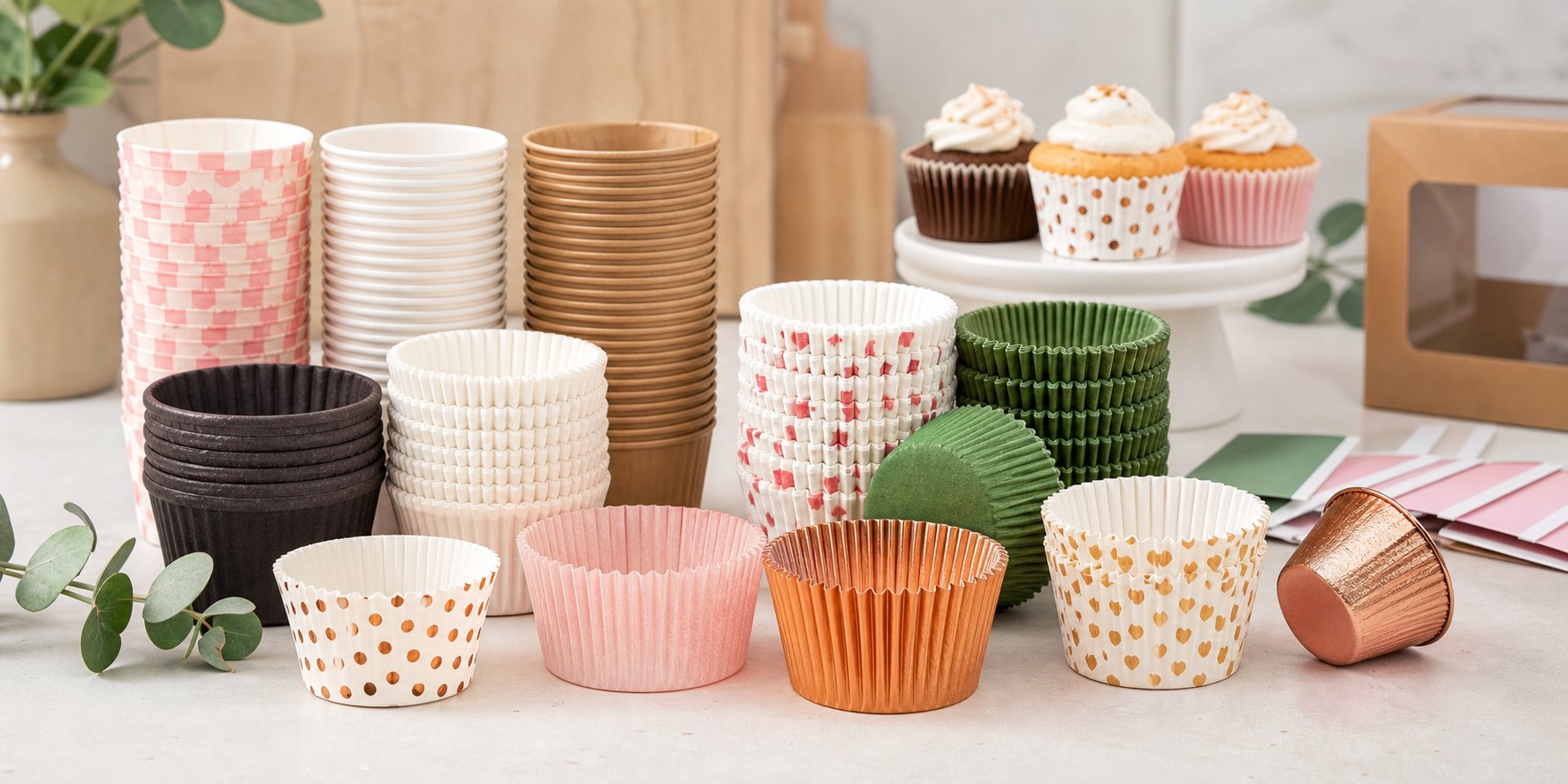
- cup format: pleated liner, tulip cup, self-supporting cup, roll-mouth cup or custom formed paper cup;
- sales channel: bakery production, foodservice, supermarket private label, ecommerce freezer shipment or catering.
This prevents a common mistake: approving a cup for one attractive product photo and then using it for a wetter or longer-storage dessert. Suppliers need the real food, cold-chain route and pack format before they can recommend a construction or sample plan.
2. Specify the Cup Construction and Fit
Cold storage does not remove the normal fit questions. A freezer program still needs controlled dimensions, pan compatibility, denesting, wall stability and pack count. The difference is that moisture and low-temperature handling make weak specifications more visible.
Use a specification table like this:
| Field | What buyers should define | Why it matters in frozen or chilled use |
|---|---|---|
| Format | Standard liner, tulip cup, self-supporting cup or roll-mouth cup | Affects wall support, presentation and packaging protection |
| Dimensions | Bottom diameter, top opening, height and tolerance | Controls pan fit, fill volume and carton layout |
| Paper grade | Colour, grammage, stiffness and supplier material code | Influences strength, appearance and document matching |
| Surface function | Grease resistance, release treatment or coating if used | Affects staining, sticking, moisture uptake and evidence scope |
| Food profile | Fat, moisture, acidity, sugar and filling type | Drives application testing and document relevance |
| Storage route | Chilled, frozen, freeze-thaw, thaw-and-serve or reheat | Changes performance risks and use-condition review |
| Packaging | Inner bag, sleeve, tray, retail box, master carton and pallet | Protects shape, cleanliness and cold-chain presentation |
| Traceability | Material lot, production lot and carton marks | Links documents, retained samples and shipment inspection |
If the buyer is still selecting dimensions, use LANGMAI's cupcake liner size guide before running cold tests. For paper weight decisions, the baking paper grammage guide helps separate gsm from stiffness, absorbency and functional performance.
3. Separate "Freezer-Safe" From Food-اتصل بنا Compliance
Freezer performance and food-contact compliance are related, but they are not the same claim. A cup can keep its shape in a freezer but still need better documentation. A declaration can be useful but still not prove that the cup will release from a moist cheesecake after thawing.
For EU buyers, review the general food-contact framework. The European Commission's Food اتصل بنا Materials page explains that all food contact materials on the EU market must comply with Regulation (EC) No 1935/2004. The official legislation page identifies Regulation (EC) No 1935/2004 as the harmonised framework and Regulation (EC) No 2023/2006 as the good manufacturing practice regulation for food-contact materials.
In practice, ask whether the declaration and supporting evidence identify the finished paper cup, not only a raw paper sheet. Review paper, treatment, coating, printing ink, adhesive, forming process and packaging components where relevant. Evidence for a dry bakery liner may not cover a high-moisture frozen dessert, and evidence for an unprinted sample may not cover the printed retail SKU.
For US projects, keep the component review separate. FDA's regulatory-status guidance for components of food-contact materials states that the overall status of a food-contact material depends on each individual substance that comprises the article and may reasonably migrate to food. FDA's food types and conditions of use include refrigerated storage, frozen storage and frozen or refrigerated storage for prepared foods intended to be reheated in the container. Buyers should state which condition matches the planned product.
4. Build a Moisture and Freeze-Thaw Test
Cold-chain paper cup testing should use the buyer's food, not only water or an empty cup. The hardest risk may be oil staining from a high-fat batter, moisture migration from fruit filling, cup softening during thawing, or condensation inside a retail pack.
A practical sample test can include:
- Record sample code, dimensions, paper grade, surface treatment, print, pack format and supplier lot.
- Fill or bake with the real recipe at the planned portion weight.
- Cool under the buyer's normal process before packing.
- Freeze or chill under the planned temperature and storage duration.
- Thaw according to the real service method: room temperature, refrigerated thaw, display case or reheating if applicable.
- Check cup wall strength, bottom staining, sticking, fibre lift, deformation, odour, colour change and appearance.
- Photograph results before freezing, after storage, during thawing and at service.
- Retain tested samples and rejected examples with notes.
If the program includes both frozen and ambient products, do not approve one cup for both without testing both routes. A cup that releases well from a dry muffin may not perform with a frozen cream dessert. A cup that looks good when frozen may collapse or wrinkle after condensation forms during thawing.
5. Control Odour, Staining and Presentation
Frozen and chilled products often spend longer in packaging than fresh bakery goods. That gives odour transfer, staining and surface marking more time to appear. Buyers should review the complete storage environment, not just the cup.
Check:
- dry odour from the empty cup and inner pack;
- odour after freezing and thawing with the real food;
- grease halos or wet marks on the side wall and bottom;
- colour bleeding or print rub under condensation;
- liner separation from the food after service;
- visual quality after handling, boxing and display;
- whether nearby materials, cartons or warehouse storage can introduce odour.
For printed programs, use the custom printed food paper packaging guide to control ink coverage, print side, curing or drying controls, artwork revision and sensory review. Avoid broad wording such as "non-toxic ink" as a substitute for a proper evidence file.
Mid-Article CTA: Prepare a Cold-Chain Sample Brief
Before requesting a bulk price, send LANGMAI the cup format, dimensions, recipe type, fat and moisture profile, freezing or chilled-storage route, thawing method, pack format, destination market and document requirements.
Send your freezer-safe paper baking cup requirements or compare related paper baking cup options.
6. Package the Cup for Shape and Cleanliness
Paper cups can deform before they ever reach the dessert line. Cold-chain projects often involve more handling steps: production, filling, freezing, case packing, retail freezer display, ecommerce shipment or catering transport. The packaging plan must protect both the empty cups before use and the finished food after filling.
For empty cups, specify inner bag or sleeve protection, count per pack, compression limit, carton strength, pallet height and storage rules. For filled products, confirm whether cups sit inside trays, cavities, retail cartons or multipacks. A beautiful sample can fail if the retail box crushes tulip points, bends cup walls or traps condensation against printed surfaces.
Packaging details to lock before mass production include:
- orientation and nesting method;
- inner-pack count and closure;
- moisture and dust protection;
- retail tray or box support for filled products;
- carton dimensions, gross weight and stacking limit;
- pallet pattern and stretch-wrap method;
- lot code location on inner packs and cartons;
- retained sample and reference-photo rules.
For broader pack-out logic, the paper baking cup packaging specification guide gives a useful carton, label and shipment-control workflow.
7. Review EUDR and Paper Traceability Separately
Food-contact compliance does not prove EUDR readiness, and EUDR does not prove food-contact suitability. They answer different buyer questions.
The European Commission's current EUDR overview describes the regulation as a due-diligence framework for specified commodities and products associated with deforestation and forest degradation. Buyers should check the current product scope, role and dates against official EU sources before treating a paper product as in or out of scope.
For applicable paper products, request available paper-origin, wood species, country, region, geolocation, paper supplier, mill, batch and shipment-link records early enough for the EU operator's due-diligence process. Do not call EUDR a product certificate, and do not assume an FSC document automatically completes EUDR obligations. LANGMAI's EUDR traceability checklist explains how to separate data collection, scope review, risk assessment and buyer responsibilities.
8. Compare Suppliers With a Cold-Chain Scorecard
Supplier comparison should cover more than cup price. A low quote may exclude the paper grade, surface treatment, packaging protection, document scope or sample work needed for frozen use.
| Evaluation area | Evidence to request | Warning sign |
|---|---|---|
| Application fit | Sample test with the buyer's product and cold-chain route | Supplier approves from a room-temperature photo only |
| Cup construction | Paper grade, grammage, treatment, dimensions and retained sample | Product name with no material or drawing control |
| Document scope | EU and US evidence tied to the finished article and intended use | Generic "food grade" or "FDA approved" wording |
| Packaging protection | Inner pack, retail pack, carton and pallet proposal | Carton plan discussed after artwork approval |
| Change control | Notice for paper, treatment, ink, supplier or tooling changes | No reapproval trigger after material changes |
| Inspection | Dimensions, odour, staining, pack count, carton marks and document matching | Release based only on carton quantity |
Ask each supplier the same questions. Then compare exclusions beside price. A supplier that helps you test, document and pack the cup correctly can be a better value than a cheaper quote that leaves the cold-chain risk with the buyer.
9. Inspect Production Before Shipment
Pre-shipment inspection should confirm that the bulk order matches the approved sample and specification. It cannot replace the earlier food-contact review or cold-chain trial, but it can catch practical failures before goods leave the factory.
Check at minimum:
- SKU, PO, artwork revision, destination market and carton marks;
- bottom diameter, top opening, height, wall shape and nesting;
- paper colour, surface consistency, odour and visible contamination;
- print rub, set-off, staining and abnormal marks;
- pack count, inner-pack closure and retail-pack integrity;
- master-carton strength, quantity, weight and pallet plan;
- retained samples against the approved reference;
- document revision and lot connection to inspected cartons.
Set sampling, defect classes and acceptance criteria in the purchase agreement based on product risk and buyer requirements. Avoid unexplained universal AQL claims. For a broader framework, use LANGMAI's baking paper quality-control inspection guide.
10. Send a Quote-Ready RFQ
A useful RFQ for freezer-safe paper baking cups should include:
- cup format, dimensions and target capacity;
- food type, fat level, moisture level and filling or topping;
- bake, chill, freeze, thaw and reheat steps where applicable;
- paper colour, grammage target and release or grease-resistance requirement;
- print needs, artwork status and food-contact side;
- EU and US destination markets and evidence requested;
- sample quantity and cold-chain test plan;
- retail pack, inner pack, master carton and pallet rules;
- inspection checklist and retained-sample requirements;
- EUDR information request where the paper product is in scope;
- order quantity, delivery terms and repeat-order change-control rules.
This level of detail helps the supplier quote the same product the buyer intends to test. It also gives procurement, QA and compliance teams a shared file instead of separate emails about price, sample appearance and documents.
FAQ
Are paper baking cups automatically freezer-safe?
No. Paper baking cups should be tested with the buyer's real food, storage time, freezing or chilled route, thawing method and packaging. Shape stability, staining, odour and release can change after cold storage.
Is freezer-safe the same as food-contact compliant?
No. Freezer performance is an application result. Food-contact compliance is a document and regulatory review tied to the finished article, components, food type and intended use. Buyers need both when the product will contact food.
What should buyers test first for frozen desserts?
Start with moisture, staining, wall stability, odour, release after thawing and pack deformation. Use the real dessert formula because high-fat, high-moisture, acidic or syrupy foods can behave differently from a dry muffin.
Can one report cover chilled, frozen and reheated use?
Not automatically. The report or declaration should match the finished construction and intended use. FDA separates refrigerated storage, frozen storage and frozen or refrigerated foods intended to be reheated, so buyers should state the correct route.
Should printed cups be tested differently?
Yes. Printed cups need review for print side, ink system, odour, rub, set-off and condensation effects. A plain cup approval should not be silently extended to a printed private-label SKU.
What packaging details matter most?
Inner-pack protection, count, compression, retail tray support, carton strength, pallet pattern and lot coding matter because cups can deform, absorb odour or lose presentation quality before use.
Does EUDR make a paper cup freezer-safe?
No. EUDR is a deforestation due-diligence workstream for products in scope. Freezer performance, food-contact evidence and cold-chain application testing are separate requirements.
Conclusion
Freezer-safe paper baking cups are not selected by a simple product name. Buyers need to connect cup construction, real food, cold storage, thawing, packaging, document review, inspection and traceability into one controlled purchasing file.
The strongest process starts with a quote-ready brief, moves through production-representative samples and cold-chain testing, and ends with lot inspection against the approved specification. That approach helps importers, distributors, frozen-dessert brands and supermarket private-label teams avoid weak claims, mismatched documents, crushed packaging and poor presentation after thawing.
CTA
Planning a chilled or frozen bakery program? Send LANGMAI your cup format, dimensions, recipe profile, storage route, thawing method, artwork, pack format, destination market, volume and document requirements. Request production-representative samples before bulk approval.
Request Cold-Chain Cup Samples
Sources
- European Commission, Food اتصل بنا Materials
- European Commission, Food اتصل بنا Materials Legislation
- U.S. FDA, Determining the Regulatory Status of Components of a Food اتصل بنا Material
- U.S. FDA, Food Types and Conditions of Use for Food اتصل بنا Substances
- European Commission, Regulation on Deforestation-free products