

Introduction
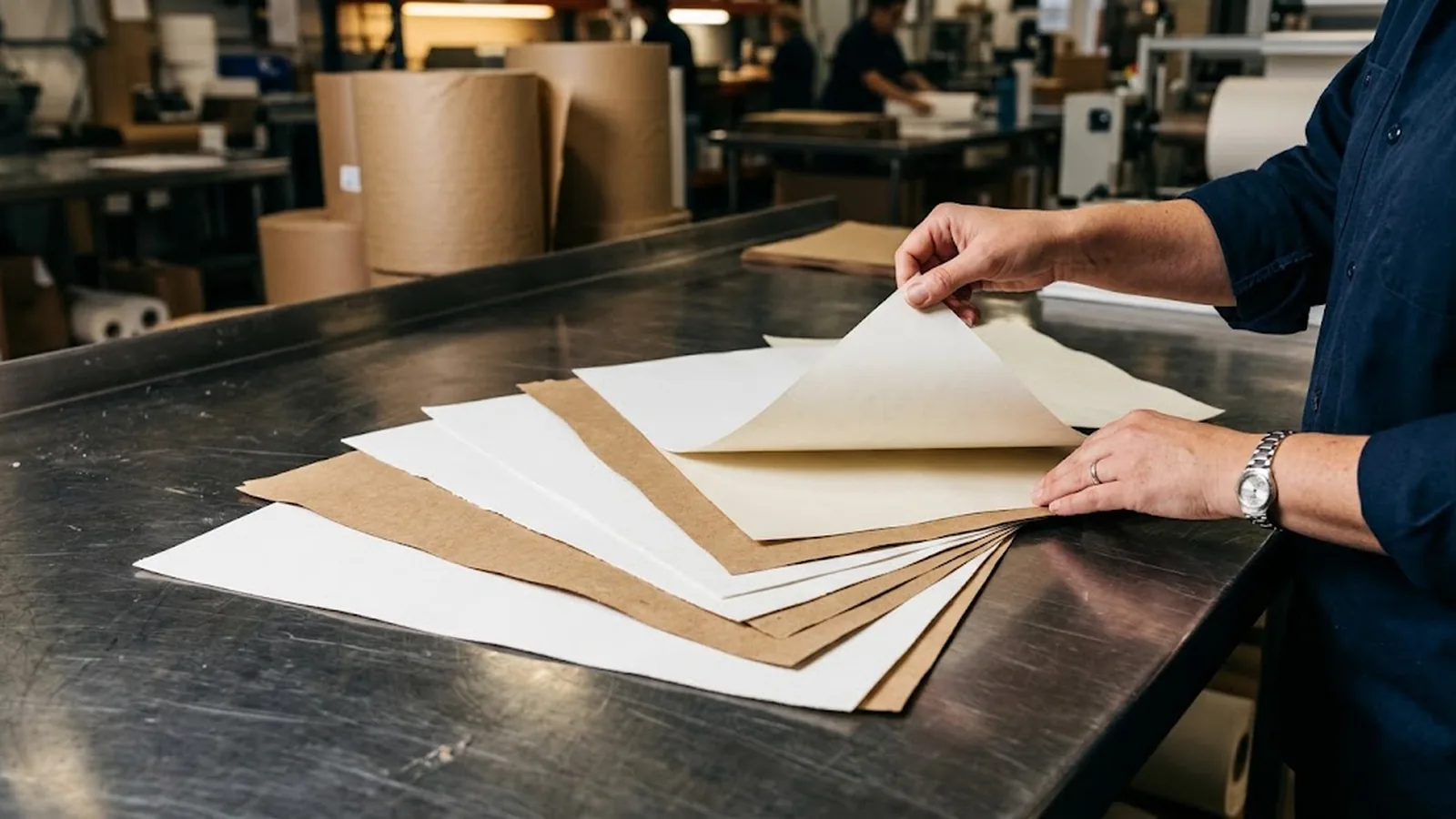
Ask three suppliers for "greaseproof paper" and you may receive three sheets that behave completely differently against fried pastry, salad dressing and warm chocolate. The word greaseproof describes a family of papers, not a performance level. The industry's common answer to this ambiguity is the Kit rating — a numbered scale that expresses how strongly a paper resists penetration by oils and fats. For wholesale buyers, Kit level is the difference between a specification that survives supplier changes and a purchasing habit that quietly produces stained cartons, translucent wraps and customer complaints. Buyers comparing these specifications can review our pre-cut parchment paper sheets and rounds programme, where coating weight, base grammage and release values are documented per construction. Cup programmes built around Kit ratings, such as the fluted and formed cake cups range, follow the same specification logic.
This guide explains what Kit levels are and how the scale is constructed, which test methods sit behind the number, how to match a Kit level to real applications, where Kit ratings have limits, and how to write grease resistance into a specification your supplier can certify lot by lot. Buyers verifying these specifications can review the certificate library alongside supplier documentation requests.
LANGMAI manufactures greaseproof and silicone-coated food packaging paper for wholesale buyers and declares grease resistance parameters with its specifications.
What the Kit Rating Actually Measures
The Kit test, based on TAPPI T559, exposes a paper sample to a graduated series of castor-oil-based reagents of increasing aggressiveness — the mixtures rise in strength through twelve numbered steps. The tester applies drops of each reagent to the paper, and after a defined contact time inspects for penetration and staining of the reverse side. The Kit value is the highest-numbered reagent the paper resists: a Kit 8 sheet withstands reagent 8 but fails at 9. The scale runs: For production volumes, the same construction logic applies to our custom printed baking parchment paper line, quoted per roll, sheet or die-cut format.
- Kit 1–3. Modest resistance, suitable for dry or low-fat contact such as interleaving and bakery tissue.
- Kit 4–6. General-purpose grease resistance, the range most sandwich wraps, basket liners and light bakery applications occupy.
- Kit 7–10. High resistance for fatty, warm or extended-contact uses: burger wraps, fried snacks, oily pastry, deli meats.
- Kit 11–12. Maximum resistance on the scale, used where oils contact the paper hot or for very long durations.
Two properties of the scale matter to buyers. First, the ratings are not linear — the jump from Kit 6 to Kit 8 represents a far larger real-world performance difference than 6 to 4. Second, a Kit value is a snapshot under the test's contact time and temperature; hot, pressed or long-duration contact in production can defeat a paper whose static rating looked adequate. The factory and certificate library lists the third-party audits and test reports behind these claims.
The Test Methods Behind Grease Resistance Claims
Buyers encounter three methods, and each answers a different question:
- Kit test (TAPPI T559). A graded pass/fail screen producing the 1–12 rating. Fast, inexpensive and ideal for incoming-goods verification — but coarse, and influenced by operator judgment at the staining check.
- Cobb test (ISO 535). Measures water absorption, not oil resistance, yet it is commonly quoted because dense sheets that resist grease also absorb little water. Use it as a supporting indicator of sheet density, not as a grease claim.
- Turpentine test (ISO 5634-3). Measures the time until a turpentine-oil mixture penetrates the sheet, reported in seconds. It discriminates more finely than Kit at the top of the range, which is why premium greaseproof producers quote seconds alongside Kit values.
A rigorous specification cites the Kit value as the headline parameter and adds a penetration time in seconds for applications where the paper sits against fat for extended or hot contact. A sheet declared "Kit 12" with no penetration-time data cannot be compared meaningfully between suppliers.
Matching Kit Level to the Application
The most common specification error is buying uniformly high Kit for all applications and paying for headroom the product never uses. Match level to the actual fat behavior:
- Dry bakery contact — liners, interleaving, tissue: Kit 3–5. The exposure is crumb contact and light butter migration, and breathability matters as much as resistance.
- Sandwich, wrap and basket liners: Kit 6–8 for standard fillings; move toward Kit 8–10 when mayonnaise, dressings or warm fillings are involved.
- Fried and high-fat foodservice: Kit 10–12, with penetration-time data, because contact is hot and continuous. For direct hot-oil contact, a silicone-coated parchment may outperform any uncoated greaseproof regardless of Kit value — resistance level and release performance are separate requirements.
- Cake cups and baking cups: Kit is a secondary parameter here; what matters is behavior against wet batter fat during baking, which the Kit screen only approximates. Require bake trial evidence alongside the declared level.
- Printed wraps: Verify that the declared Kit level holds in the printed area, not just on plain sheet — inks and overprint varnishes can change local penetration behavior.
The Limits of the Kit Rating
Treat Kit as a screening tool, not a guarantee:
- The reagents are castor-oil based; they approximate, but do not reproduce, every fat in food — cocoa butter, hot frying oil and dairy fats behave differently.
- Контакты time in the test is minutes; shelf contact is days. Long-duration storage against oily products demands penetration-time data or real aging trials.
- The rating says nothing about release, wet strength or flavor neutrality — a Kit 12 sheet can still stick to hot sugar or transfer odor.
- Two sheets with the same Kit value can differ visibly in production when temperature and pressure enter the picture.
For these reasons, confirm the declared level with an application trial using the real product, at real contact temperatures and durations, before approving a grade.
Writing Grease Resistance into the Specification
Convert performance into certifiable numbers:
- Declared Kit value per TAPPI T559, with the test laboratory named and the report available.
- Penetration time in seconds (ISO 5634-3) for high-fat or long-contact applications.
- Cobb value as a supporting density indicator, where relevant.
- The application the level is certified for, stated explicitly — "Kit 8 for sandwich wrap with standard fillings" is enforceable; "greaseproof paper" is not.
- Lot certification and incoming-goods frequency: which parameter is checked on every lot and which on periodic retest.
- For printed grades, confirmation that the level holds on printed areas.
LANGMAI declares Kit levels and penetration times with quotations, supplies test reports with shipments and supports application trials to match grease resistance to each program's fat profile.
FAQ
What is the difference between Kit 6 and Kit 8 greaseproof paper?
Kit 8 resists a reagent two steps more aggressive than Kit 6, and because the scale is non-linear, that difference is substantial in practice. Kit 6 suits standard sandwich wrap and light fillings; Kit 8 is the safer choice for mayonnaise-rich, warm or oily applications. Confirm with an application trial using your actual filling.
Is a higher Kit level always better?
No — higher levels cost more and, in dense sheets, can reduce breathability. Dry bakery interleaving performs perfectly at Kit 3–5, and paying for Kit 10 there adds cost without benefit. Specify the level the application's fat exposure demands.
Why do suppliers quote Cobb values for greaseproof paper?
Cobb (ISO 535) measures water absorption, not grease resistance, but the dense fiber structure that gives greaseproof paper its oil resistance also gives low Cobb values. It is a useful supporting indicator of sheet density — but it should appear alongside, not instead of, a Kit value.
Does LANGMAI certify Kit levels on every shipment?
Yes. LANGMAI declares Kit levels and penetration times in the specification, provides test reports with shipments and supports lot-based verification programs. Контакты Sales with your application and fat-exposure profile for matched samples with declared grease resistance data.
Conclusion
"Greaseproof" is a marketing word; Kit 8 with a penetration time of 40 seconds is a specification. Buyers who anchor grease resistance to the Kit scale, demand the test method behind every number, and match level to the real fat profile of each application pay for exactly the performance they need — no stained packaging, no wasted headroom, and no ambiguity when the supplier changes. Our silicone-coated parchment sheets and rolls programme publishes the test data behind each grade so specifications can be verified before ordering.
CTA
Контакты Sales for LANGMAI greaseproof and silicone-coated food packaging papers with declared Kit levels, penetration-time data and application trial support for bakery, foodservice and wholesale programs.