

Introduction
Chemical compliance usually dominates the conversation when wholesale buyers audit food packaging paper suppliers: PFAS, heavy metals, migration limits. Yet microbiological quality is the parameter most likely to cause a rejected shipment at a customer's factory gate, and the one buyers most often fail to specify clearly. A pallet of baking cups can pass every chemical certificate and still arrive with an elevated total plate count because of storage humidity, damaged overwrap or a lapse in the converting plant's hygiene program. Every document in our compliance library is tied to a specific construction; see how the silicone-coated parchment sheets and rolls programme aligns test reports with the exact grade supplied.
This guide explains what microbiological testing on food packaging paper measures, how total plate count (TPC) and yeast and mold counts are determined, which limits buyers specify in contracts, how to read a supplier's test report, and how sampling and storage keep results meaningful from the mill to your customer's line. Buyers verifying these specifications can review the certificate library alongside supplier documentation requests.
What Microbiological Testing Measures on Paper Packaging
Microbiological testing for paper packaging focuses on three core parameters. Total plate count, or aerobic colony count, estimates the overall number of viable aerobic bacteria per gram of paper. It is a hygiene indicator, not a safety verdict: a moderate TPC does not mean the product is dangerous, but it signals how well the manufacturing and storage chain controlled conditions. Yeast and mold count measures fungal organisms, which matter more for paper than for most packaging materials because cellulose absorbs moisture and mold spores are ubiquitous in warehouse air. Many buyers also require specified indicator organisms, such as coliforms for direct contact grades, to be absent in the tested sample. Documentation scope is confirmed per SKU and destination market, as outlined on our food-grade die-cut parchment rounds page.
Because paper is a dry product, microbes on it are typically dormant rather than growing. The risk profile changes when the paper ships through humid climates, sits in condensation-prone containers, or contacts moist foods that allow growth. The factory and certificate library lists the third-party audits and test reports behind these claims.
Why Paper Has a Microbial Load at All
Cellulose fibre comes from biological raw material, and process water in papermaking carries its own microbial population. Even in a well-run mill, finished paper carries some baseline colony count. Converting steps add further contact points: coating, slitting, sheeting, stacking and carton packing all expose the material to air, machinery and human handling.
This means the goal of a specification is not zero microbes, which is unachievable and unnecessary, but a controlled, consistent, low-level load. Buyers should treat a supplier's ability to produce stable results across batches as more meaningful than a single excellent report; volatility between batches is a stronger warning sign than a consistently moderate but stable count.
Recommended Specification Limits for Wholesale Contracts
Exact limits depend on application and destination market, and buyers should align them with their customers' incoming-inspection standards. In common commercial practice, food-grade packaging paper specifications often set total plate count in the range of a few hundred colony-forming units per gram, with yeast and mold similarly capped at low hundreds, and specified organisms required absent. Dry, indirect-contact grades can justify slightly looser limits; direct-contact, moist or high-risk applications justify tighter ones.The critical drafting point is method and language. A specification that says low microbial count is unenforceable. A specification that states the parameter, the reference method, the unit, the limit and the sampling basis is enforceable. Buyers should attach the microbiological clause to batch certificates of analysis, define retention samples, and agree in advance on what happens when a result exceeds limits: retest protocol, rejection, replacement and freight responsibility.
Common Failure Scenarios and How to Prevent Them
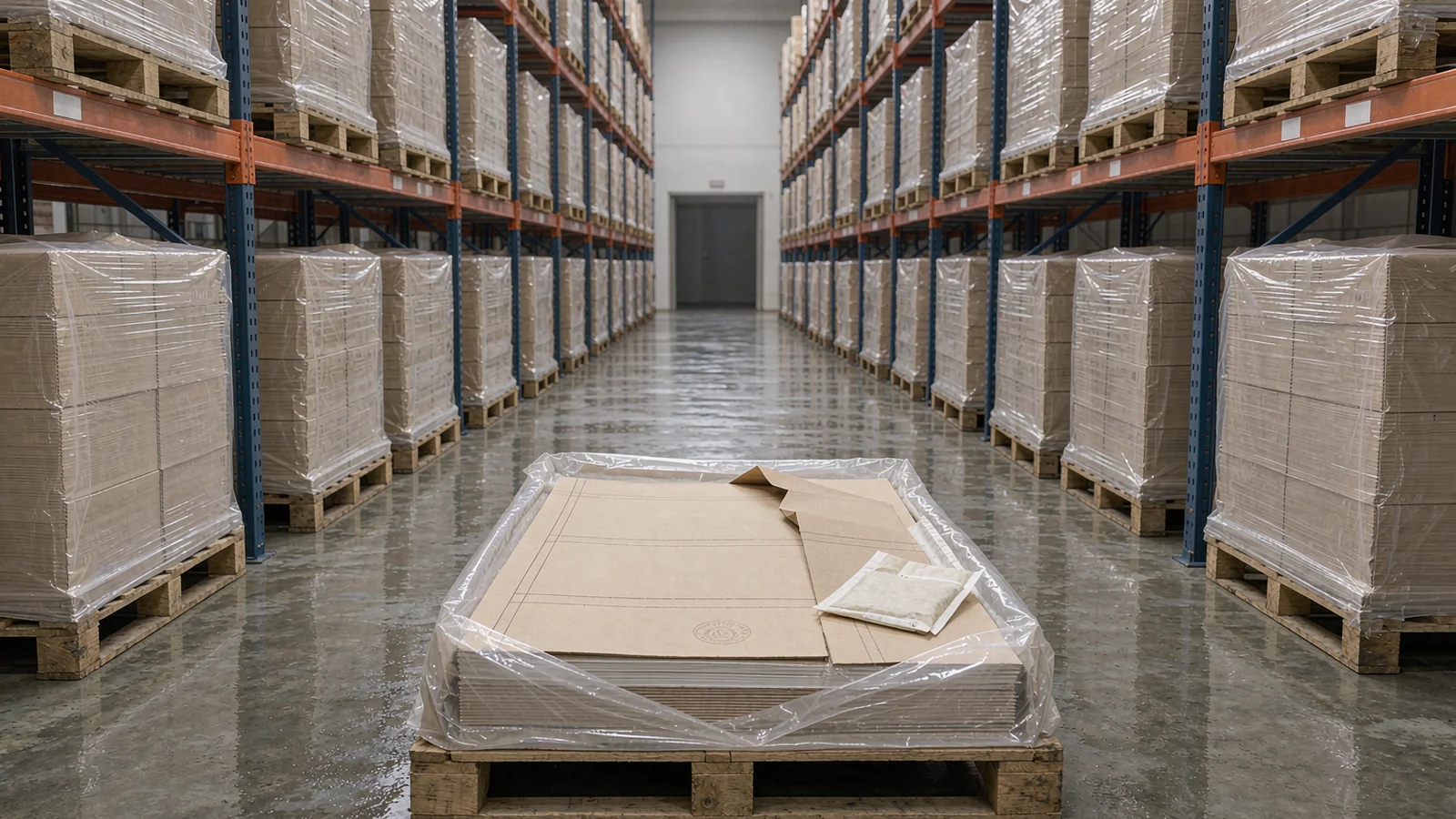
Wholesale buyers who have handled rejected paper shipments recognise a small set of recurring scenarios. The first is a humid-climate ocean shipment without adequate overwrap: containers crossing tropical routes experience repeated condensation cycles, and carton edges wick moisture into the stack, producing elevated mold counts at the outer layers while inner cartons test clean. The prevention is packaging engineering, not tighter specifications — inner liners, sealed pallet overwrap and desiccants matched to the route length.
The second scenario is a converting gap: the mill supplies compliant jumbo rolls, but the slitting and sheeting subcontractor operates a dusty or damp workshop, and the converted product arrives with a higher count than the base material. Buyers should test finished goods, not base material, and ask where converting takes place. The third is warehouse cross-contamination, where paper pallets are stored beside wet goods or under a leaking roof nobody inspects. All three share one lesson: microbiological results are a property of the whole chain, and a specification that ignores transit and storage will keep producing surprises regardless of how well the factory performs.
How to Read a Supplier's Test Report
A usable microbiological report contains more than a pass mark. Check that it identifies the testing laboratory and whether that lab is accredited, the reference method used, the sample description including batch number and production date, the test date relative to production, and the result with units. Compare the method on the report with the method in your specification; results from different methods are not interchangeable, and a mismatch is grounds to request retesting.
Be cautious with reports that are undated, that cite internal methods without detail, or that always show perfect results across years of batches. Ask the supplier how frequently they test, whether testing is per production batch or per period, and whether third-party laboratories are used. A credible manufacturer answers without hesitation and can show a testing log.
Sampling Plans and Inbound Verification
Supplier reports reflect the sample the supplier chose to test. Wholesale buyers importing at scale should build periodic independent verification into their quality program: draw samples from randomly selected cartons across a received lot, send them to an accredited third-party laboratory, and track results over time against the supplier's certificates.
Sampling technique matters. Use sterile gloves and sterile bags, sample from outer cartons and interior layers, and note storage conditions at receipt. If a container arrived with moisture damage, test the affected pallets specifically, since elevated moisture is the primary driver of mold growth in transit. Document the chain from container opening to laboratory submission so a failure can be traced to a cause rather than disputed.
Storage and Transit: Keeping Results Meaningful
Microbiological quality at the factory gate can be undone by the last kilometre of the supply chain. Paper absorbs moisture from humid air, and mold can establish on packaging paper stored in damp warehouses or shipped in unventilated containers crossing humid climates. Buyers should require moisture-protective packaging — inner liners, sealed overwrap, desiccants where routes demand — and specify container handling terms for long ocean shipments. At the receiving warehouse, paper should be stored off concrete floors, away from exterior walls, in dry temperature-stable conditions, and kept in original overwrap until use. First-in-first-out rotation limits storage time, and periodic humidity checks turn a theoretical risk into a managed parameter.
FAQ
What is an acceptable total plate count for food packaging paper?
It depends on the application and the customer's standards, but commercial food-grade specifications commonly set TPC in the low hundreds of CFU per gram with yeast and mold similarly capped. Always define the method and sampling basis together with the numeric limit.
Is mold on packaging paper a food safety risk?
Mold on the packaging itself primarily signals moisture exposure and poor storage, and it can transfer odour, spoilage organisms and staining to foods in direct or close contact. Most buyers treat any visible mold as an automatic rejection regardless of the formal spec.
How often should we test supplier batches independently?
Importers typically verify microbiological quality per shipment or per supplier lot through batch certificates, and run independent third-party testing periodically — quarterly, or on new suppliers and after any transit incident.
Which test methods should a specification reference?
Reference internationally recognised standard methods for aerobic colony count and yeast and mold count on paper, and insist the certificate cites the same method. Method consistency is what makes results comparable across batches and suppliers.
Conclusion
Microbiological testing is the quiet half of food packaging paper compliance. TPC and yeast and mold counts do not make headlines the way chemical contaminants do, but they decide whether a shipment clears incoming inspection, and they are sensitive to everything after production: packaging, transit, and warehouse humidity. Buyers who specify limits with methods and sampling bases, read supplier reports critically, verify independently on a schedule, and control the storage environment will convert an invisible risk into a documented, managed one. In B2B supply, that documentation is the product. Our custom silicone-coated baking parchment paper programme is audited against the same standards referenced in this guide.
CTA
LANGMAI supplies food-grade baking paper, cake cups and food packaging paper with batch-level certificates of analysis covering microbiological and chemical parameters, moisture-protective export packaging and full food-contact documentation. Контакты our wholesale team to review our testing program and request a quotation.
Sources
- ISO standard methods for paper and board microbiological analysis, including aerobic colony count and yeast and mold enumeration
- European Commission, Commission Regulation (EU) 2023/2006 on good manufacturing practice for food contact materials
- U.S. FDA, 21 CFR 176.170, Paper and paperboard components in contact with aqueous and fatty foods
- Industry guidance on warehouse humidity control and ocean freight moisture protection for paper packaging