
Introduction
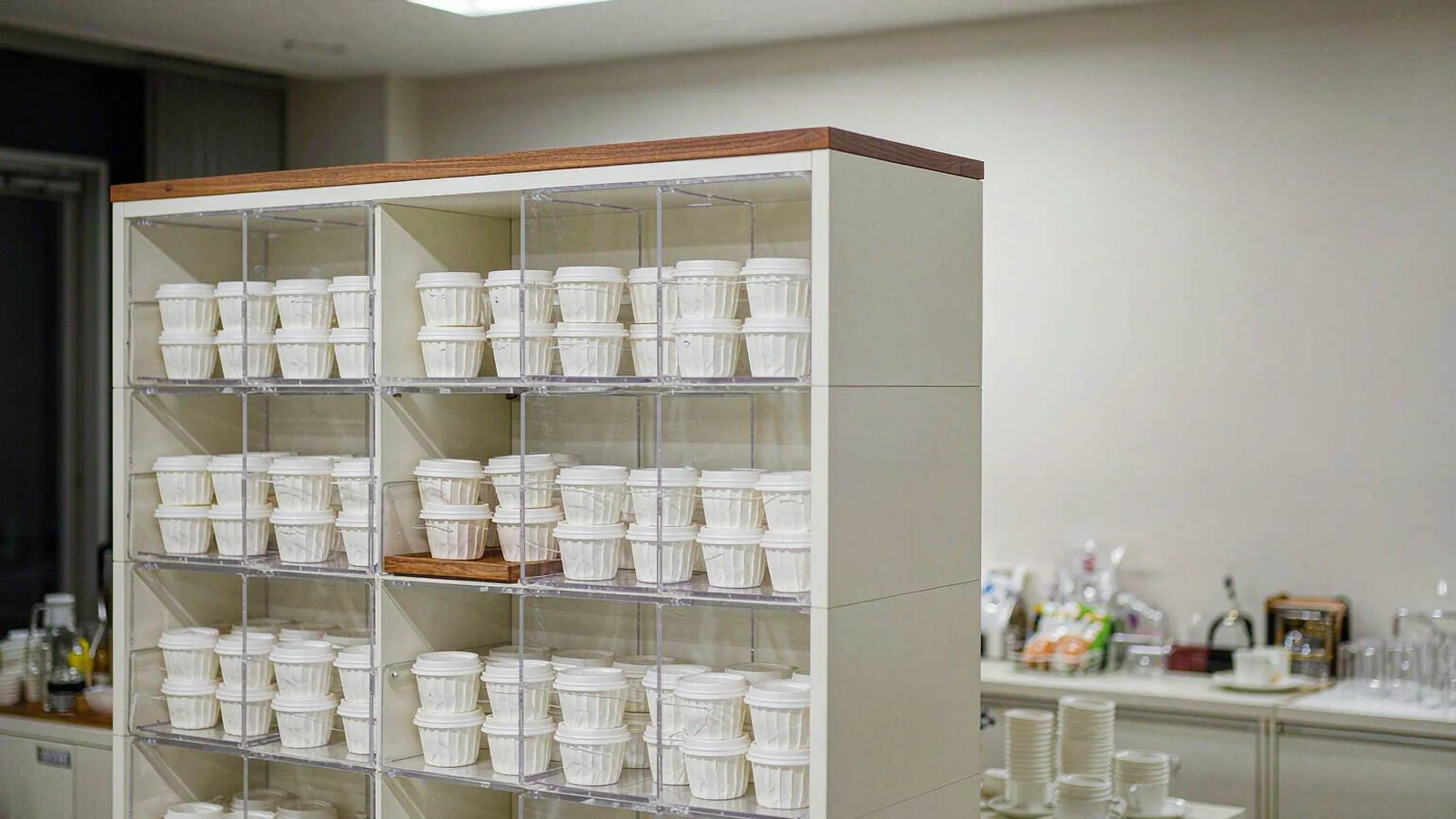
Unattended retail is one of the most demanding channels for single-serve food packaging. Vending machines and micro-markets move desserts and chilled treats through spiral dispensers and canisters where the pack must do the work of a shop assistant: hold its shape, release cleanly, and stay presentable through weeks of transit and restocking. A cake cup that performs in a bakery cabinet can fail inside a vending spiral. This guide covers nesting and denesting behaviour, stiffness for automated dispensing, food-contact compliance for ambient shelf-life products, single-serve hygiene expectations, and the MOQ and logistics realities of route-based restocking. Cup programmes usually ship alongside pan lining; our wholesale parchment paper rolls and sheets specs cover the sheets and rolls that pair with them.
Why Vending and Micro-Markets Need Purpose-Built Portion Formats
The vending and micro-market channel differs from retail grocery in three ways that affect cup specification. First, products are dispensed by machine: a spiral, elevator or robotic picker must separate one unit from a column of dozens, so every cup in the stack behaves identically or the machine jams. Second, the pack is handled by consumers with no staff present, so edges must stay sealed, grease must not reach outer surfaces, and the cup must survive being tipped, shaken and dropped inside the machine. Third, operators restock by route: a driver fills machines across a territory in one shift, so packaging must arrive machine-ready — pre-nested, counted, and protected against crush in transit.
Portion control is the other driver. Single-serve cups in the 60–240 ml range let operators price by portion, standardise nutrition labels, and fit products into narrow vending shelves. The geometry that works is usually straight-walled or slightly tapered with a defined nesting angle, not the flared tulip shapes favoured for bakery presentation. The difference from bakery sourcing: the machine, not a human, is the customer handling the pack.
Nesting and Denesting: The Behaviour That Makes or Breaks Automated Dispensing
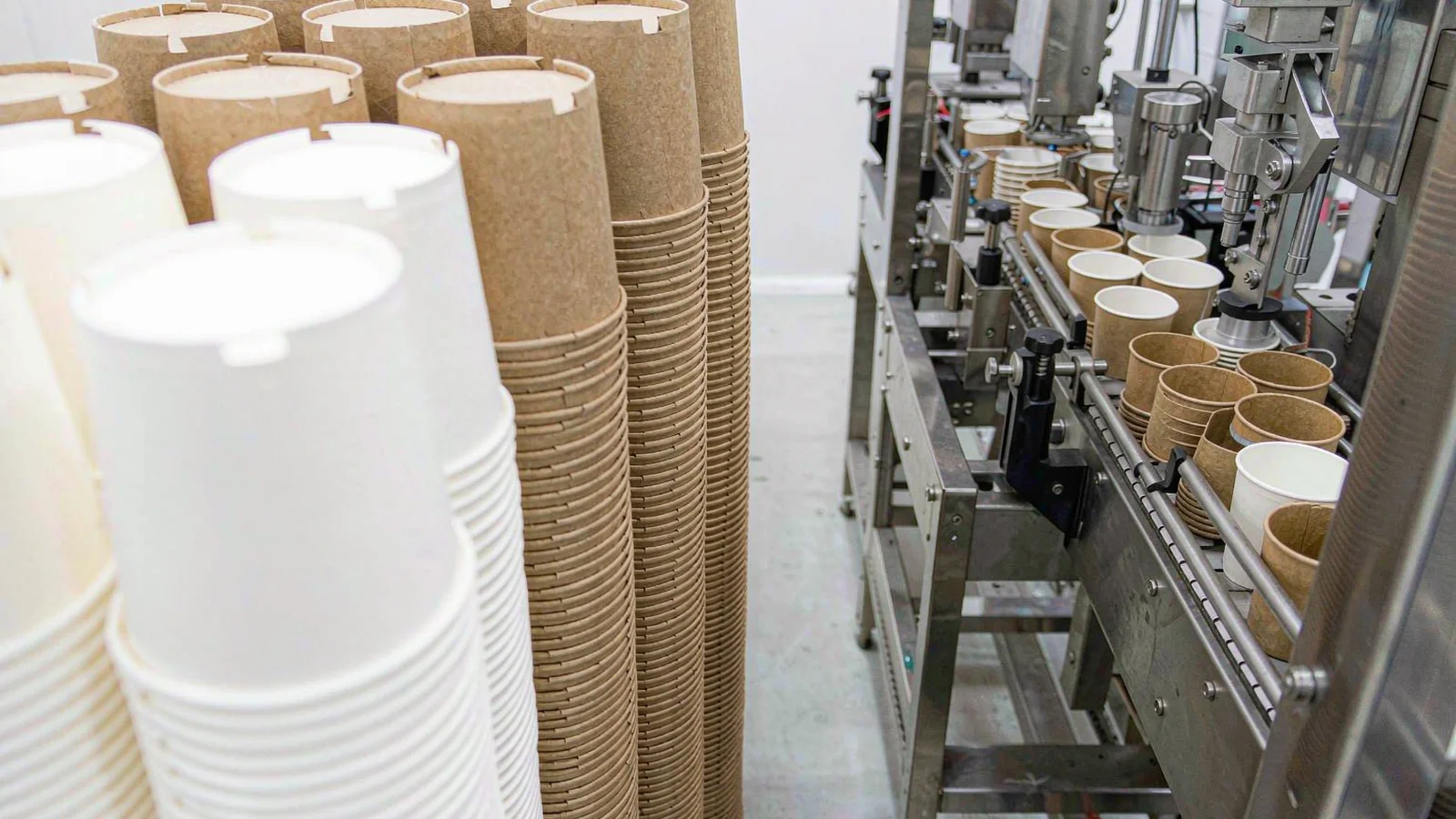
Nesting lets cups ship as compact stacks and load into machine canisters; denesting lets the dispenser separate exactly one cup at a time. The two forces are in permanent tension. If nesting friction is too high, cups cling together and the spiral drags out two or three at once. If it is too low, stacks vibrate apart in transit and arrive scuffed or interlocked at odd angles. Well-engineered vending cups hold separation force within a narrow, repeatable window — verified through denesting tests on loaded columns, not by feel on a sample of ten.
Three specification levers control this behaviour. Side-wall angle determines how deeply cups seat into each other; a steeper taper means shallower nesting and easier separation. Rim geometry — rolled, curled or flat — sets the contact area between consecutive cups. Base stiffness prevents the bottom cup collapsing under the column weight above it, so paperboard selection matters more here than in hand-loaded display. Operators loading third-party machines should request denesting-force data for the target canister; suppliers running their own cup lines can tune these levers per machine model. Where a producer lines trays and moulds product in the same run, our pre-cut parchment paper sheets and rounds are quoted with the cup programme for a single documentation package.
Stiffness, Grease Barrier and Food-Контакты Compliance for Ambient Shelf-Life Продукция
Vending products often sit at ambient temperature for weeks or months between production and purchase, so the packaging must maintain food-contact integrity across a long shelf-life window without refrigeration. The compliance baseline is straightforward: food-contact grades with FDA and LFGB test reports available, backed by batch documentation tracing each shipment to its test record. Cup stock for this channel is typically a grease-resistant paperboard grade — often PEFC- or FSC-certified virgin fibre — sized so wall stiffness keeps the cup cylindrical inside the machine even after warehouse humidity swings. Grease barrier matters just as much: a filled dessert will migrate oil through weak sidewalls during a month at ambient temperature, and oil-stained cups are a hygiene complaint waiting to happen in a self-service setting.
Because no staff member is present, single-serve hygiene expectations are absolute: cups arrive closed or lidded where the product requires it, the food-contact surface stays untouched between packaging and purchase, and outer print must not transfer through the barrier layer. Operators should ask how the food-contact layer and decorative print layer are separated, and request migration documentation for the exact ink system. The factory and certificate library lists the third-party audits and test reports behind these claims. For products baked or filled in-house, our silicone-coated parchment sheets and rolls programme publishes coating-weight and release data per grade so the full pack-out line stays within one compliance file.
Индивидуальный заказ for Operators and MOQ / Logistics for Route-Based Restocking
Operators use packaging as their storefront in unattended retail, so customization carries extra weight. The practical menu includes brand print on the sidewall, colour matching to the machine or brand palette, private-label lids, and portion-band differentiation — small, medium and large cups in one visual family so a shelf reads as a coherent range. Flexo printing is the workhorse for volume programmes; buyers should confirm the ink system is specified for food-adjacent exterior use and that registration tolerances suit the cup's taper, because a design that looks right on a flat dieline can drift on a tapered wall.
MOQ and logistics decide whether the programme is profitable at route scale. Operators restock in small, frequent drops rather than large orders, but manufacturer economics run the other way, so the standard structure is a moderate MOQ per design with staggered call-off from a single production run — order once, release in tranches matching route capacity. Stacks should ship pre-nested and shrouded, with carton counts aligned to full canister fills so drivers refill without counting or decanting. Consolidating the cup order with adjacent consumables cuts freight and documentation overhead in one move: our wholesale parchment paper rolls and sheets are quoted with the cup programme to share pallet space, testing files and lead times.
FAQ
Can standard bakery cake cups be loaded directly into vending machines?
Rarely. Bakery display cups are optimised for hand-loading and presentation, with flared walls and loose nesting that cause misfeeds in spirals. Vending formats need controlled nesting depth, consistent rim geometry and verified denesting force for the target canister.
What compliance documentation should a vending operator request from a cup supplier?
At minimum: food-contact test reports at the FDA/LFGB level for the cup grade, migration documentation for the print system, and traceability records linking shipped batches to their test files. Suppliers supplying self-service channels should support all three without friction.
How are cup quantities matched to vending canisters?
Best practice is to specify stack heights and carton counts as multiples of a full canister fill for the target machine model, so route drivers load directly from the shipper. This is agreed during sampling, alongside denesting-force validation.
What MOQ applies to customized portion cups for micro-market programmes?
Typical structures start at a few tens of thousands of cups per design, with call-off scheduling that releases stock in route-sized tranches. Multi-design orders within one portion family can often share a production run, lowering the effective MOQ per SKU.
Conclusion
Sourcing cake cups for vending machines and micro-markets is a mechanical-engineering problem as much as a packaging purchase. The cup must nest tightly enough to load efficiently, denest reliably enough to feed one unit per cycle, hold stiffness and grease barrier through ambient shelf-life distribution, and carry the operator's brand on a surface the consumer trusts. Buyers who anchor their specification on denesting behaviour, documented FDA/LFGB-level compliance and route-aligned carton counts will avoid the two classic failures of this channel: machine jams at the canister, and stained packs at the shelf. Buyers standardising on one paper supplier can review our silicone-coated parchment sheets and rolls next to their cup specifications, and verify claims through the certificate library alongside supplier documentation requests.
CTA
Planning a portion-cup programme for vending or micro-market routes? LANGMAI manufactures paper cake cups and portion formats with tunable nesting behaviour, food-contact grades supplied with FDA/LFGB test reports, and flexo customization from your artwork. Request a quotation with denesting test data and route-ready carton counts — sampling and call-off scheduling can be matched to your restocking calendar.
Sources
- U.S. Food and Drug Administration — Food Контакты Substances (FCS): https://www.fda.gov/food/packaging-food-contact-substances-fcs/food-contact-substances-fcs
- eCFR — 21 CFR Part 176, Indirect Food Additives: Paper and Paperboard Components: https://www.ecfr.gov/current/title-21/chapter-II/subchapter-B/part-176
- Regulation (EC) No 1935/2004 on materials and articles intended to come into contact with food: https://eur-lex.europa.eu/legal-content/EN/TXT/?uri=celex%3A32004R1935
- National Automatic Merchandising Association (NAMA) — unattended retail industry resources: https://namanow.org/