Introduction
Baking paper looks indestructible in its packaging, but it is a hygroscopic cellulose product with a silicone coating, and warehouse conditions quietly shape its performance when it reaches the bakery. Distributors who store paper well deliver product that lies flat, releases cleanly, and matches the supplier's specification. Distributors who store it badly — on damp floors, under oversize stacks, in front of open dock doors — deliver curled sheets, sticking patches, and boxes that fail customer receiving inspection. The complaints rarely say "storage problem"; they say "quality problem." The root cause is often in the warehouse, not the mill. Buyers comparing these specifications can review our wholesale parchment paper rolls and sheets programme, where coating weight, base grammage and release values are documented per construction.
This guide covers the practical rules for storing and handling baking paper, baking cups, and food packaging paper: environmental targets, pallet and stacking practice, shelf life expectations, FIFO rotation, and the handling errors that generate most quality claims. Buyers verifying these specifications can review the certificate library alongside supplier documentation requests.
Why Paper Is Sensitive: Moisture and the Coating
Paper absorbs and releases moisture with the surrounding air until it reaches equilibrium. As moisture content shifts, paper dimensions change — this is why sheets curl and why rolls develop edge waviness. For silicone-coated baking paper, humidity swings can also affect the surface release uniformity and the flatness of precut sheets, which matters enormously to bakery customers who auto-dispense sheets onto trays. For production volumes, the same construction logic applies to our baking parchment paper manufacturing programme line, quoted per roll, sheet or die-cut format.
The reverse risk is overdrying: very low humidity and high heat can make paper brittle and increase static, causing sheets to cling during dispensing. The goal of storage control is stability, not a single magic number — avoid rapid swings and keep conditions in a moderate band. The factory and certificate library lists the third-party audits and test reports behind these claims.
Recommended Storage Conditions
Practical targets used across the paper distribution trade:
- Relative humidity: maintain roughly 45–55% RH. Below this band paper dries and becomes brittle; above it, moisture uptake, curl, and edge wicking increase.
- Temperature: stable 15–25°C. Rapid temperature drops on cold paper cause condensation, so let cold-delivered goods acclimate before opening cartons.
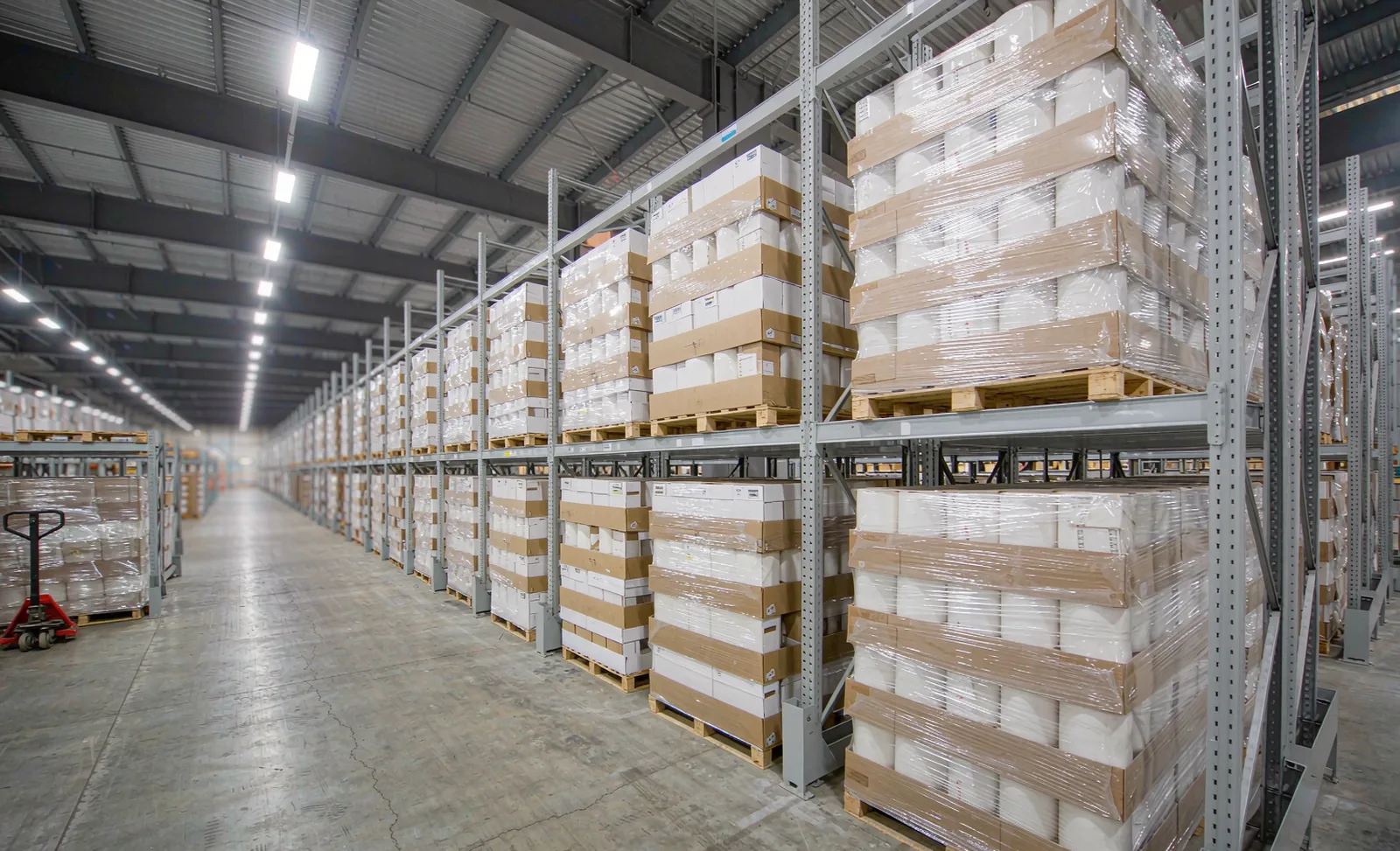
- Floors and walls: store pallets on dunnage or racking, never directly on concrete floors, and keep clearance from exterior walls where condensation and temperature gradients form.
- Dock doors: avoid staging pallets near open doors or HVAC discharges; localized drafts are a common cause of edge curl in otherwise well-run warehouses.
- Sunlight: keep product out of direct sunlight, which ages packaging film and heats unevenly.
For distributors without climate control, prioritize the controllables: keep product off floors, away from walls and doors, and shrink-wrapped until the point of picking.
Pallet Stacking and Packaging Integrity
Stacking practice causes as many claims as climate does. Follow these rules:
- Respect stacking limits — excessive column loads crush lower cartons and dent roll cores; dented cores cause rolls to run eccentric on dispensers. Follow the supplier's stated maximum stack height.
- Keep cartons flat and square; cross-stacked or overhanging cartons transfer loads to edges and corners.
- Do not open master cartons until needed; the carton and film are the moisture barrier. Re-seal partially picked cartons with intact film or lids.
- Inspect wrap on arrival: torn film at the point of a forklift strike often correlates with crushed inner cartons. Photograph and log damage before putaway.
- Store sleeves and boxes of baking cups upright; baking cups are formed products, and sideways storage or heavy top loading deforms the cup walls, causing flaring problems on filling lines.
Shelf Life: What Is Realistic
Baking paper does not "expire" in the food-safety sense — it is not an ingredient — but it has a practical shelf life during which performance remains fully within specification. Well-made silicone-coated baking paper stored in intact packaging under stable conditions typically performs to specification for several years; most manufacturers state conservative best-use windows on their specifications. Silicone release liners and coated papers can show gradual release changes over very long storage, which is why rotation discipline matters more than a hard expiry date.
Practical guidance for distributors:
- Store to the specification sheet's stated storage conditions and note the manufacturer's stated shelf life; treat it as a performance warranty window, not a safety cutoff.
- Write the receiving date on each pallet or lot; without lot dating, FIFO becomes guesswork.
- When quoting long-term contracts with slow movers, negotiate lot-fresh supply rather than warehousing years of stock.
FIFO Rotation and Lot Traceability
First-in, first-out is the standard for food packaging inventory, and it doubles as traceability infrastructure. When a customer reports a release or curl problem, the distributor's first question from the supplier will be: which lot, which production date, and how was it stored? If FIFO is enforced with clear lane marking, lot labels facing outward, and picking systems that enforce rotation, answering that question takes minutes. If the warehouse runs on informal rotation, the answer may be unavailable — and the claim may become the distributor's cost.
Practical FIFO measures: dedicated lanes per SKU with oldest stock forward, lot labels visible without moving pallets, system-enforced pick sequencing where a WMS exists, and a rule that no new lot is put away in front of an older one even when picking shortcuts are tempting.
Handling Errors That Generate Claims
The recurring causes of quality claims in distribution:
- Water contact from roof leaks, condensation drip lines, or wet mopping near paper storage — even brief soaking ruins cartons and wicks into stacks.
- Forklift handling that crushes carton corners, denting roll cores and deforming baking cup sleeves.
- Dropping rolls onto their ends, flattening cores and edges.
- Leaving cartons open overnight in humid conditions, allowing moisture uptake.
- Mixing old and new stock in the same lane, breaking both FIFO and traceability.
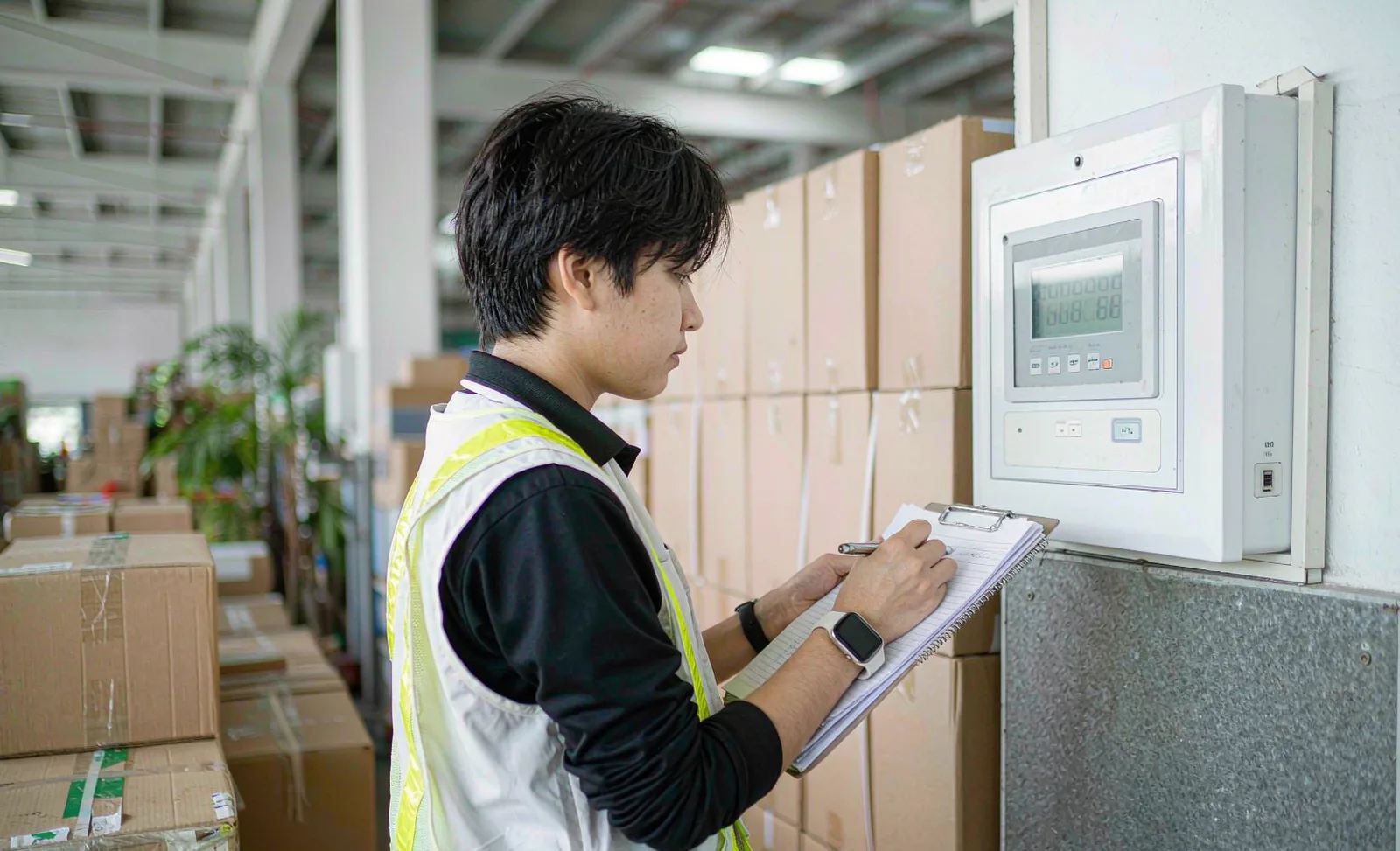
A short monthly warehouse audit against this list is inexpensive insurance: walk the paper zone, check floor clearance, wrap integrity, stack heights, and lot label visibility.
FAQ
Q: What humidity is best for storing baking paper?
A: Aim for a stable 45–55% relative humidity at roughly 15–25°C. The priority is stability — avoid rapid swings and condensation risks, keep pallets off concrete floors and away from exterior walls, dock doors, and HVAC discharges.
Q: Does baking paper have an expiry date?
A: Not a food-safety expiry. It has a practical shelf life stated on the manufacturer's specification — typically several years in intact packaging under proper storage — during which release performance and flatness remain within specification. Manage it with FIFO rotation and lot dating rather than treating it as perishable stock.
Q: How should baking cups be stored?
A: Upright in their sleeves and boxes, protected from side loading and heavy stacking. Baking cups are formed products; deformed walls from poor storage cause flaring and filling-line problems at the customer. Keep them sealed in original packaging until picking.
Q: Why is FIFO so important for paper products?
A: It keeps performance consistent and preserves traceability. When a customer claim arises, lot-level records let you and your supplier pinpoint production date and storage history quickly. Warehouses without enforced FIFO often cannot answer those questions, and claims cost escalation follows.
Conclusion
Warehouse quality is product quality for paper distribution. Stable humidity and temperature, clean pallet and stacking practice, lot-dated FIFO rotation, and disciplined handling protect both the physical performance of baking paper and the traceability your customers audit. Distributors who treat storage as part of the product specification see fewer claims, smoother receiving inspections, and stronger supplier relationships — because when something does go wrong, the evidence trail is intact and the conversation starts from facts. Our private-label parchment paper supplier programme publishes the test data behind each grade so specifications can be verified before ordering.
Call to Action
LANGMAI supplies silicone-coated baking paper, cake cups, and food packaging paper to distributors worldwide, with lot-traceable shipments, specification-backed shelf life statements, and export-grade pallet packaging. Discuss your storage and supply requirements at https://www.lmcakecup.com.
Sources
- European Commission — Food safety: food contact materials: https://food.ec.europa.eu/food-safety/food-contact-materials_en
- FDA — Food Контакты Substances program: https://www.fda.gov/food/food-ingredients-packaging/food-contact-substances-fcs
- TAPPI — Technical resources on paper properties including moisture content: https://www.tappi.org
- ISO — Packaging and distribution standards overview: https://www.iso.org
- FoodSafety.gov — Food storage guidance context: https://www.foodsafety.gov