Introduction
Every bakery, hotel kitchen, and central production facility eventually faces the same procurement decision: baking paper or aluminium foil? On a spec sheet the two materials can look interchangeable — both line trays, both go into ovens, both are sold by the roll or sheet. In practice they behave very differently, and the difference shows up in three places buyers care about: cost per use, baking performance, and food-contact compliance. Choosing the wrong material for an application means wasted product, sticking trays, or a compliance file that fails a customer audit. Buyers comparing these specifications can review our silicone-coated parchment sheets and rolls programme, where coating weight, base grammage and release values are documented per construction.
This guide compares the two materials from a wholesale purchasing perspective — how they are made, what they cost in real-world use, how they perform under heat and moisture, what compliance documentation each requires, and how to structure a purchase that covers both needs where appropriate. Buyers verifying these specifications can review the certificate library alongside supplier documentation requests.
How the Two Materials Differ in Structure
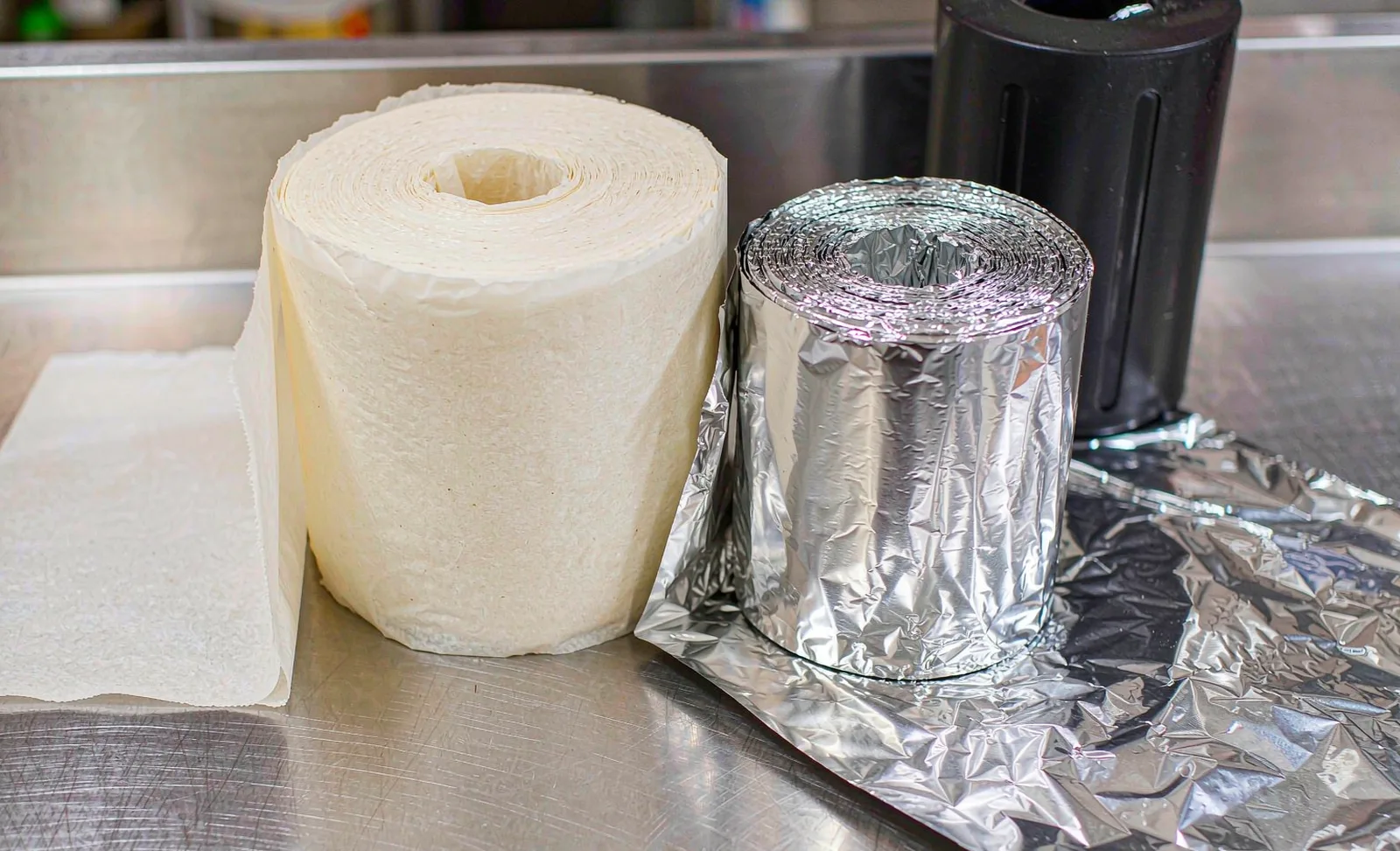
Baking paper — often called parchment paper or silicone paper — is a cellulose-based paper, typically 38–60 gsm, treated with a silicone coating that provides non-stick release. Quality baking paper is also greaseproof, achieved either through dense refining or a double-sided silicone application. Aluminium foil is a metal product: a thin sheet of aluminium, usually 9–18 microns in household and foodservice gauges, formed by rolling and annealing. For production volumes, the same construction logic applies to our food-grade die-cut parchment rounds line, quoted per roll, sheet or die-cut format.
The structural difference drives almost everything else. Paper is insulating and moisture-permeable to a degree; foil is conductive and an absolute barrier to moisture, grease, and aroma. Neither is "better" universally — the right answer depends on the application, which is why mixed purchasing is common in professional kitchens. The factory and certificate library lists the third-party audits and test reports behind these claims.
Performance Comparison in the Oven
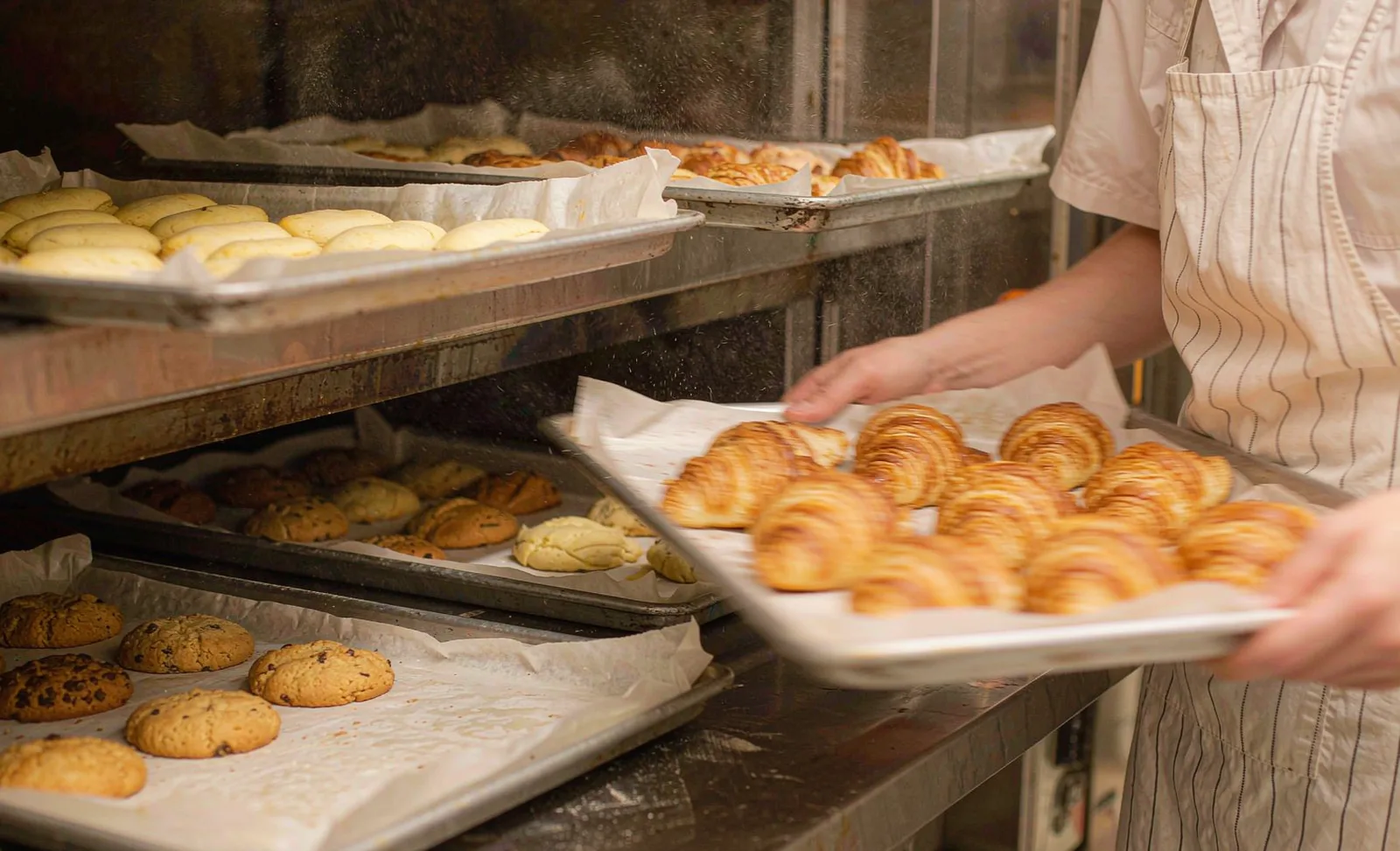
For direct baking contact — cookies, cakes, pastries, bread — baking paper is the standard. Silicone release prevents batter and dough from sticking without greasing the pan, sheets lie flat, and products bake evenly. Foil has no release properties: anything baked directly on foil will stick unless the surface is oiled, and foil can transfer a metallic taste to acidic foods during long contact.
For heat conduction and wrapping, foil wins. Roasting vegetables or meats where browning is desired, wrapping baked potatoes, covering dishes to prevent over-browning — these are foil applications. Foil also forms a vapor-tight wrap for freezing and transport, which paper cannot match.
Bakeries most often use paper for line work (tray lining, layering between products, banding) and foil for wrapping and covering. A useful rule for procurement: map your menu to contact type. Direct baked-goods contact favors paper; vapor barrier and conduction favors foil.
Cost Per Use: The Number That Matters
Wholesale pricing comparisons by roll are misleading because the two materials consume at different rates. The meaningful metric is cost per tray or cost per use.
Baking paper is used once in most production settings, but a full-cover sheet line serves an entire tray, and quality parchment releases cleanly, so yield is predictable. Foil is often cheaper per square meter at commodity gauges, but the usable cost picture changes with usage patterns: foil for direct baking usually needs oiling (added labor and oil cost), and thin foils tear during wrapping, generating waste. Additionally, foil trays and wraps used for presentation or transport can double up with paper liners, meaning kitchens that standardize on foil alone often end up buying paper anyway for release purposes.
When modeling cost, buyers should request: grammage and sheet count per case, sheets per tray coverage, and expected waste rates from their own trial runs. A trial on your own products — the same recipe on both materials — produces numbers no supplier price list can match.
Food-Контакты Compliance Requirements
Both materials are food-contact articles, but they are regulated differently, and buyers should collect different documentation.
Baking paper sold into the US market should be supported by compliance with 21 CFR 176.170/176.180, covering paper components in contact with aqueous, fatty, and dry foods, including the high-temperature conditions of use relevant to baking. In the EU, paper and board food contact falls under Framework Regulation (EC) No 1935/2004 plus national measures such as the German BfR recommendations for paper and board. Buyers should expect a specification sheet, a declaration of compliance, and migration or extractives data from an accredited laboratory.
Aluminium foil in food contact is addressed in the US under FDA regulations for food-contact substances, and in Europe under the Council of Europe's metals and alloys resolution plus national implementations. The key practical point for buyers: a foil supplier's documentation will not satisfy a baking paper audit, and vice versa. If you purchase both, maintain two separate compliance files.
For both materials, ask whether the documentation covers your actual conditions of use — oven temperatures, fatty foods, long contact times. A compliance statement written for ambient dry contact is not evidence for a 200°C baking application.
Sourcing Considerations for Wholesale Buyers
When evaluating suppliers for either material, buyers should weigh:
- Consistency of grammage and coating weight between shipments — the most common cause of on-site performance variation.
- Format availability: rolls, half-sheet and full-sheet precuts, and custom sizes that reduce cutting labor.
- Minimum order quantities and mixed-SKU consolidation, especially if you need both materials from one supplier base.
- Documentation quality per shipment, tied to specification revisions.
- Lead time reliability and packaging that protects paper from moisture in transit.
Consolidating both materials with fewer suppliers simplifies compliance management and freight, but only if the supplier can evidence compliance for each material category — a paper specialist and a foil converter are different competencies.
FAQ
Q: Can I substitute aluminium foil for baking paper in cookies and cakes?
A: Not without adjustments. Foil has no release properties, so cookies and cakes will stick unless the foil is greased, and cleanup increases. For direct baked-goods contact, silicone-coated baking paper is the appropriate material; foil is better reserved for wrapping, roasting, and covering applications.
Q: Which is more cost-effective at wholesale volumes?
A: It depends on application, not unit price. Calculate cost per tray including oiling labor, waste, and rework for foil used in baking applications. For direct baking, baking paper usually wins on total cost because it eliminates greasing and reduces stuck-product loss; for wrapping and transport, foil is often the economical choice.
Q: Do baking paper and foil need different compliance documents?
A: Yes. Baking paper is a paper food-contact product documented under regulations such as FDA 21 CFR 176.170/176.180 in the US and Regulation (EC) No 1935/2004 with national paper measures in the EU. Aluminium foil is documented under metals and food-contact substance rules. Maintain separate files per material and verify each covers your oven and food-contact conditions.
Q: Should a bakery buy both materials?
A: Most professional kitchens do. Baking paper handles tray lining, release, and layering; foil handles wrapping, covering, and roasting. Mapping menu items to contact types prevents both overbuying one material and misusing the other.
Conclusion
Baking paper and aluminium foil are complements, not substitutes — but they are frequently treated as interchangeable in purchasing, which leads to sticking products, hidden oiling costs, and incomplete compliance files. The disciplined approach is to map each application to the material that performs it, model cost per use rather than price per roll, and collect material-specific food-contact documentation that covers your real oven and food conditions. Buyers who do this build a supply base where each material earns its place in the budget. Our custom silicone-coated baking parchment paper programme publishes the test data behind each grade so specifications can be verified before ordering.
Call to Action
LANGMAI is a wholesale manufacturer of silicone-coated baking paper and cake cups, supplying bakeries, foodservice distributors, and private-label programs with full food-contact documentation and custom sheet formats. Request specifications, compliance files, and samples at https://www.lmcakecup.com.
Sources
- eCFR — 21 CFR 176.170, Components of paper and paperboard in contact with aqueous and fatty foods: https://www.ecfr.gov/current/title-21/section-176.170
- FDA — Food Контакты Substances program: https://www.fda.gov/food/food-ingredients-packaging/food-contact-substances-fcs
- European Commission — Materials in contact with food (Framework Regulation 1935/2004): https://food.ec.europa.eu/food-safety/food-contact-materials_en
- German Federal Institute for Risk Assessment (BfR) — Recommendations on food contact materials: https://www.bfr.bund.de/en/home.html
- Council of Europe — Metals and alloys used in food contact materials and articles, technical guide overview: https://www.edqm.eu