Introduction
Ask three factories to quote the same nominal baking paper program and the numbers rarely line up. One prices per kilogram, one per sheet, one per carton loaded at a different sheet count; one quotes FOB and another DDP; one assumes 40 gsm with a full silicone coating and another builds its number on a lighter construction. Buyers who compare the figures as printed often award the program to the cheapest quote on paper and the most expensive one in practice. This guide sets out how procurement teams can compare baking paper supplier quotes properly: why headline prices mislead, how to normalize quotations to a common unit, which specification lines every quote must itemize, how landed cost changes the ranking, and how to weight non-price factors such as samples, lead time and documentation before the contract is signed. Commercial terms on our wholesale parchment paper rolls and sheets page mirror the MOQ, lead-time and documentation structure described here.
1. Why Direct Price Comparisons Mislead Baking Paper Buyers
The core problem is that a baking paper quote is not one number — it is a bundle of assumptions. Unit of sale is the first divergence: per-kilogram pricing rewards light constructions, per-sheet pricing hides grammage differences, and per-carton pricing depends on how many sheets the supplier packs per box. Basis weight is the second: 35 gsm and 45 gsm paper can carry similar per-sheet prices while delivering very different material per unit. Silicone coating is the third; a quotation that says only "non-stick" leaves coating weight, single- or double-sided application and release performance undefined, so two nominally identical prices can cover very different products. Incoterms are the fourth: an FOB quote and a DDP quote differ by freight, insurance, duty and clearance, which can swing the delivered total by double-digit percentages. Finally, quotation validity matters, because pulp and silicone input costs move and a quote valid for 30 days is not comparable to one held for 90. A disciplined comparison therefore starts by refusing to read any headline price until the assumptions underneath it are written down.
2. Normalizing Quotes: Price per Square Meter, per Sheet and per Carton
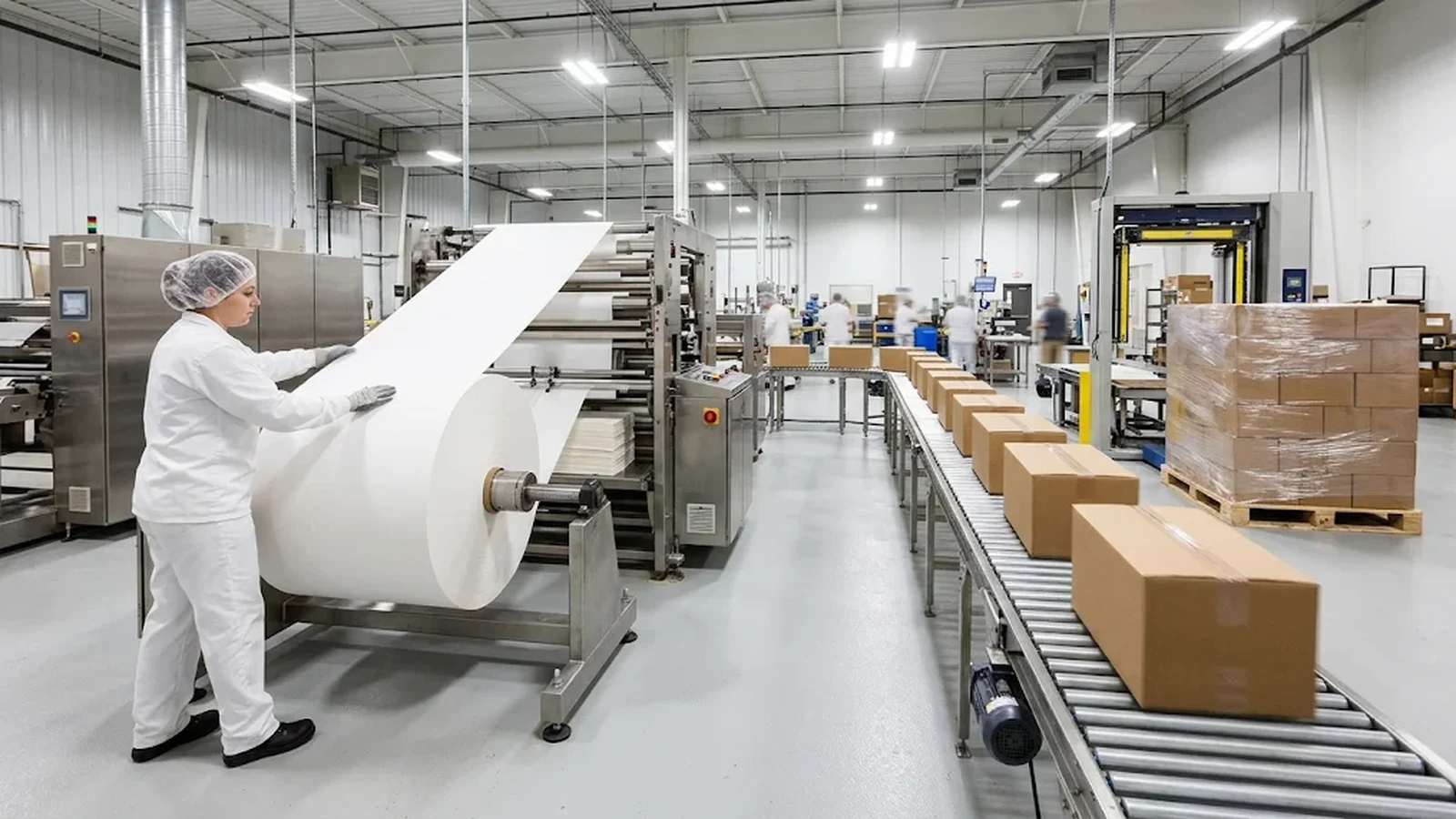
Normalization gives every quote a common denominator. The cleanest paper-level unit is price per square meter: multiply sheet length by width, multiply by sheets per carton, and divide the delivered carton price by total area, so a 40 gsm sheet and a 44 gsm sheet can be compared on real material and coating content rather than on count. The production-level unit is price per usable sheet at your actual size — asking each supplier to quote your drawing, including trim waste and die-cut tooling where relevant, instead of their stock size. The logistics-level unit is price per pallet loaded: carton dimensions and pallet configuration change how many units fit a container, so two equal per-carton prices can still land at different costs per thousand sheets once freight efficiency is counted. Ask every bidder to restate their offer in all three units on the same Incoterm baseline, and require the sheet count per carton and cartons per pallet in writing. Once the units match, the remaining spread between quotes is real information — it points at differences in construction, coating, overhead or margin that deserve questions before the award.
3. Spec-for-Spec Comparison: What Every Quote Must Itemize
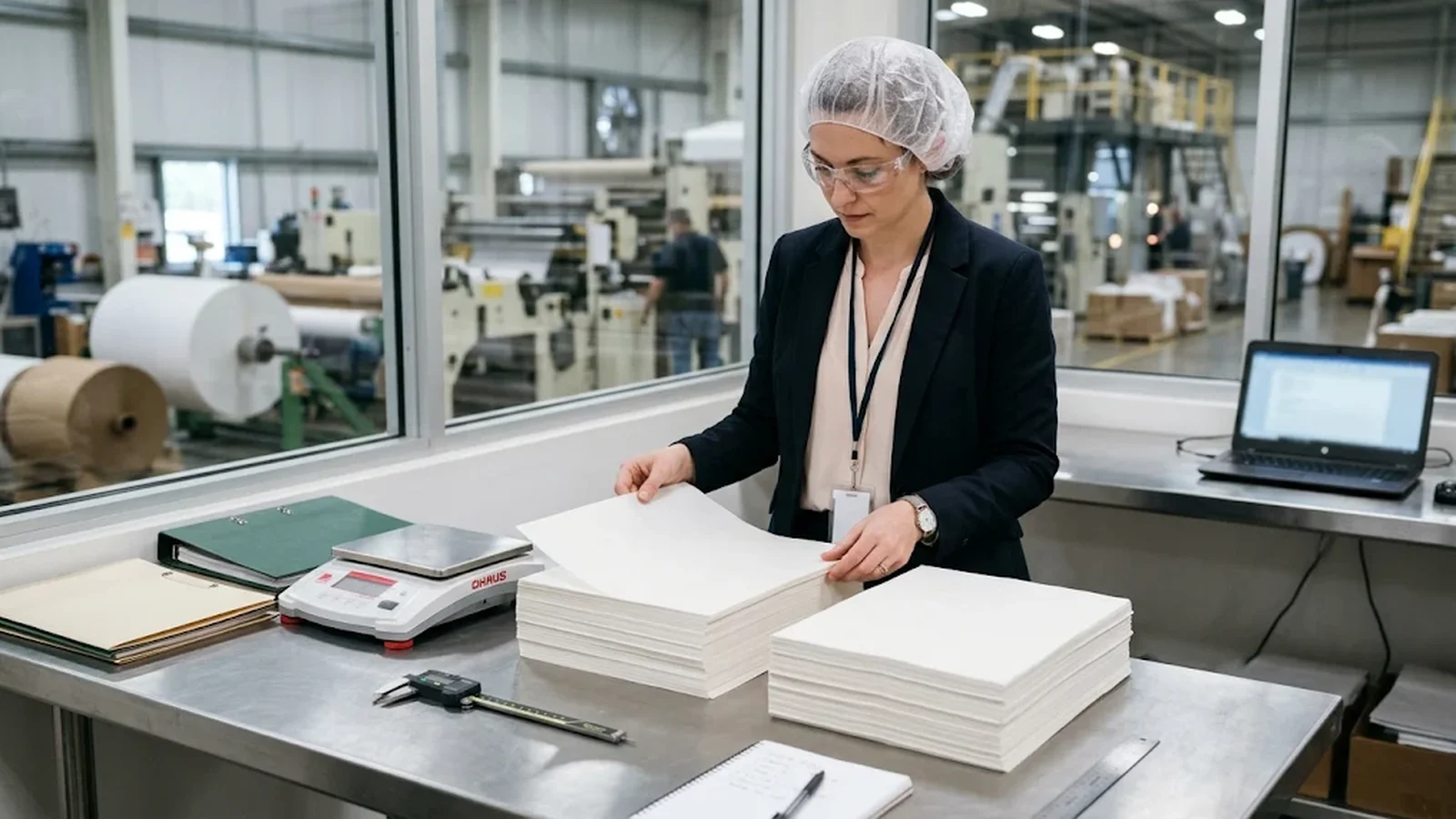
A comparable quote states the construction, not just the price. Require each bidder to itemize: base paper type and grammage (most wholesale baking programs sit in the 35–45+ gsm band), silicone coating weight within the practical 0.7–1.5 g/m² manufacturing range with single- or double-sided application stated, sheet or roll dimensions with tolerance, grease-resistance test method and result, and packaging specification including inner liner and carton count. Food-contact evidence belongs on the quote as well: US programs typically reference the FDA 21 CFR Part 176 framework for paper in contact with food, EU programs ask for a Declaration of Compliance supported by migration testing, and retail customers increasingly require PFAS-free declarations or total organic fluorine screening. A supplier who resists itemizing these lines is not necessarily hiding anything, but an unitemized quote makes verification impossible and weakens your position if quality drifts later. Insist that the quotation and the specification sheet reference each other, so the awarded price and the audited construction are the same document. Our baking parchment paper manufacturing programme publishes the test data behind each grade so specifications can be verified before ordering.
4. Landed Cost: Freight, Duty, Packaging and Payment Terms
For imported baking paper, the delivered cost per carton decides the ranking, not the ex-works number. Build a landed-cost line for every quote: ocean freight at the assumed container utilization, marine insurance, duty under the correct HS classification for your market, port and clearance charges, and inland transport to your warehouse. Packaging choices feed directly into this line — cartons without moisture barriers can arrive flat-stacked and sound, or wavy and blocked after weeks at sea, and the repack or rejection cost belongs in the comparison. Payment terms change the real price too: a 2% discount for payment against documents is worth more than the same 2% offered on open-account terms 60 days later. Quotation validity should be normalized as well; ask all bidders to hold prices for the same window or to state the adjustment mechanism tied to a published pulp index. Weighting these lines converts three superficially different offers into one comparable number per quote, which is the only fair basis for an award.
5. Weighting Non-Price Factors: Samples, Lead Time and Documentation
The lowest normalized price is rarely the lowest total cost of ownership. Sample quality is the first non-price factor: bake the pre-production samples from every finalist on your own product before awarding, because release behavior on your fillings separates quotes that look equal on paper. Lead-time reliability is the second — a supplier who is 4% cheaper but misses the Q4 window costs more than the saving. Documentation quality is the third: confirm that per-lot certificates of analysis, compliance declarations and audit records arrive with the shipment, not after the first complaint. Scoring these factors on a weighted matrix, with price perhaps 60–70% of the total and the remainder split across samples, reliability and documentation, keeps the decision defensible internally. The factory and certificate library lists the third-party audits and test reports behind these claims. A quote that is cheap because it omits coating weight, packaging protection or compliance evidence is not a discount — it is a transfer of risk from the supplier's price to your line.
FAQ
Why do baking paper quotes from different suppliers vary so much?
Because each quote bundles different assumptions: unit of sale, grammage, coating weight, sheet count per carton, Incoterms and validity period. Normalize every offer to price per square meter, per usable sheet and per pallet on the same delivery basis before comparing.
Should we compare baking paper on price per kilogram or per sheet?
Neither alone. Price per kilogram favors light constructions and hides coating content; price per sheet hides grammage. Use price per square meter for material comparison and price per usable sheet at your actual size for production comparison.
What belongs in the landed cost of imported baking paper?
Ocean freight and insurance, duty under the correct HS code, port and clearance charges, inland haulage, and the packaging cost of protecting the paper from ocean-freight moisture. Payment terms and quotation validity should be normalized across bidders as well.
Can we use one supplier's quote to negotiate with another?
Yes, once both are normalized and itemized. Sharing a normalized spec-for-spec comparison signals that you are comparing constructions, not just prices, and moves the negotiation toward coating weight, packaging and documentation instead of a race to the bottom.
Conclusion
Comparing baking paper supplier quotes comes down to four disciplines: refuse headline prices until the assumptions are written down, normalize every offer to price per square meter, per usable sheet and per pallet on one Incoterm baseline, require the construction and compliance lines to be itemized so the awarded price matches the audited spec, and score landed cost together with samples, lead-time reliability and documentation on a weighted matrix. For the paper side of these programmes, buyers can review our silicone-coated parchment sheets and rolls specifications and sample terms. Buyers verifying these specifications can review the certificate library alongside supplier documentation requests.
CTA
Comparing quotes for a wholesale baking paper program? Send us your specification sheet and volume assumptions for an itemized, normalized quotation with pre-production samples.
Sources
- FDA — Indirect Food Additives: Paper and Paperboard Components (21 CFR Part 176): https://www.ecfr.gov/current/title-21/chapter-I/subchapter-B/part-176
- European Commission — Food Контакты Materials: https://food.ec.europa.eu/food-safety/food-contact-materials_en
- TAPPI — Technical Association of the Pulp and Paper Industry: https://www.tappi.org
- U.S. International Trade Commission — Harmonized Tariff Schedule: https://hts.usitc.gov