Introduction
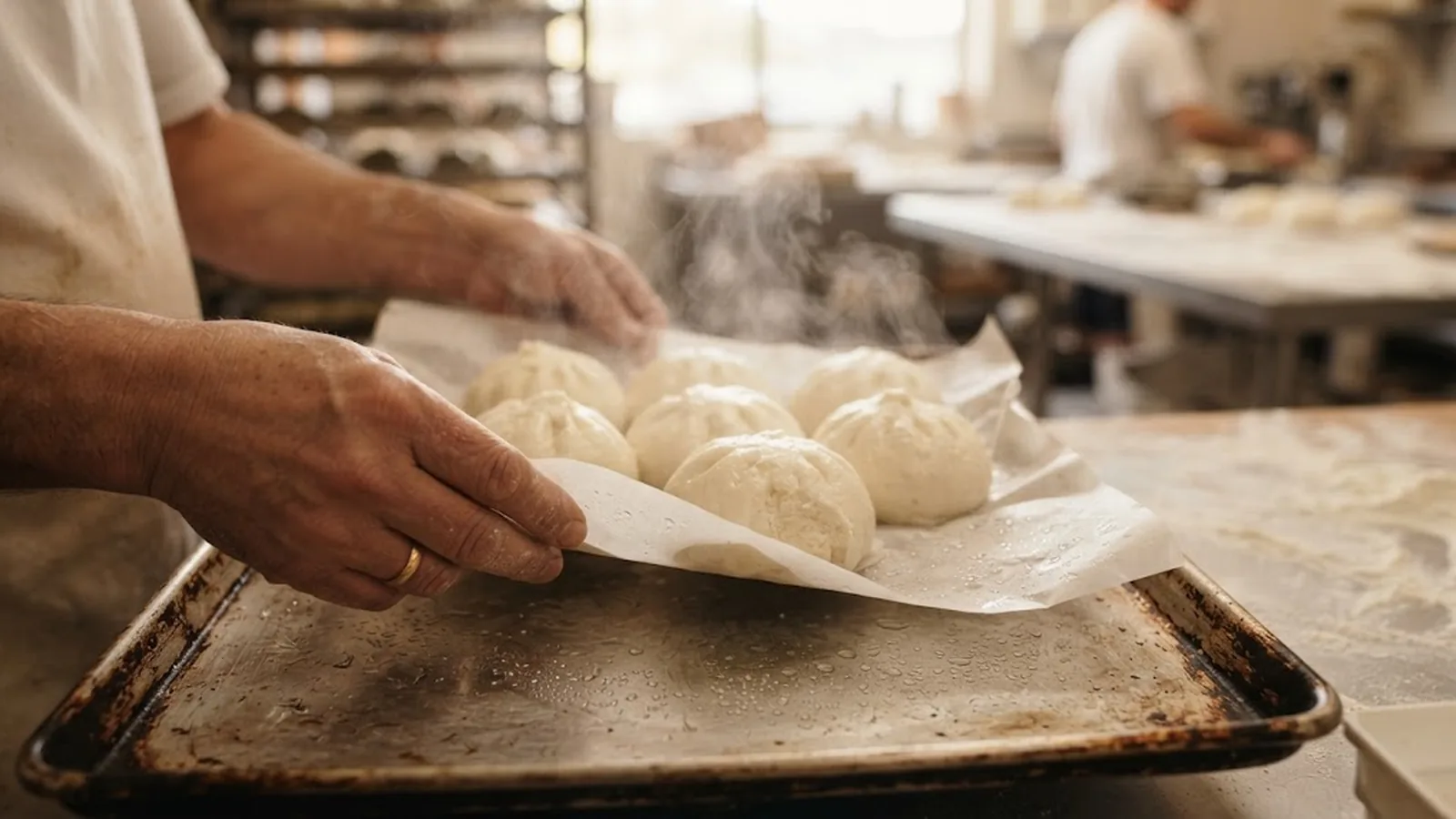
Steam is no longer a niche oven feature. Combi ovens with injection and convection-steam modes have spread from hotel kitchens into restaurant chains, central production kitchens and industrial bakeries, because steam improves crust development, keeps lean doughs from drying and enables gentle, uniform baking of delicate products. Alongside that spread, a practical question reaches wholesale buyers more often than it used to: does the baking paper we specify still behave when the oven is full of vapour? Buyers comparing these specifications can review our custom printed baking parchment paper programme, where coating weight, base grammage and release values are documented per construction.
The short answer is that food-grade silicone-coated baking paper is well suited to steam-assisted baking — moist heat does not approach the coating's temperature limits, and the paper's job of releasing product and protecting trays is unchanged in principle. But steam changes the operating environment in ways that matter at specification level: condensation loads, odour transfer, edge wicking and tray performance between batches all behave differently than in a dry convection oven. Buyers verifying these specifications can review the certificate library alongside supplier documentation requests.
This guide explains what steam baking does to baking paper, where the real temperature and performance limits sit, which products suit which steam applications, and the specification and trial questions buyers should put to suppliers.
1. What Steam Baking Actually Does to the Oven Environment
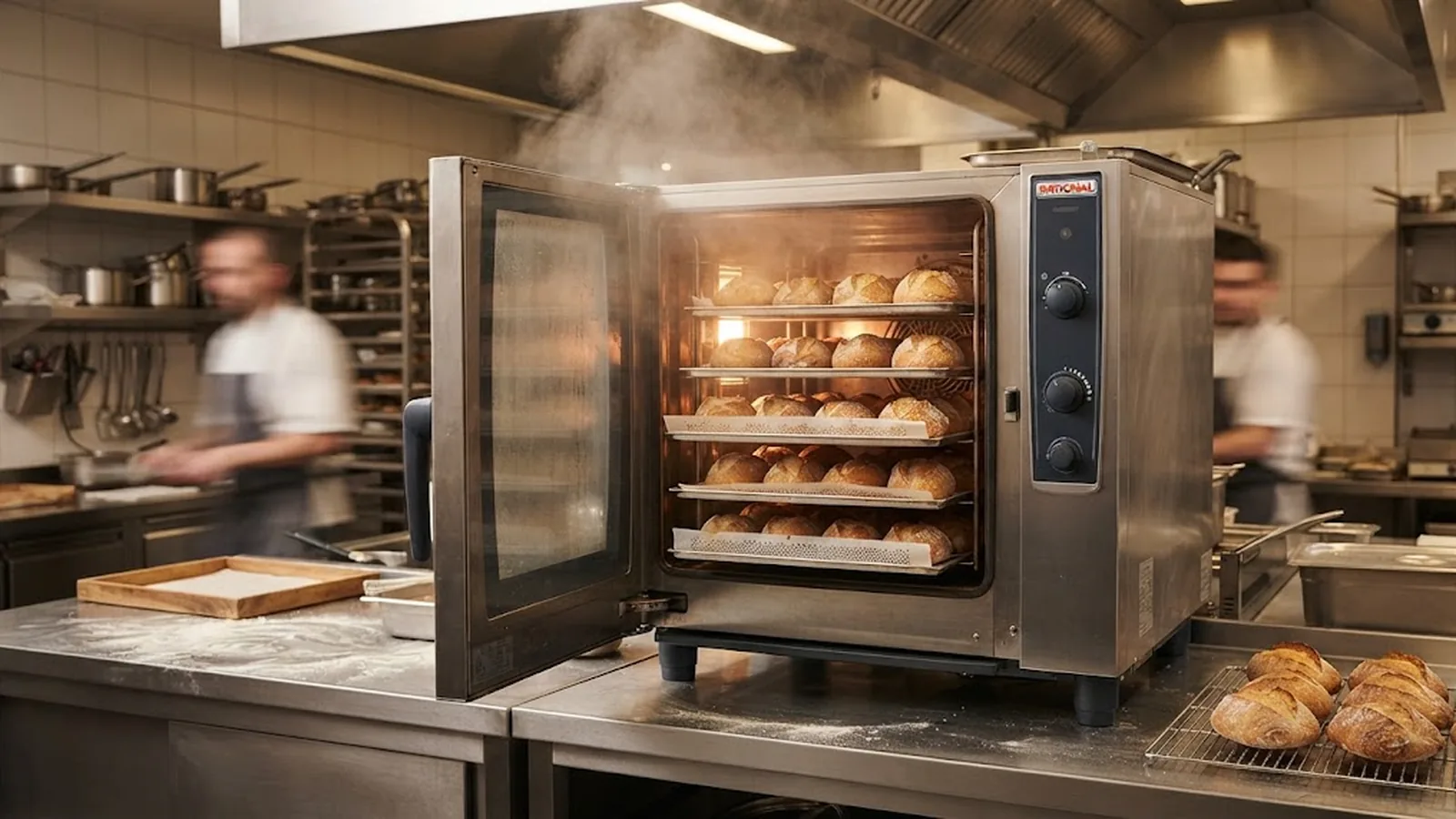
Steam baking spans a spectrum. At one end is a brief burst of injection at load — a few seconds of vapour into a 230 °C chamber, followed by a dry bake, typical for artisan bread and rolls. At the other is sustained moist-heat operation: combi modes holding 50–100 percent humidity at 120–180 °C for steamed puddings, custards, fish or par-baked goods reheated under steam. For production volumes, the same construction logic applies to our silicone-coated parchment sheets and rolls line, quoted per roll, sheet or die-cut format.
The paper in these environments sees three things a dry oven does not present: The factory and certificate library lists the third-party audits and test reports behind these claims.
- Condensation. Early in the cycle, vapour condenses on the coldest surfaces — often the tray and paper before they heat through. Droplet pooling on the sheet is normal and temporary.
- Sustained high humidity. The paper equilibrates with chamber humidity; its moisture content rises a few percent, which slightly softens the fibre network.
- Dripping and splashback. In mixed loads, condensate from walls and ceilings, plus vapour released from the food itself, lands on the sheet during baking.
None of this is unusual for the paper, but all of it changes which failure modes dominate — so buyers should evaluate paper for their steam profile specifically rather than inheriting a dry-oven specification.
2. Temperature and Steam: Where the Real Limits Sit
A common buyer worry is that steam somehow makes paper less heat-tolerant. The physics says otherwise: moist heat transfers energy efficiently, but the paper surface in a steam bake rarely exceeds the chamber set point, and saturated steam at atmospheric pressure cannot exceed 100 °C. Superheated steam and dry convection phases run hotter, but a typical combi cycle keeps sheet temperatures within the comfort zone of silicone-coated baking paper, generally rated for continuous use around 200–220 °C with short excursions higher — the same envelope as dry-heat use.
The limits that actually bite in steam service are practical, not thermal:
- Edge wicking and softening. Condensate wicks into cut sheet edges. Standard grammages recover as the sheet dries, but repeated multi-batch use at high humidity accelerates edge fibre lift. Where trays are re-lined per batch — the normal foodservice pattern — this is a non-issue.
- Release under a wet interface. A pool of condensate between batter and sheet is water, not grease, and releases cleanly; but sugary batters combined with a wet sheet can develop local adhesion as the syrup sets. High-surface-sugar products need the same attention to silicone coat weight in steam ovens as in dry ones.
- Odour and taint in saturated air. Vapour is an efficient carrier. Strongly aromatic foods baked under steam share chamber air more aggressively than in dry heat, so a paper that has absorbed odours in storage will deliver them faster.
3. Product Selection for Steam Применение
Buyers can map steam applications to paper types with a few rules of thumb:
- Standard silicone-coated greaseproof baking paper is the default for combi steam baking of bread, rolls, buns, scones and most cakes. Single-sided coating is sufficient where sheets are used one way; double-sided coating removes orientation errors in fast kitchens.
- Heavier grammages (typically 40–60 GSM) suit sustained moist cycles and mixed loads, where added wet strength and flatness after condensation keep sheets from cockling onto products.
- Perforated sheets suit the dry-phase portion of crusty bread programmes: perforations let vapour escape from beneath the dough, supporting bottom-crust development while the sheet still protects the tray.
- Unbleached kraft papers perform identically in thermal terms but show water marks and grease shadows more readily; for open-kitchen and buffet presentation, bleached white presents better after a humid bake.
Note that true steaming — bamboo steamers, steamer baskets, boiling-water contact — is a different service with different products, specified for direct moist-heat contact rather than oven use.
4. Line and Kitchen Practice: Getting the Most from Paper in Steam Ovens
Operational habits decide much of the paper's real-world performance:
- Preheat the tray with the oven. Most condensate pooling happens on cold trays loaded into a humid chamber. Preheated trays and sheets shed the initial condensation faster and stay flatter.
- Do not overload relative to vapour circulation. Sheets that block airflow under dense loads trap moisture against the paper; spacing that suits dry convection usually suits steam.
- Single-batch lining for foodservice. In hotel and restaurant service, relining per batch removes most humidity-related fatigue concerns. The cost per bake of paper is trivial against labour; the conversation is about consistency, not savings.
- Industrial multi-bake evaluation. Where central kitchens reuse sheets across cycles, run a structured multi-bake trial under the actual steam programme, scoring release, edge condition, flatness and transfer at defined batch intervals, rather than extrapolating from dry-oven reuse data.
5. Specification and Compliance: What Buyers Should Put in Writing
A steam-baking specification differs from a dry-oven one in emphasis, not structure. Buyers should specify:
- Temperature rating covering the full programme envelope, including superheated dry phases, stated as continuous and peak values.
- Grease resistance by a named test method and pass level, chosen for the fattiest product in the range, since steam does not relax fat-related strike-through risk.
- Wet behaviour: dimensional stability and absence of delamination or coating lift after a defined condensation exposure — some suppliers can support this with data; if not, a kitchen trial generates it quickly.
- Food contact compliance for the destination market: FDA 21 CFR 176 for the US, EU Regulation 1935/2004 for Europe, and PFAS-free evidence where demanded by brand policy or market rules.
- Format and case pack: sheet size matched to tray gauge, count per case, and pallet configuration matched to your kitchen or plant storage.
The compliance file for steam applications is identical to dry heat — the moist environment does not change migration expectations — but buyers should still file the declaration of compliance and test reports against the specific product code, and re-verify whenever a supplier changes coating chemistry or paper grade.
FAQ
Is baking paper safe in a steam-injected combi oven?
Yes. Food-grade silicone-coated baking paper is rated well above the temperatures of typical steam bake cycles, and humidity does not degrade the coating's safety or its release performance. The practical considerations are condensation handling, wet-strength for multi-batch use and odour neutrality — specification items, not safety concerns.
Does steam reduce the temperature limit of baking paper?
No. Saturated steam cannot exceed 100 °C at atmospheric pressure, and the sheet in a combi cycle stays within the same envelope as dry-heat use. The paper's limiting factor remains the dry convection phase, not the steam phase.
Why did my paper cockle or lift at the edges after steam baking?
Condensate wicked into the cut edges temporarily softens the fibre; standard papers recover on drying. Repeated multi-batch reuse at high humidity accelerates edge lift. Use fresh liners per batch, preheat trays, or step up to a heavier grammage validated for multi-bake steam service.
Conclusion
Steam baking changes the environment around the paper more than it changes the paper itself. Silicone-coated baking paper handles moist heat comfortably; what buyers must re-examine is condensation behaviour, wet strength for multi-batch use, odour discipline and the small operational habits — preheated trays, sane load density, per-batch lining — that determine how the paper performs between the specification sheet and the service counter. Our food-grade die-cut parchment rounds programme publishes the test data behind each grade so specifications can be verified before ordering.
Treat steam programmes as their own specification case: name the oven profile in the RFQ, trial the actual products under the actual cycle, and file compliance against the specific product code. With that done, the same paper that protects trays in a dry deck oven will do its job through every steam injection the kitchen can schedule.
LANGMAI supplies food-grade silicone-coated baking papers in sheet, roll and perforated formats, with the compliance documentation foodservice groups and industrial bakeries need for steam and dry applications alike. Контакты our wholesale team with your oven programmes and tray specifications for samples and a structured bake trial.