
Introduction
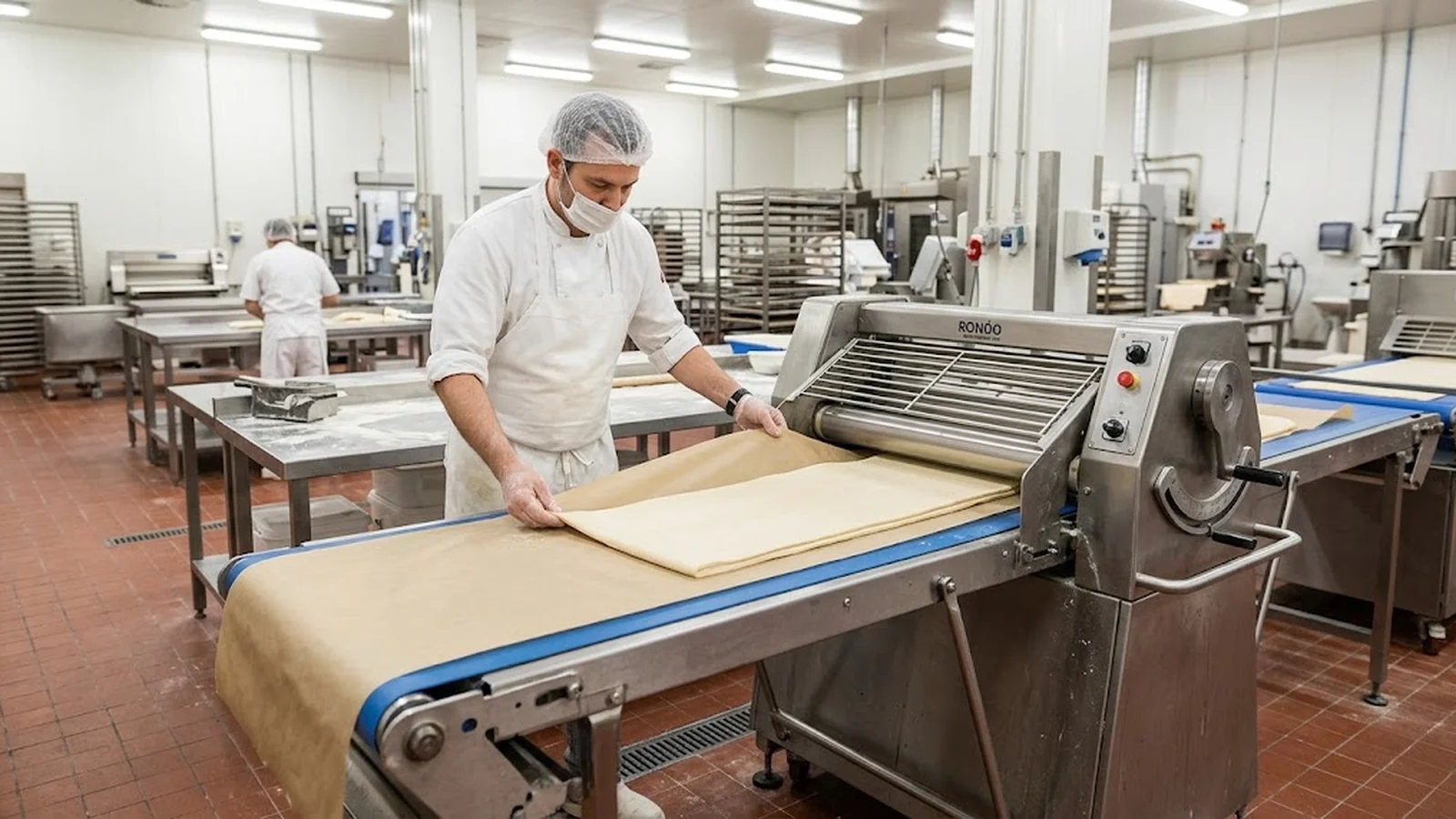
In a high-volume bakery, the dough sheeter and pastry brake are where most paper-related downtime starts. Paper that tears under the pressure of the rollers, sticks to high-fat laminated dough, or drifts off-width as it passes through the machine turns a straightforward production run into a cleanup job and a scheduling problem. Unlike oven applications, sheeting is cold, mechanical work: the paper is stressed by compression, tension and repeated contact with butter-rich dough surfaces, so the qualities that matter most are release under pressure, tensile strength in the machine direction, and dimensional consistency sheet to sheet. This guide explains what buyers should specify for sheeter and brake applications, how roll and sheet formats differ in yield and handling, and how to qualify a supplier before committing to a full programme. Production teams comparing constructions can start with our silicone-coated parchment sheets and rolls, where release and tensile data are documented per grade.
Where Paper Works on the Line: Brakes, Reversible Sheeters and Laminating Stations
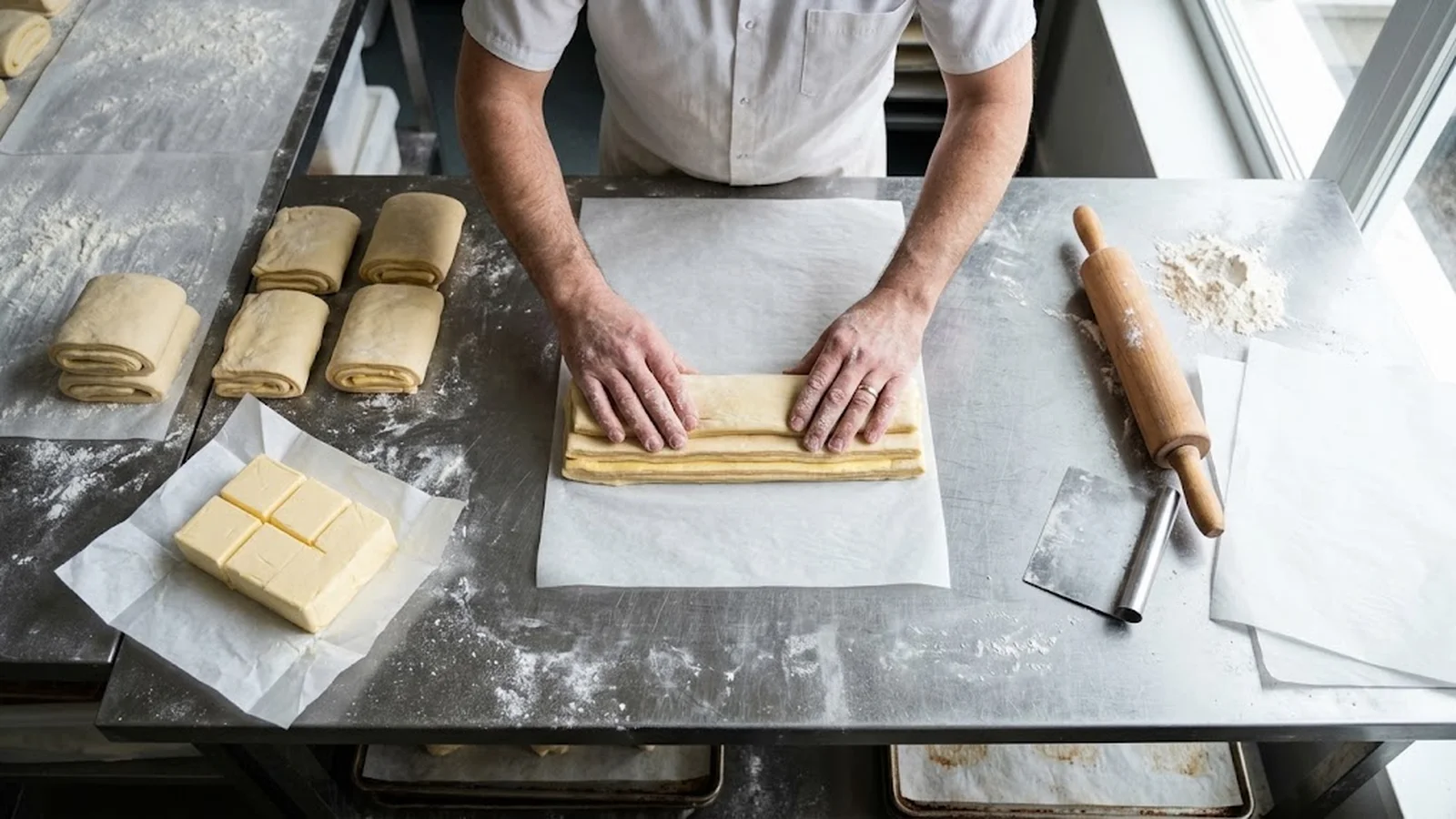
Dough sheeting equipment falls into three broad groups, and each places a different load on the paper. Manual and floor-model pastry brakes use the paper as both a release surface and a handling layer: bakers fold dough between sheets and lift the sandwich repeatedly, so the paper needs enough wet and dry tensile strength to survive folding without cracking along the crease. Reversible bench and floor sheeters run the dough-and-paper sandwich back and forth under a rolling pin assembly; here the critical property is consistent thickness, because a paper that varies in calibre changes the effective gap and produces uneven sheet thickness across the dough. Dedicated laminating lines for croissant and puff pastry production often use paper as an interleaving layer between butter blocks or dough lamination folds, which shifts the priority to clean release from high-fat surfaces at refrigerator temperatures.
Matching the paper to the station starts with being honest about which of these jobs it actually does. A grade that performs well as an oven liner is not automatically the right interleaving paper, and vice versa. Buyers who consolidate both applications onto one construction should ask the supplier to verify release and strength data at the relevant conditions rather than assuming the certificate covers every use.
Specification Parameters That Decide Compatibility
Four parameters dominate sheeter performance. First, release: silicone coating weight determines how cleanly the paper separates from butter-rich dough, and heavier coatings generally hold up better across repeated lamination folds. Second, grammage and calibre: a base weight in the 35–45 gsm range with tight thickness tolerance keeps the roller gap predictable; papers that are too thin crease and tear, while papers that are too thick add to the finished laminate and waste material. Third, dimensional stability: the sheet should resist stretching under roller tension so edges stay square and the paper tracks straight through the machine. Fourth, width and cut accuracy: roll widths should be slit to the sheeter's working width with minimal tolerance, because a roll that is even a few millimetres narrow exposes the rollers to dough and forces frequent cleaning.
Buyers should also agree on how these parameters are verified. A practical acceptance pack includes release testing against the buyer's own dough formulation, tensile strength values in both machine and cross directions, and a slit-width tolerance statement for roll stock. The factory and certificate library lists the third-party audits and test reports behind these claims, so verification can happen before the first trial shipment rather than after it.
Roll Versus Sheet Formats for Sheeting Programmes
Format choice is a yield and labour decision. Rolls suit reversible sheeters and brakes where bakers cut or tear paper to length as they work: a single roll master width can be slit to several machine widths, reducing SKU count, and rolls store compactly at the station. Pre-cut sheets suit laminating stations and croissant lines with a fixed dough size, because they eliminate the cutting step, keep portion control exact and speed up changeovers — an operator pulls a sheet and places it, with no trimming waste. The trade-offs are cost per use and storage: sheets cost more per piece than the equivalent roll length but recover the difference in labour, while rolls minimise packaging waste but depend on consistent cutting discipline at the bench.
High-volume operations often land on a hybrid: rolls for the brake and general sheeting work, pre-cut formats sized to the laminating table for dedicated croissant or puff pastry runs. Buyers moving between formats can review our food-grade die-cut parchment rounds and sheet programme, where custom dimensions are quoted directly against the machine's working width and dough size.
Qualifying a Supplier and Controlling Cost on Sheeter Paper
Because sheeter paper is consumed continuously, small differences compound. A yield model built on grams of paper per dough sheet — roll length actually used, plus trimming and tear-out waste — gives buyers a defensible basis for comparing quotations that look similar per case but perform very differently on the line. Trial protocols should run a full production shift, not a bench test: track tear-outs per shift, cleaning stops caused by paper drift, and how many folds each sheet survives in brake work. Paper that fails mid-fold on a brake is a safety issue as much as a quality one, since operators can be left handling sticky dough with no release layer.
On the commercial side, confirm that the specification is locked into the supply agreement: coating weight range, base grammage, slit tolerance and packing configuration should all be referenced so a substitution cannot arrive unannounced. Buyers running private-label or multi-site programmes can work with our private-label parchment paper supplier team to fix these parameters per site, and buyers verifying the specification can review the certificate library alongside their supplier documentation requests.
FAQ
Can the same baking paper be used on the sheeter and in the oven?
Often yes, but not automatically. Sheeting stresses tensile strength and release under compression, while oven use stresses heat resistance. Verify both against your process — a grade rated for oven use will normally handle the cold side, but the reverse is not guaranteed.
What roll width should we order for our sheeter?
Match the working width of the machine and add the smallest acceptable margin for tracking. Order slit-to-width rolls from the factory rather than trimming in-house; factory slitting holds tighter tolerance and reduces edge waste.
Why does our paper stick to croissant dough but not bread dough?
High-fat laminated dough transfers more butter to the paper surface, especially at refrigerator temperatures. Croissant and puff pastry programmes usually need a heavier silicone coating than lean doughs.
How do we compare quotes between roll and pre-cut sheet formats?
Build a cost-per-dough-sheet model: price per case divided by usable sheets after trimming and tear-outs, plus the labour saved by not cutting at the bench. This consistently outperforms comparing price per kilogram.
What documentation should a sheeter-paper supplier provide?
A specification sheet with grammage, calibre tolerance, coating weight and tensile values, food-contact declarations for the destination market, and batch traceability linking delivered lots to test records.
Conclusion
Paper on a dough sheeting line is a process component, not a commodity purchase. Release under compression, calibre consistency, slit accuracy and fold strength decide whether the sheeter runs cleanly or becomes the bottleneck of the shift, and the right format — roll or pre-cut sheet — depends on how each station actually works. Specify the parameters that matter for the machine, verify them with a full-shift trial, and lock the specification into the supply agreement.
CTA
Need a sheeter-compatible parchment grade sized to your machines? Request free test samples of our silicone-coated baking parchment paper in rolls slit to your working width or pre-cut sheets sized to your laminating table. Our engineering team reviews your dough formulation and line conditions before recommending a construction, and a physical pre-production sample is approved before any mass production run.
Sources
- U.S. FDA, Food for Human Consumption — Paper and Paperboard Components (21 CFR Part 176): https://www.ecfr.gov/current/title-21/part-176
- EU Regulation (EC) No 1935/2004 on materials and articles intended to come into contact with food: https://eur-lex.europa.eu/legal-content/EN/TXT/?uri=CELEX%3A32004R1935
- BfR Recommendations on Food Контакты Materials (paper and board, Recommendation XXXVI): https://www.bfr.bund.de/en/recommendations/all-recommendations/
- BRCGS Packaging Materials Standard: https://www.brcgs.com/our-standards/packaging-materials/
- FSSC 22000 Food Safety Certification: https://www.fssc22000.com/