
Introduction
Curl is the most under-specified property in baking paper purchasing. Buyers routinely lock grammage, silicone coating, KIT level and sheet dimensions into the specification — and leave flatness to chance. Then the complaints arrive from the field: sheets that curl upward in the carton and jam the dispenser, sheets that lift at the corners on the tray and let batter run underneath, sheets that spiral off an automatic feeder and stop the line. None of these are safety failures; all of them are margin failures, because every curled sheet costs labor, waste or downtime. Buyers comparing these specifications can review our wholesale parchment paper rolls and sheets programme, where coating weight, base grammage and release values are documented per construction.
This guide explains why baking paper curls, how curl and flatness are measured, what a buyer should write into the specification to prevent it, and which storage and handling practices protect flatness between the factory and the tray. It is written for bakery procurement and quality teams, foodservice distributors and import buyers running dispensing programs or automated lines. Buyers verifying these specifications can review the certificate library alongside supplier documentation requests.
1. Why Baking Paper Curls: The Mechanics
Paper is a hygroscopic fibre network, and curl is the visible result of asymmetry — any force that makes one side of the sheet behave differently from the other. In baking paper, four mechanisms dominate: For production volumes, the same construction logic applies to our baking parchment paper manufacturing programme line, quoted per roll, sheet or die-cut format.
- Moisture gradient. One side of the sheet absorbs or loses moisture faster than the other. The damp side expands, the dry side does not, and the sheet bows toward the dry side. Silicone coating slows moisture transfer, which is exactly why a coating applied unevenly on the two faces produces a paper with a built-in preference to curl.
- Coating asymmetry. Single-sided silicone papers carry a slight structural bias by design. Well-made single-sided sheet is balanced by fibre orientation and calendering; poorly balanced stock curls persistently toward the uncoated face.
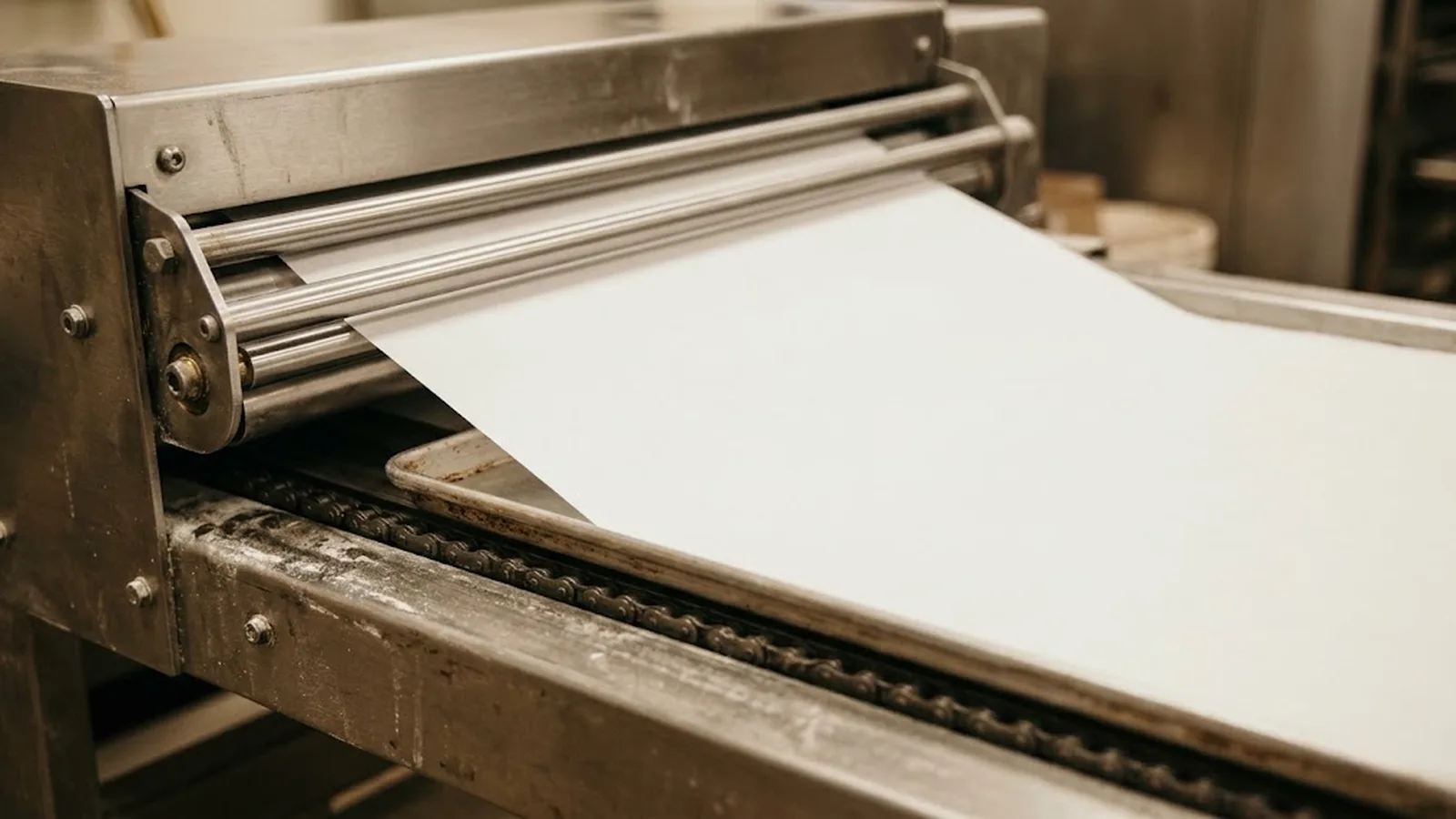
- Converting stress. Sheets cut from a wound roll carry a memory of the drum: a residual tendency to curl in the machine direction, strongest in tightly wound rolls and small-diameter cores. The closer the sheet is cut to the roll diameter, the stronger the memory.
- Heat exposure. In the oven, differential shrinkage across the sheet can lift edges and corners — usually temporary, but accelerated by pre-existing moisture imbalance.
Understanding the mechanism matters because each has a different fix: moisture gradient is a storage and packaging issue, coating asymmetry is a supplier selection issue, converting stress is a format and GSM issue, and heat lift is a product-behavior expectation to be agreed in trials. The factory and certificate library lists the third-party audits and test reports behind these claims.
2. How Curl and Flatness Are Measured
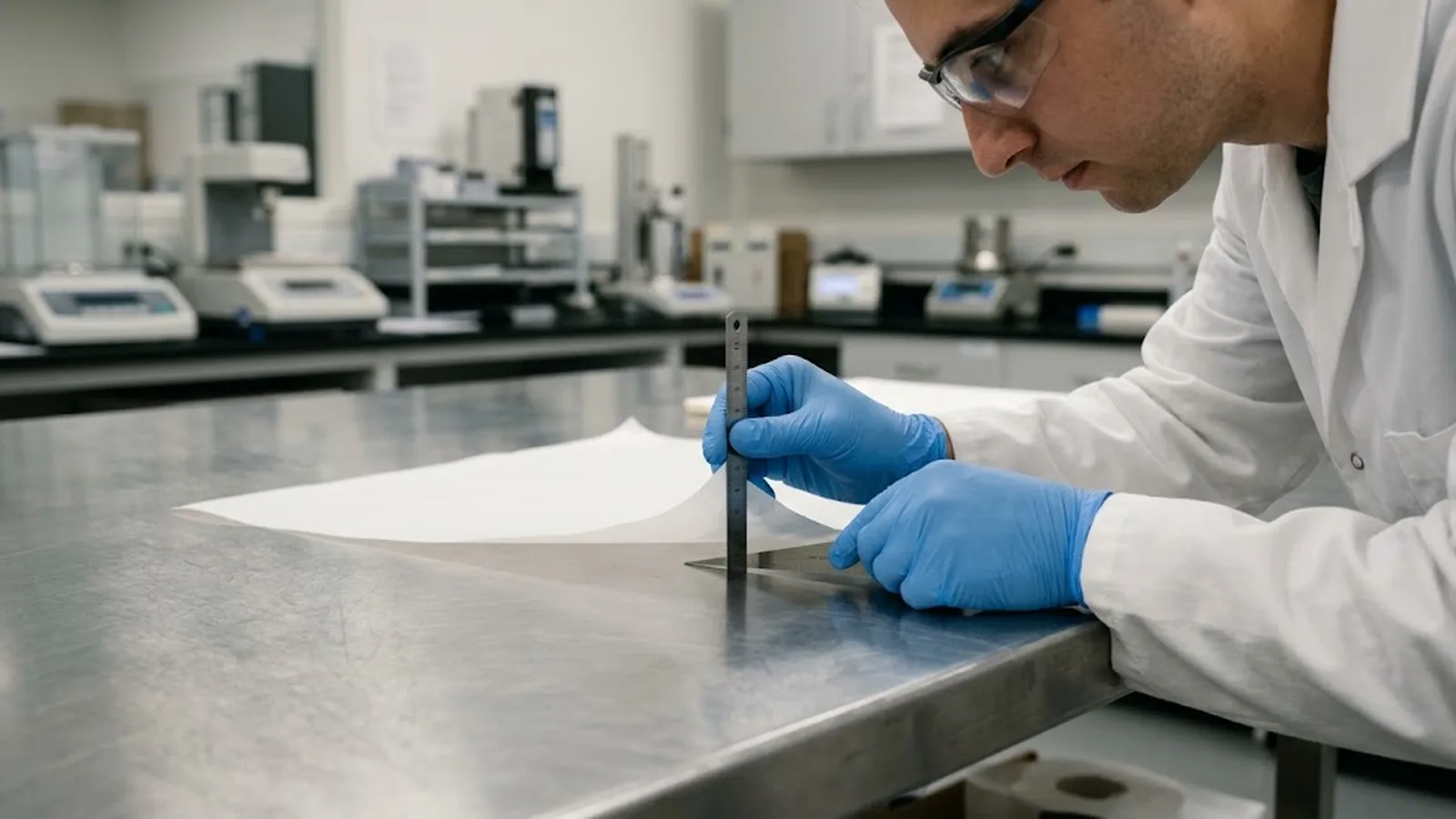
A specification needs a number, and the paper industry has them. The standard reference is the TAPPI curl test (T 510 and related methods), which measures the height or curvature a conditioned strip or sheet develops over a defined time under controlled humidity. Buyers without lab access can run a serviceable in-house equivalent:
- Condition the sample at room humidity for 24 hours in its actual packaging state — conditioning a sheet in open lab air can halve the curl it shows.
- Place the sheet flat on a level surface, coated side up, and measure the maximum corner or edge lift from the surface with a rule or wedge gauge.
- Repeat flipped, coated side down, since curl direction often reverses with orientation.
- Record the dispenser behavior for pop-up formats: the sheet must lie flat enough to present one-at-a-time without doubling or jamming.
Reasonable contract language for flat pre-cut sheets is a maximum edge lift expressed in millimeters at a stated humidity — commonly in the low single digits — plus a functional pass on the actual dispensing equipment. A number the supplier has measured and can reproduce is worth more than an ambitious figure neither party can verify.
3. Writing Flatness into the Specification
Curl belongs in the purchase specification alongside grammage and KIT. The flatness clause should include:
- The test method and conditioning (TAPPI reference or the agreed in-house procedure, including humidity).
- The acceptance limit in millimeters of edge lift, agreed per format — flat sheets, pop-up stacks and rounds each justify their own limit.
- Orientation requirements for single-sided papers, where the coating direction affects tray placement and feeder setup.
- Packaging requirements that protect flatness: moisture-barrier inner wrapping, sealed cartons, and pallet stretch-wrap, since transit humidity is the most common source of curl discovered on arrival.
- Aged-performance check: curl measured after storage in the original packaging for a defined period, not only on fresh samples, because moisture equilibration inside the carton changes behavior over weeks.
Buyers running automated feeders should add a line-feed trial to sample approval — running a full carton through the actual dispenser or line under plant humidity. Bench numbers do not capture jams; the machine does.
4. Storage and Handling: Protecting Flatness in the Field
Most curl complaints traced back up the supply chain end in a warehouse or a humid prep area rather than at the factory. The field practices that preserve flatness are simple and cheap:
- Keep cartons sealed until use. Opened cartons in a steamy bakery environment equilibrate within days; the edges of exposed sheets move first.
- Store pallets away from walls, floor contact and ovens. Temperature gradients across a pallet create moisture gradients across the outer sheets.
- Rotate stock so older cartons feed the line first, limiting the time paper sits in the most humidity-stressed corners of the facility.
- Acclimatize before feeding dispensers. Cartons moved from a cold warehouse to a warm kitchen should rest sealed for several hours; condensation on cold sheets is a classic cause of sudden curl complaints.
- Reseal partially used cartons, or use dispenser boxes with closures, for pop-up programs.
Where curl appears across multiple sites with the same product and the same climate, the conversation belongs with the supplier — packaging upgrades, a heavier base sheet, or a double-sided coating construction often resolve persistent cases.
5. When Curl Signals a Construction Change
Some applications genuinely need a different construction rather than better handling. Indicators that it is time to re-spec:
- High-humidity service (combi ovens, steam environments, chilled batters) where standard grades cockle between batches — heavier GSM or enhanced barrier papers hold flat longer.
- Automatic feeding at speed, where even minor curl causes doubles and misfeeds — pop-up interfolding plus a stiffer sheet usually outperforms a thinner flat sheet.
- Long retail shelf lives, where aged curl in the carton matters as much as fresh curl — moisture-barrier overwrap becomes a specification item, not an option.
- Single-sided coating on double-sided tasks, where orientation errors compound curl with release failures; double-sided coated sheet removes the orientation variable entirely.
Re-specification conversations go smoothly when the buyer arrives with data: measured edge lift, storage conditions, humidity logs and the failing application. Suppliers can then target the mechanism instead of guessing.
FAQ
Why does my baking paper curl more in summer than winter?
Seasonal humidity changes the moisture gradient across the sheet. Warm humid air expands the exposed fibre side faster than the coated side, increasing bow. The fix is field-side: sealed cartons, away from steam and temperature gradients, with acclimatization before opening. Persistent seasonal curl across sealed stock points to packaging or construction and should go back to the supplier with measurements.
What edge-lift limit should I put in my baking paper specification?
A workable contract limit for flat pre-cut sheets is a low single-digit millimeter maximum edge lift on a conditioned flat surface, measured on both orientations, plus a functional pass on your actual dispenser or tray placement. Set the limit with your supplier against measured capability — an unmeasurable limit produces disputes, not flat paper.
Does heavier baking paper curl less?
Generally yes — heavier grammages are stiffer and resist curl forces better, which is why 40–60 GSM grades hold flatness longer in humid and multi-bake service. But stiffness is not immunity: moisture barrier packaging and balanced coating matter as much as grammage in humid climates.
Conclusion
Curl is not random and it is not cosmetic. It is the predictable output of moisture gradients, coating balance, converting memory and field handling — every one of which a buyer can influence. Put flatness in the specification as a measured limit, require packaging that protects it, validate on the actual dispensing and baking equipment under plant humidity, and give the paper the storage discipline you already give your ingredients. The reward is a paper program that feeds dispensers without jams, lies flat on trays, and never appears in a complaint file again. Our private-label parchment paper supplier programme publishes the test data behind each grade so specifications can be verified before ordering.
LANGMAI supplies flat, dimensionally stable baking papers in sheet, roll and pop-up formats with measured curl performance, moisture-protective packaging and the test data wholesale buyers need for automated lines and retail programs alike. Контакты our wholesale team with your tray sizes and dispenser models for samples and a flatness-verified quotation.
Sources
- TAPPI — Technical resources for pulp and paper testing
- EU Regulation 1935/2004 — Materials and articles intended to come into contact with food
- FDA — Food Контакты Substances: 21 CFR 176 Indirect Food Additives: Paper and Paperboard Components
- EFSA — Food contact materials
- German BfR — Paper and board for food contact recommendations