
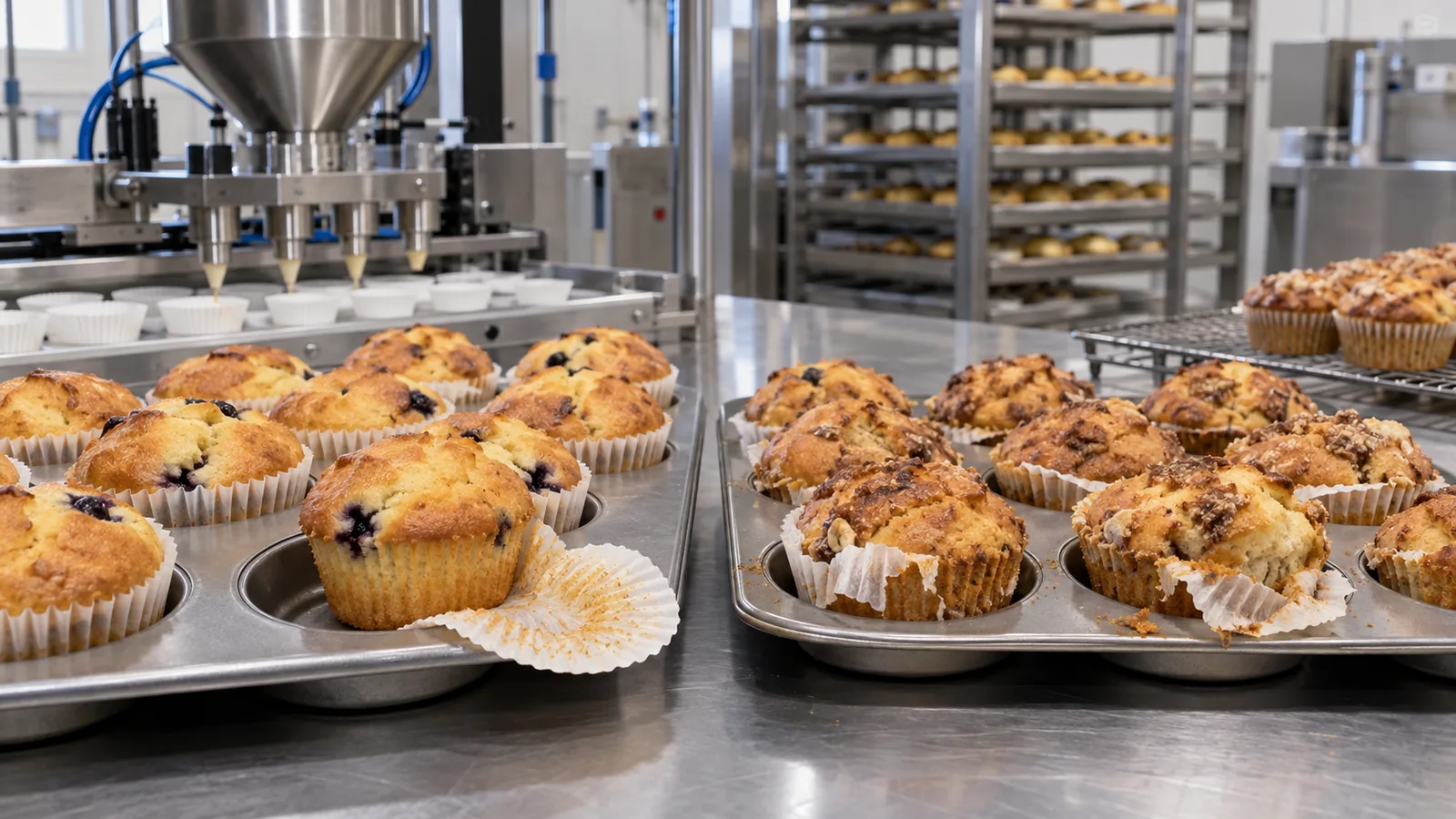
Introduction
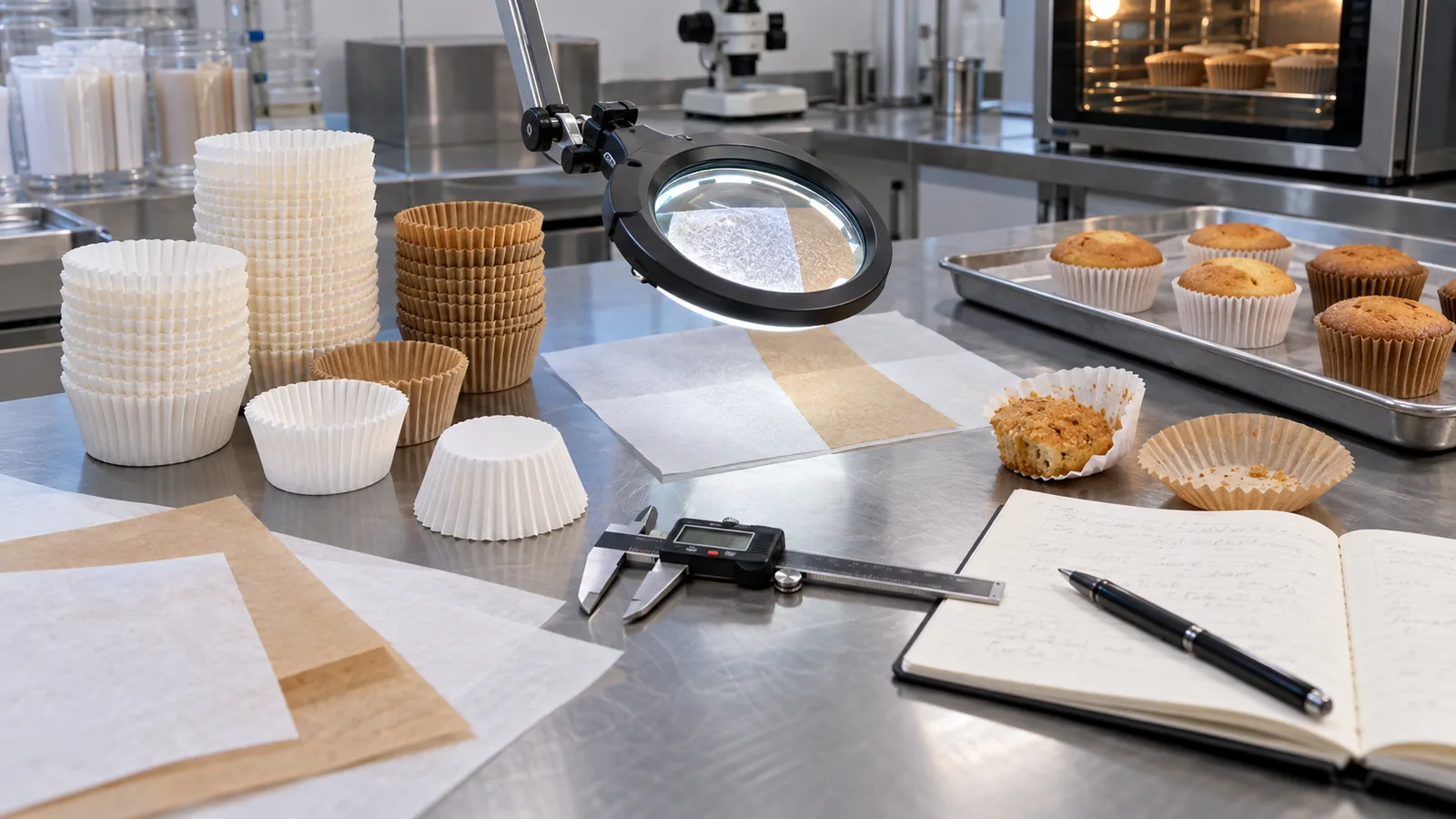
A demolding defect is rarely only a paper problem. When a muffin leaves half its crust on the cup wall, the line loses throughput, generates rework and ships a product that looks wrong on the shelf. Such complaints are common and often misdiagnosed, because the symptom appears at the end of a process whose real cause sits several steps back. Cup programmes usually ship alongside pan lining; our custom silicone-coated baking parchment paper specs cover the sheets and rolls that pair with them.
Four variables explain most release failures: the grease level of the formula, the coating system and coat weight, the batter type and deposit weight, and the oven profile including cooling. Tested in a fixed order, they normally identify the controlling variable within one production day; changed all at once, they almost never do. Buyers verifying these specifications can review the certificate library alongside supplier documentation requests.
This guide is for wholesale buyers and quality teams: what a demolding defect looks like, how to separate the four root causes, a receiving-dock and line checklist, and specification language that prevents recurrence.
1. What a Demolding Defect Actually Looks Like
"Sticking" covers several distinct failures, each pointing to a different cause. Where a bakery lines trays and moulds product in the same run, our wholesale parchment paper rolls and sheets are quoted with the cup programme for a single documentation package.
- Side-wall tearing: fibres stay bonded to the crust when the cup is peeled. A coating or bake-profile problem.
- Base adhesion: the product base stays in the cup. Usually sugar content, deposit weight or underbaking.
- Crust loss with clean paper: the paper releases but takes crust with it. A batter or bake issue, not a coating issue.
- Wet or translucent cup after baking: grease has passed through. A barrier problem, not a release problem.
- Pleat collapse or distortion: structural, usually grammage, moisture or denesting behaviour.
Classify the defect before changing anything. Tearing and strike-through need different fixes, and a supplier asked only for "better release" may add coat weight that solves one but not the other. The factory and certificate library lists the third-party audits and test reports behind these claims.
2. Grease Level: The Most Common Root Cause
Butter, oil, margarine and egg yolk content drive how aggressively a formula attacks the paper barrier. Butter-rich pound cake, brioche-style muffins and chocolate formulations need far more barrier than a lean sponge.
Ask production for the fat figure on a baked-weight basis and record it with the complaint. A cup that performs at 12 percent fat can fail at 22 percent with no change in the paper, which is why a "we changed nothing" report should be tested against the current recipe, not the recipe on file.
Watch the fat type too: high-sugar batters caramelise at the interface and glue themselves to the paper regardless of coating. Where a range spans several formulations, specify against the worst case.
3. Silicone Coating, Coat Weight and Coverage
Most release performance comes from the coating, not the base paper. Buyers should know three things: the chemistry, the coat weight, and single or double-sided application.
Silicone-based release coatings are the common route for baking cups because they tolerate oven temperatures and peel cleanly. Alternatives include fluorochemical-free barrier treatments and, in some constructions, a mechanical finish based on dense refining. Each has a different performance ceiling and a different place in the buyer's regulatory file, worth confirming at specification stage rather than at audit.
Coat weight often matters more than chemistry in borderline cases, but raising it has trade-offs: higher unit cost, changed denesting on high-speed lines and a different print surface. Coverage uniformity matters as much as the average, since uneven coating releases on one panel and tears on another, which reads as random failure.
Ask the supplier to state coating type and nominal coat weight in writing, linked to the SKU code. "Silicone coated" alone is a marketing phrase, not a specification.
4. Batter Type and Deposit Weight
Two batters with the same fat percentage can behave differently. High-sugar batters set into a sticky caramel layer at the interface; protein-rich batters bind to fibre through coagulation; batters with chips, fruit or streusel create hot spots and adhesion points that tear on peel.
Deposit weight is the quiet variable. An over-deposited cup overflows and bakes a collar against the pleats that tears away on removal; under-deposition leaves a shallow product that overbakes onto the wall. Both look like a paper problem at the end of the line. Hold deposit weight constant during a fault and record it in grams.
5. Oven Temperature, Bake Profile and Cooling
Release depends on how the crust sets. Too cool an oven extends the wet phase and gives the batter more time to bond before structure forms. Too hot a top zone sets the crust early but can leave the base underbaked and glued.
Record oven zone temperatures, belt speed and core temperature at exit, not just the panel setpoint, which may have drifted. Cooling matters too: product cooled under a lid holds steam at the interface and softens the paper, so demolding warm and demolding cold can differ on the same cup. Bake the same batter in the same cup at two temperatures and two times; if release changes, the paper was never the controlling variable.
6. Buyer-Side Troubleshooting Checklist
Work through this sequence, changing one thing at a time.
- Photograph the failure first: cup in tray, cup after peel, product underside.
- Confirm SKU, lot code and supplier to rule out a substituted or revised supply.
- Bake retained samples from the previous approved lot beside the suspect lot, same batter and profile.
- Record recipe fat and sugar figures and deposit weight in grams.
- Verify oven zone temperatures and bake time against the process specification, and note the cooling route.
- Run a control: a known-good lot plus a bare greased tray. If the bare tray also sticks, the fault is in the batter or oven.
- Check strike-through separately by inspecting the outside of the baked cup for grease staining.
- Record the result, disposition and retained samples from both lots.
This sequence usually identifies the cause in one shift and gives the supplier evidence for a useful corrective response.
7. Specification Language That Prevents Recurrence
A complaint closes only when it becomes a specification change:
- Name the coating system and nominal coat weight, linked to the SKU code.
- State the validated use window: batter fat range, deposit weight, bake temperature and time, demolding temperature.
- Require grammage and a statement of single or double-sided application.
- Add a change-notification clause covering coating chemistry, coat weight and base paper mill.
- Specify incoming checks: dimensions, count, denesting, coating uniformity and a bake trial against a retained reference.
- Define the corrective route: lot quarantine, retained-sample period and a root-cause response window.
Include a retained-sample clause in every order. Without a physical reference from the approved lot, the next complaint has nothing to compare against.
Conclusion
Demolding defects are solvable when classified before escalation. Identify whether the failure is tearing, base adhesion, crust loss or strike-through, then test grease level, coating, batter and oven profile one variable at a time against a retained reference sample. Most cases resolve to a mismatch between the formula's fat and sugar load and the coat weight, or to an oven profile that has drifted from the validated window. Close every complaint by writing the validated window and coating specification into the purchase document. Buyers standardising on one paper supplier can review our baking parchment paper manufacturing programme next to their cup specifications.
Which comes first when a baking cup sticks: the paper or the recipe?
Test rather than assume. Bake the suspect lot and a retained previous lot side by side with the same batter and profile. If both fail, the recipe or oven is the controlling variable; if only the suspect lot fails, the paper or coating changed. A bare greased tray control settles it in one bake.
Does a higher silicone coat weight always improve release?
Usually, but not without cost. Extra coat weight improves peel on high-fat batters, but raises unit cost, can affect denesting on high-speed equipment and may change the print surface. Specify the minimum weight that passes your worst-case batter, not the maximum available.
Can a cup that releases well still show grease strike-through?
Yes — they are different properties. Release concerns the surface interface; strike-through concerns barrier performance under fat load and time. Test both separately, with fat level and bake time recorded.
How many lots should a buyer keep as retained samples?
Keep retained cups and a written bake record from the approved lot for at least as long as the complaint and reorder cycle, plus one sample per coating revision. Without a physical reference, a later complaint has no baseline.
What should be written into the specification after a release complaint?
Coating system and nominal coat weight linked to the SKU, grammage, single or double-sided application, validated batter fat and deposit-weight range, bake and demolding temperature window, incoming inspection method, retained-sample requirement and a change-notification clause covering chemistry and mill.
CTA
Send LANGMAI the cup format, grammage, batter fat range, deposit weight, bake profile and destination market. The team can recommend a coating and construction, prepare samples for a side-by-side bake trial and help convert the result into a written specification.