

Introduction
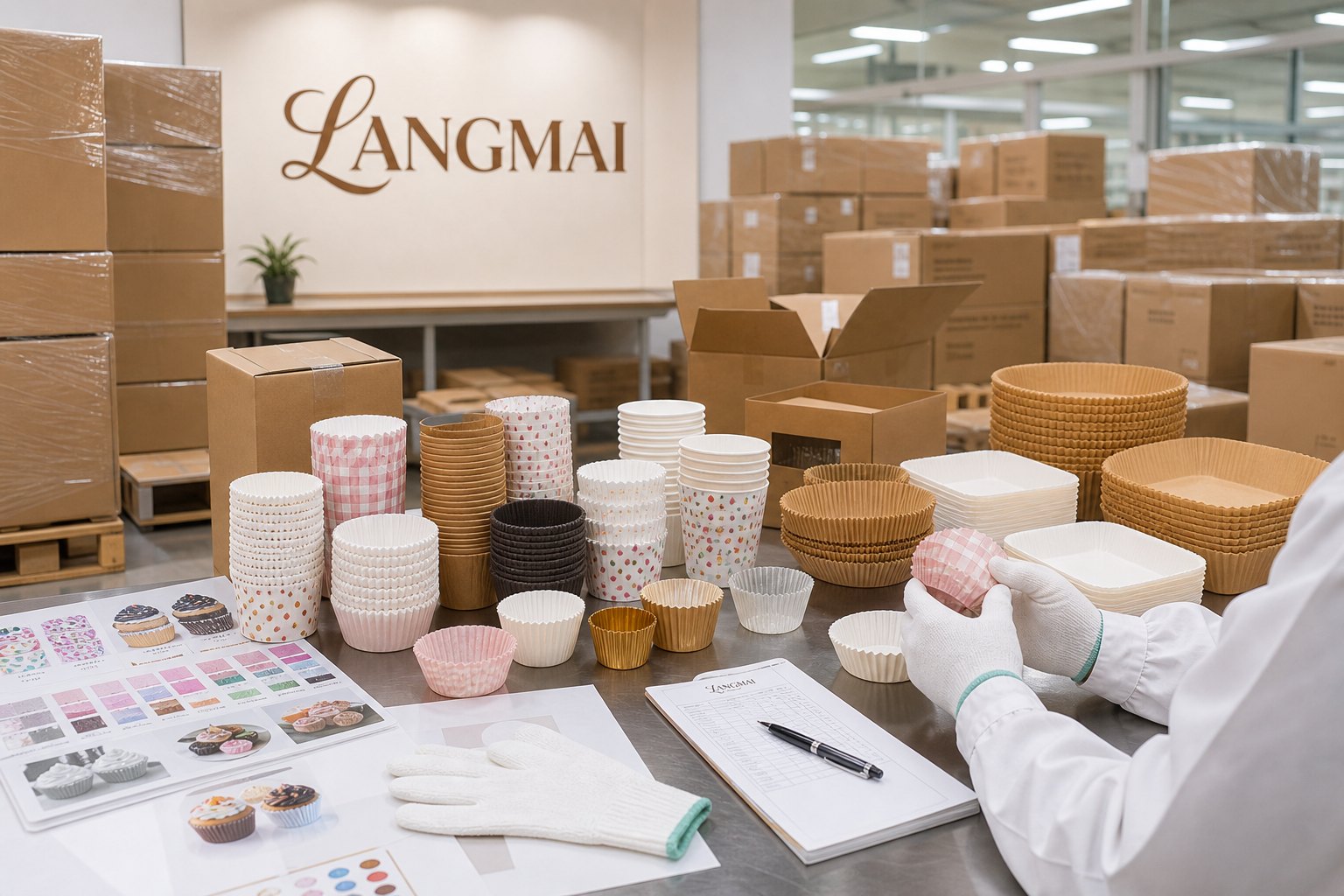
For greaseproof paper rolls wholesale, buyers should begin with the unwind and converting equipment, then define web width, core, roll build, winding direction, splice rules, basis weight, grease performance and packaging. Approve a trial roll on the actual line and test the converted item with the intended food. Finally, review product-specific food-contact evidence for the destination market and put buyer-agreed tolerances and defect rules in the purchase specification. Buyers comparing these specifications can review our wholesale parchment paper rolls and sheets programme, where coating weight, base grammage and release values are documented per construction.
1. The Strategic Role of Converter Paper Rolls in Food Packaging
Converter rolls undergo downstream printing, slitting, cutting or forming, so runnability matters alongside food performance. The web must remain stable through the buyer's tension, speed and tooling. Buyers comparing sheeted formats can use the greaseproof paper sheets wholesale guide; printed programs should also review custom printed food paper packaging and ink control. For production volumes, the same construction logic applies to our baking parchment paper manufacturing programme line, quoted per roll, sheet or die-cut format.
2. Comprehensive Roll Specification Checklist
To prevent costly manufacturing disruptions, buyers must establish a highly detailed specification sheet before issuing a purchase order. Do not rely on nominal roll data alone; you must distinguish nominal specifications from buyer-agreed tolerances. Every parameter must be negotiated and documented.
Width and Diameter Constraints
The physical dimensions of the roll must fall within the absolute minimum and maximum capacities of your unwind stand.
- Web Width: Specify the exact width required for your yield calculations. Establish strict positive and negative tolerances (e.g., +/- a specific millimeter allowance) to prevent edge trim waste or web tracking issues on your machines.
- Outer Diameter (OD): The outer diameter dictates how much continuous linear meterage is on the roll. While larger diameters mean fewer roll changes and less downtime, they must not exceed the clearance of your converting equipment or safe handling limits.
Core Dimensions and Material Integrity
The core is the structural foundation of the roll. If the core fails, the entire roll becomes unusable.
- Inner diameter: Measure the unwind shaft or chuck and state the required core ID and tolerance on the drawing.
- Core construction: Specify material, wall thickness, straightness and crush performance from the unwind method, roll mass and handling conditions.
Length, Weight Basis, and Grammage
Understanding how you are billed and how your material yields is fundamental to cost control.
- Basis weight/grammage: State the approved value and tolerance, but validate stiffness, strength and grease holdout in converting and food trials.
- Yield Calculation: Clarify whether you are purchasing greaseproof paper rolls wholesale by net weight, gross weight (including core and packaging), or linear length. Because paper density can vary slightly, establishing a tolerance for basis weight is crucial for accurately predicting your linear meter yield per metric ton.
Grease Resistance and Barrier Properties
The core functionality of greaseproof paper is its ability to prevent the migration of oils and fats. However, there is no universal grease kit rating that guarantees performance across all food types.
- Restricted-substance requirements: State the exact buyer or destination-market requirement and required evidence. Do not use an undefined "free from" claim as a substitute for a test scope and reporting limit.
- Application performance: If a laboratory grease method is specified, record the method and result, then run the converted product with the real food, temperature and contact time. Compare other barrier approaches in the food-grade wax paper wholesale guide.
Printability and Converting Readiness
If the rolls are destined for a printing press (flexographic, offset, or rotogravure), the surface characteristics must be explicitly defined.
- Surface Smoothness and Sizing: The paper must accept the buyer-approved ink system evenly without excessive absorption or dot gain.
- Moisture Content: The internal moisture profile of the paper affects its dimensional stability. Paper that is too dry may become brittle and crack during folding; paper that is too wet may curl or cause registration issues during multi-color printing.
Splice Quality and Frequency
A splice occurs when two separate webs of paper are joined together within the same roll to achieve the desired outer diameter.
- Splice rules: Agree the permitted count, location, construction, strength and detection method. Validate a supplier splice at production speed if the web passes through printing, drying or cutting equipment.
Winding Requirements and Tension Control
Poor winding can render perfectly good paper useless. The mechanics of how the paper is spooled onto the core dictate its runnability.
- Winding profile: Define acceptable telescoping, dishing, edge alignment and hardness variation from the buyer's handling and unwind limits. Inspect trial and production rolls at the core, middle and outer layers.
Table 1: Roll Specification Parameters and Production Impact
| Roll parameter | Possible nonconformity | Converting impact |
|---|---|---|
| Web width | Wider or narrower than the approved drawing | Trim waste, incomplete product or machine stoppage |
| Core dimensions | Incorrect fit or inadequate strength | Mounting difficulty, slippage or core damage |
| Winding profile | Telescoping, dished edges or uneven tension | Web wandering, wrinkles and breaks |
| Splices | Unapproved frequency, position or construction | Downtime and downstream jams |
| Moisture condition | Uneven profile or damaged wrap | Curl, wrinkles and registration variation |
3. Application Sample Testing
Before a bulk order, run representative material through the intended unwind, print, slit, cut or forming process and test the converted item with the intended food. A data sheet alone cannot demonstrate line compatibility.
- Converting Line Trials: Request a sample roll—not just a hand sheet—to run on your actual slitter, rewinder, or printing press. Observe how the paper handles web tension, evaluate the edge cut quality, and monitor for excessive dust generation during slitting.
- Print and Adhesion Tests: If printing, test the paper with your specific inks. Evaluate ink adhesion, drying times, and the potential for set-off (ink transferring to the back of the next layer in the roll). Verify that the low-odor inks do not degrade the paper's grease resistance.
- Real-World Food Contact: Conduct extended tests with the actual food items the paper is intended to hold. Expose the paper to the specific temperature profiles (e.g., hot bakery items, cold deli meats) and contact times representative of the end user's experience. Monitor for grease penetration, loss of structural integrity, and any potential off-odors transferred to the food.
Request Greaseproof Roll Samples
4. Packaging, Palletization, and Moisture Protection
Build the packaging specification from roll mass and dimensions, handling equipment, route, humidity exposure and storage. Define moisture barrier, edge protection, roll orientation, restraint, pallet footprint and labels, then review a packed sample or loading photos. The goal is to prevent water exposure, core deformation, edge damage and load movement without prescribing one universal material or pallet pattern.
5. Inspection Protocols for Bulk Food Wrapping Paper Rolls
Establishing a clear inspection protocol is vital for maintaining quality control when receiving food wrapping paper rolls bulk. Buyers and suppliers should agree on inspection standards and defect classifications prior to production. Avoid generic statements about "standard roll tolerance" or "fixed AQL" (Acceptable Quality Limit); instead, define exactly what constitutes a critical, major, or minor defect for your specific operation.
- Pre-Shipment Documentation: Request photos of the loaded container, pallet configurations, and clearly visible roll labels showing lot numbers, GSM, width, and linear length.
- Incoming Visual Inspection: Upon arrival, inspect the condition of the trailer or container. Look for signs of water damage, shifted pallets, or crushed cores.
- Web Defect Categorization: Differentiate between defects that render the roll unusable (e.g., crushed cores, deep edge cuts) and those that are manageable (e.g., occasional minor wrinkles that process out under tension).
Table 2: Defect Classification for Roll Inspection
| Buyer-defined class | Example | Likely consequence |
|---|---|---|
| Critical | Contamination, wrong material or unusable core | Food-safety concern or inability to run |
| Major | Wrong width, severe telescoping or unapproved splice | Significant downtime, scrap or yield loss |
| Minor | Cosmetic outer-wrap damage with protected paper intact | Extra handling without material failure |
Classifications and sampling levels must be agreed for the buyer's application before inspection; this table is not a fixed AQL plan.
6. Document Review and Food-Contact Compliance
Greaseproof paper intended for food packaging must comply with the strict regulatory frameworks of the destination market. A supplier should provide current documentation that identifies the offered material, intended use and applicable legal basis.
United States: FDA Compliance
For the U.S. market, paper and paperboard components must comply with specific sections of the Code of Federal Regulations (CFR).
- 21 CFR 176.170: This regulation covers "Components of paper and paperboard in contact with aqueous and fatty foods." Because greaseproof paper is specifically designed for fatty foods, adherence to this regulation is paramount. It dictates permissible extractives and the conditions of use (temperature and food type).
- 21 CFR 176.180: This covers "Components of paper and paperboard in contact with dry food." While less stringent than 176.170, it is still a foundational requirement for any food-contact paper.
European Union: Framework and GMP
For the European market, the regulatory landscape involves broad framework regulations and specific manufacturing standards.
- Regulation (EC) No 1935/2004: The overarching framework principle stating that food contact materials must not transfer their constituents to food in quantities that could endanger human health or unacceptably change the composition, taste, or odor of the food.
- Regulation (EC) No 2023/2006: The Good Manufacturing Practice (GMP) regulation, ensuring that materials are consistently produced and controlled to meet quality standards appropriate for their intended use.
- Paper-specific references: Where required by the buyer or market, review relevant BfR recommendations or other national guidance in addition to EU framework rules.
The buyer's document checklist should identify the exact statement or report required, product identity, intended food and contact conditions, applicable law, issue date and change status. Any restricted-substance claim also needs a defined scope, method and reporting limit.
7. Key Questions for Your Greaseproof Paper Roll Supplier
Ask the supplier to return a completed capability matrix covering available widths and roll builds, tolerance proposals, splice control, winding checks, grease-test methods, destination-market documents, packaging and complaint investigation. Request records or samples for each answer; sales statements alone are not audit evidence.
| Evaluation area | Evidence to request | Buyer validation |
|---|---|---|
| Equipment fit | Roll drawing and tolerance proposal | Compare with unwind limits and handling equipment |
| Runnability | Winding and splice records | Run a representative roll at production settings |
| Food performance | Named test results and product sample | Test the converted item with the intended food |
| Regulatory status | Product-specific statements and supporting file | Match identity, market and contact conditions |
| Delivery condition | Packing drawing and load plan | Inspect a packed trial and incoming shipment |
| Change control | Notification and reapproval procedure | Confirm which material or process changes trigger review |
FAQ
What is the difference between a master roll and a finished roll?
A master or converter roll is supplied for downstream slitting, printing or cutting. A finished roll is already converted to the buyer's dispensing or retail format. Define both by drawing rather than by name alone.
How do I determine the correct basis weight?
The suitable grammage depends on strength, fold, opacity, grease exposure and converting conditions. Compare candidate constructions with the actual food and equipment, then lock the approved value and tolerance.
Why is the core inner diameter important?
The core ID and strength must match the buyer's unwind equipment and roll mass. Confirm the shaft or chuck dimensions from the machine documentation and approve a trial roll.
Does a higher laboratory grease rating always mean better performance?
No. The result describes performance under the named method. Compare it with the actual food, temperature, contact time and converted format.
Are there standard roll tolerances for every converting line?
No. Put buyer-agreed limits for width, diameter, core, winding, splices and defects in the signed specification.
Conclusion
A dependable roll program connects the machine drawing, approved trial roll, converted-food test, regulatory file, packed configuration and inspection plan. Use nominal data only to shortlist candidates; the signed specification should contain the tolerances and defect rules that protect the buyer's actual operation. Our private-label parchment paper supplier programme publishes the test data behind each grade so specifications can be verified before ordering.
Sources
- U.S. Food and Drug Administration (FDA). "21 CFR 176.170 - Components of paper and paperboard in contact with aqueous and fatty foods." Code of Federal Regulations. https://www.ecfr.gov/current/title-21/part-176/section-176.170
- U.S. Food and Drug Administration (FDA). "21 CFR 176.180 - Components of paper and paperboard in contact with dry food." Code of Federal Regulations. https://www.ecfr.gov/current/title-21/part-176/section-176.180
- European Commission. "Food Contact Materials - Legislation." Food Safety. https://food.ec.europa.eu/food-safety/chemical-safety/food-contact-materials/legislation_en
- German Federal Institute for Risk Assessment (BfR). "BfR Recommendations on Food Contact Materials." https://www.bfr.bund.de/en/service/databases/bfr-recommendations-on-food-contact-materials/