
Introduction
Release performance is the single property most likely to disappoint a buyer after the first production run. Paper that released beautifully in the supplier's sample bake can stick badly in your plant — not because the sample was fake, but because release is not one property. It changes with the food matrix, bake temperature, humidity, number of reuses, and even how long the batter sits on the paper before entering the oven. That is why professional buyers test release twice: dry and wet. Buyers comparing these specifications can review our custom printed baking parchment paper programme, where coating weight, base grammage and release values are documented per construction.
This guide explains what dry and wet release actually measure, how to build a repeatable test protocol, what acceptance criteria to set, and how to use the results to qualify a baking paper supplier before committing to volume orders. Buyers verifying these specifications can review the certificate library alongside supplier documentation requests.
What "Release" Means in Silicone-Coated Parchment
Release is the force required to separate baked or unbaked food from the paper surface. It is governed by the silicone coating: its type (solvent-based cured versus solventless platinum-cured systems), coat weight in grams per square meter, and cure quality. A well-cured silicone network presents a low-energy surface to which sugars, fats, and starches adhere weakly. An under-cured or under-weight coating lets food components penetrate or bond during the bake, and the paper tears, leaves residue on the product, or lifts the bottom crust off a muffin. For production volumes, the same construction logic applies to our silicone-coated parchment sheets and rolls line, quoted per roll, sheet or die-cut format.
Critically, release behaves differently when the food-contact side is dry (cookie dough, par-baked crusts) versus wet (batter, high-moisture doughs, sticky fruit fillings). Wet contact softens the paper surface and can swell sizing, changing adhesion behavior dramatically. A paper that excels in dry release may fail on wet cake batter — and vice versa in edge cases — so testing only one condition leaves you blind to half the risk. The factory and certificate library lists the third-party audits and test reports behind these claims.
Dry Release Testing: Protocol and Interpretation
Dry release testing evaluates performance against low-moisture, fat-rich products: cookies, shortbread, croissant lamination, par-baked pizza crusts, and wrapped confectionery.
A practical protocol:
- Standardize the product. Use a fixed recipe with measured sugar and fat content, mixed to a defined schedule. Product variation destroys test comparability.
- Standardize the bake. Same oven, same rack position, same set temperature (record actual probe temperature, not the dial), same bake time. Deck ovens and convection ovens give different results; pick the one that matches your production reality.
- Apply controlled contact time. Place dough on the paper and bake immediately for one series; rest a second series 10 minutes before baking to capture dwell-time effects.
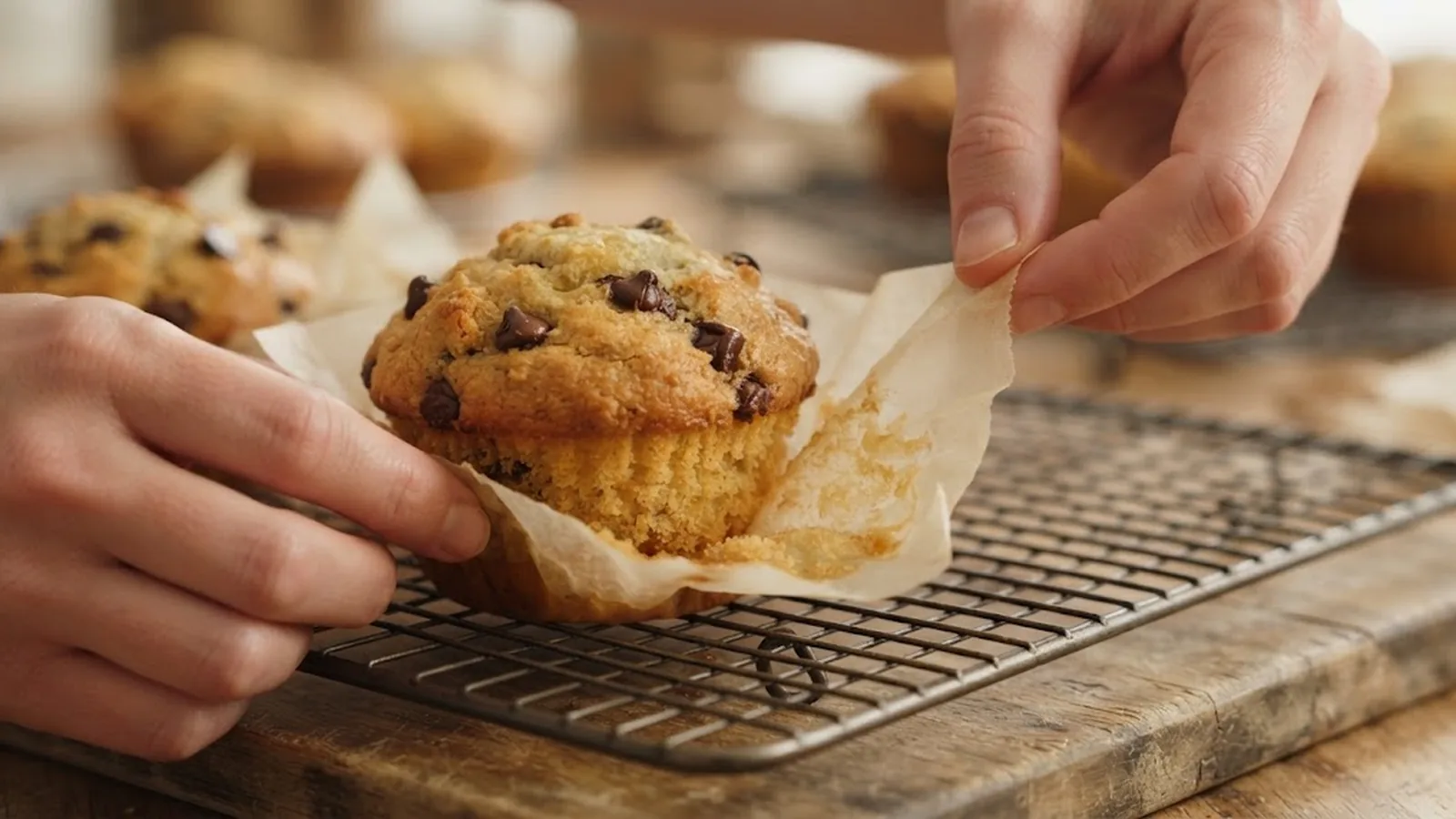
- Score the release. After cooling to a defined temperature, invert and lift the paper at a constant angle. Score on a simple ordinal scale: 5 = paper falls away freely, no residue; 3 = light adhesion, paper releases without tearing product; 1 = product tears or paper fibers remain on the food.
- Repeat for multi-use papers. If the paper is marketed for reuse, repeat the bake on the same sheet for the claimed number of uses and score each cycle.
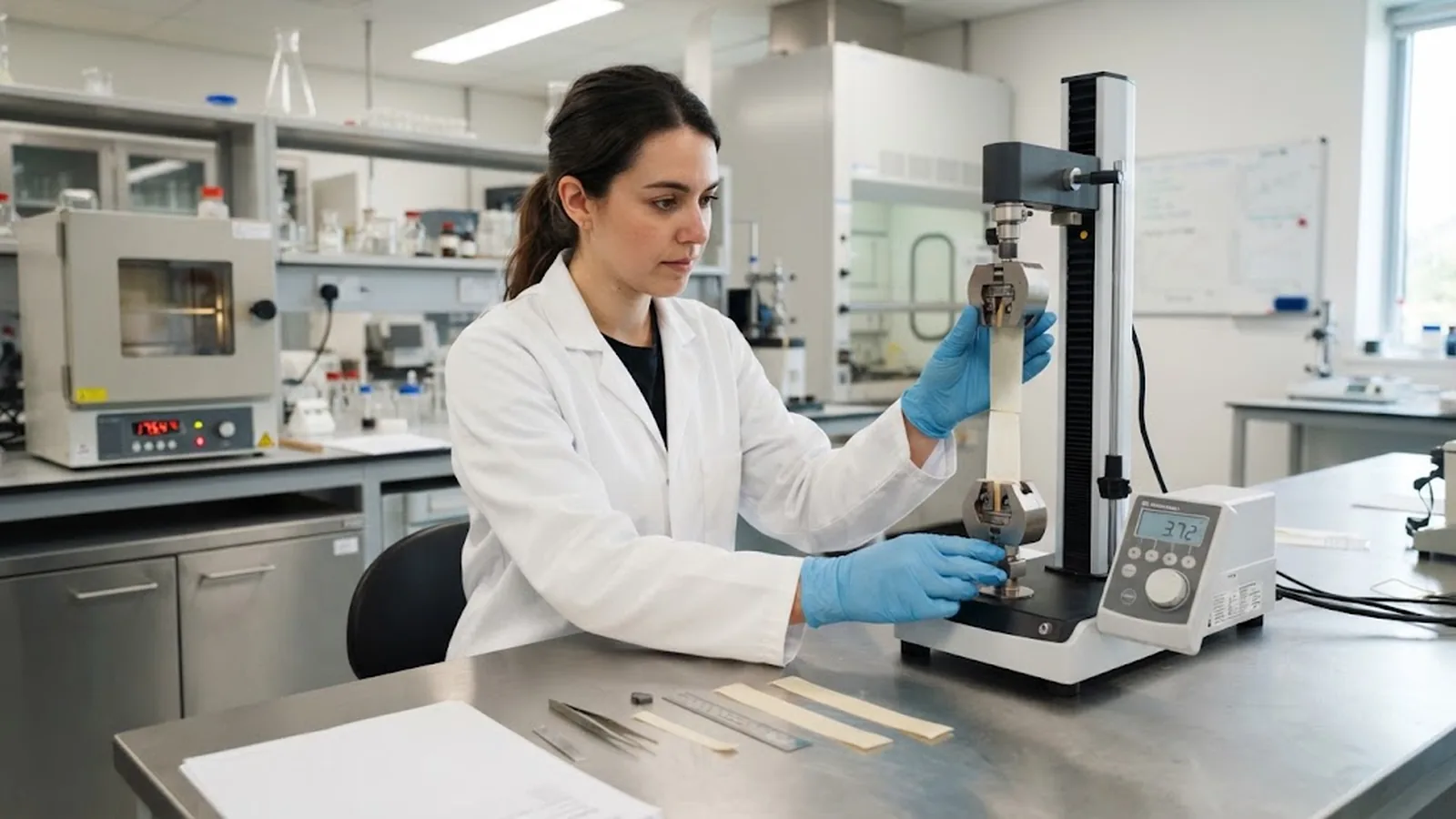
For buyers who want quantitative data, peel testing on a universal testing machine (90-degree or T-peel at fixed speed) gives force values in newtons per centimeter. Instrumented data is valuable for supplier comparisons, but a disciplined ordinal panel of three trained tasters or QC staff is usually sufficient for acceptance decisions.
Wet Release Testing: Protocol and Interpretation
Wet release testing covers batters and high-moisture systems: sponge and pound cakes, cheesecakes, steamed puddings, and fruit-topped products where juice or filling seeps under the product during baking.
The protocol mirrors the dry test with key changes:
- Use a high-sugar, high-moisture batter as the challenge product — a standard sponge with measured Brix is a good worst case.
- Bake in the actual pan format — a cake cup, loaf mold, or tray liner configuration, since contact geometry affects release. Testing flat sheets when you buy cake cups is a common protocol error.
- Include a humidity-stressed series. Store a paper sample at 30–35°C and 80% relative humidity for 24 hours, then bake. This simulates tropical warehouse conditions and exposes papers whose sizing or coating degrades with moisture uptake.
- Evaluate adhesion after full cooling and again after 24 hours, because some batters bond more strongly as they cool and equilibrate.
Wet release failures show up as paper sticking to the cake bottom, fiber transfer, or crumb collapse when the product is demolded. For cake cup buyers, wet release combined with the cup's structural rigidity determines whether the demolded product is sellable as-is or must be served in the cup.
Setting Acceptance Criteria
Vague criteria like "good release" cannot be enforced in a contract. Instead, define:
- Minimum panel score: for example, ≥4 of 5 on both dry and wet tests, with no score below 3 across three independent batches.
- Multi-bake retention: if reuse is claimed, release score must not drop more than 1 point by the final claimed use.
- Peel force ceiling (if instrumented): e.g., ≤ a fixed N/cm value agreed with the supplier, measured under your specified conditions.
- Batch-to-batch consistency: require the supplier to run the same protocol on production batches and share results; retained samples from each shipment let you re-verify.
Ask for the silicone coating type and coat weight in the specification sheet — solventless platinum-cured systems generally offer more consistent release and lower odor than older solvent systems, and the data lets you compare quotes on equal technical footing.
Using Release Data in Supplier Qualification
Run the protocol on samples from at least two suppliers plus your incumbent paper as a control. Test blind (label samples with codes), replicate across at least two days, and record oven probe temperatures. The paper that wins on paper — grammage, KIT level, price — is not always the paper that wins on the pan, and a documented protocol gives you objective grounds for the decision and for future batch acceptance disputes.
FAQ
Why can paper that passed dry testing still stick to cake batter?
Dry and wet contact engage different adhesion mechanisms. Wet batter softens the paper surface and, in high-sugar recipes, caramelizing sugars bond strongly during the bake. A coating optimized for dry, fat-rich contact can underperform on wet systems, which is why both tests are needed.
How many replications are enough before qualifying a supplier?
Minimum three independent production batches, tested on at least two separate days, with three replications per condition per day. Sample bake results from a single afternoon are not statistically meaningful enough to justify a container-level commitment.
Should I test at my oven temperature or the supplier's standard?
Always test at your production temperature and with your actual product and pan format. Supplier standard tests are useful for cross-supplier comparison, but your plant conditions are the only ones that predict real performance.
What is a reasonable release score scale for internal QC?
A 5-point ordinal scale (5 = free release, 1 = product damage or fiber transfer) is simple, trainable, and repeatable. Define what each score means in writing and train at least two QC staff to score independently.
Does paper grammage affect release?
Only indirectly. Heavier paper resists moisture penetration and edge lifting better in wet bakes, which preserves the coating's function. But release itself comes from the silicone layer — grammage cannot compensate for an under-weight or poorly cured coating.
Conclusion
Dry and wet release tests answer two different questions about the same paper, and buyers who test only one condition routinely discover the gap after the first mass production run. A disciplined protocol — fixed product, fixed bake, fixed scoring, humidity stress for wet systems, and multi-bake cycles where reuse is claimed — converts "release quality" from a marketing claim into a contract-enforceable specification. Build the protocol once, and it will serve every supplier qualification and batch acceptance decision for years. Our food-grade die-cut parchment rounds programme publishes the test data behind each grade so specifications can be verified before ordering.
CTA
LANGMAI supplies silicone-coated baking parchment and paper baking cups manufactured on solventless platinum-cured coating lines, with release performance documented to your protocol. Send us your product matrix and test conditions, and we will provide samples plus batch-level test data for qualification. Contact LANGMAI to request samples and specifications for your next tender.
Sources
- U.S. Food and Drug Administration — Food Contact Substances: https://www.fda.gov/food/food-additives-petitions/food-contact-substances
- European Commission — Food contact materials: https://food.ec.europa.eu/food-safety/food-contact-materials_en
- German Federal Institute for Risk Assessment (BfR) — Recommendations on paper and board: https://www.bfr.bund.de/en/
- ISO — Paper and board testing standards: https://www.iso.org/