

Introduction
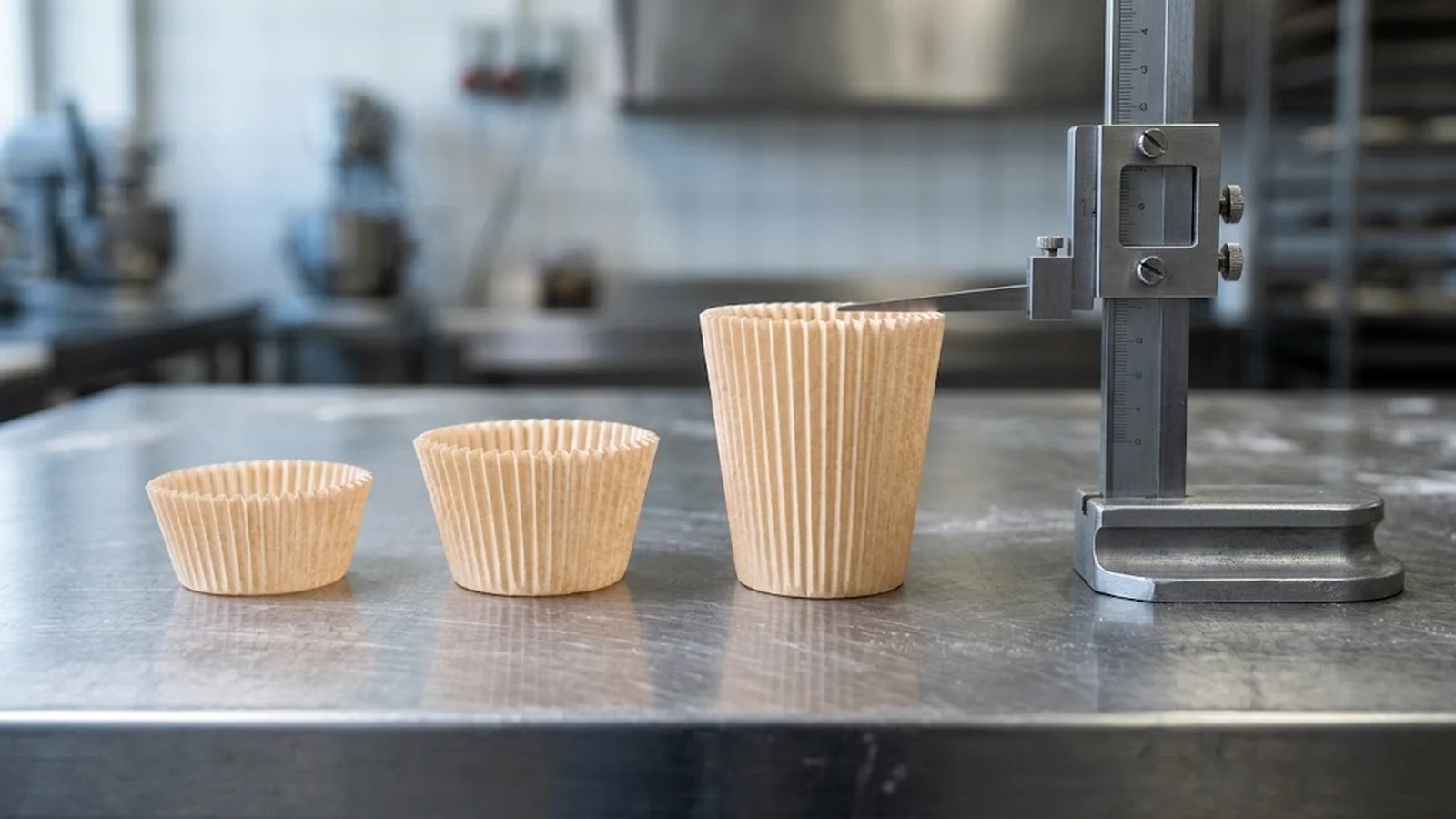
Diameter gets all the attention in cake cup specifications, but wall height is the dimension that decides whether the product looks the way the marketing photo promised. A cup too short for its batter overflows into the pan, wastes product and glues trays together; a cup too tall shades the batter, slows the bake and leaves a pale, under-browned shoulder that reads as undercooked. Between those two failures sits a specifiable band — and like diameter and grammage, wall height is a number buyers should write down, not leave to "standard." Cup programmes usually ship alongside pan lining; our wholesale parchment paper rolls and sheets specs cover the sheets and rolls that pair with them.
This guide explains how wall height interacts with batter volume, fill depth and bake behavior, what height ranges suit which products, and how to specify and verify height across production shipments so that what arrives matches what was approved. Buyers verifying these specifications can review the certificate library alongside supplier documentation requests.
1. Why Wall Height Matters More in Production Than in the Sample
In the test kitchen, a marginally short cup is invisible. In commercial production it multiplies: thousands of fills per hour, each one engineered to deposit a target batter weight. When batter rises above the cup rim — as it reliably does with deep-fill muffin deposits of 90–110 g in a standard-height cup — the excess contacts the pan or the adjacent cup, bakes into a bridged crown, and turns a clean de-panning operation into a scraping and re-cleaning cycle. Overfill also changes the product itself: an overflowing crown bakes darker at the rim, sticks to the cup wall, and can tear away on removal. Where a bakery lines trays and moulds product in the same run, our baking parchment paper manufacturing programme are quoted with the cup programme for a single documentation package.
Height does the opposite job from the top down. Excess wall height shades batter from the oven's radiant heat, extends bake time by minutes at scale, and leaves the classic pale ring at the cup's upper wall on chocolate and whole-grain batters. Height also has commercial afterlives: it sets the stacked height of the finished product in retail packs and deli display cases, and whether a standard dome lid clears the crown. A wall height that bakes beautifully and does not fit the lid is still a failed specification. The factory and certificate library lists the third-party audits and test reports behind these claims.
2. Height Ranges and What They Suit
Commercial baking cups cluster into three practical height families, useful as starting references rather than fixed law:
- Standard height (roughly 25–33 mm for muffin diameters of 45–50 mm). The default for cupcakes and portion muffins with deposits around two-thirds of the cup volume. Standard walls keep exposure high, bake times short and browning even — the right choice wherever presentation is a flat, open crown.
- High wall / deep-fill (roughly 35–50 mm). Built for the muffin-shop format: generous deposits that rise above the rim, moist batters with large inclusions such as blueberries or chocolate chunks, and the domed, bakery-counter silhouette customers associate with premium muffins. High walls contain the rise, protect the pan and give the batter vertical room to crown without collapsing sideways.
- Tulip and wrap formats. Fluted paper folded outward above the cup wall, effective height becomes a design variable rather than a single number: the flare holds a high deposit while leaving the batter top exposed, combining deep-fill volume with standard-height browning. Tulip formats trade volume efficiency — fewer cups per pan — for presentation and pan protection.
Height interacts with batter type, not just volume. Stiff, high-viscosity batters hold their shape and tolerate shorter walls than fluid batters, which climb the wall and need the extra containment. Buyers changing recipes seasonally should treat wall height as part of that change, not a fixed given.
3. Specifying Fill Depth Alongside Cup Height
Wall height only has meaning relative to fill depth, so the specification should state both. The classic guidance — fill cups two-thirds full — works for standard-height cups and conventional batters; deep-fill programs deliberately run to or above the rim with high-wall cups. What matters for the specification is the coupling: cup height, target batter weight, and expected rise, written together, so a recipe change on one side of the pair triggers a review of the other.
A practical way to specify is by batter weight per cup and resulting fill percentage: for example, "55 g deposit in a 50 mm diameter cup, 30 mm wall height, fill 65%, expected rise 40% above deposit level." That one line lets both the bakery and the cup supplier simulate overflow risk before the first production run — and it converts vague complaints ("the cups are too small") into checkable numbers.
4. Verifying Height in Incoming Shipments
Wall height is measurable on arrival with no more than a rule and a sample discipline, and it should be measured, because height drifts in converting when fold-forming rollers wear or paper grammage changes. A ten-minute incoming check:
- Sample across the shipment — pull cups from several cartons, top and bottom of each pallet.
- Measure 10 cups per carton with a rule or height gauge, cups seated on a flat surface, and record the extremes, not the average.
- Compare against the approved sample, not just the spec sheet — a production run can meet a loose tolerance while still failing to match what was approved.
- Run the bake check quarterly or at supplier change: deposit the target batter weight, bake the standard profile, and confirm crown shape, wall browning and clean release.
A workable tolerance band for wall height is ±1 mm on cups in the 25–40 mm range, consistent with the converting precision that holds diameter. Buyers who log height alongside diameter and grammage build the trend data that keeps suppliers honest and turns disputes into measurements.
FAQ
What wall height should I use for deep-fill muffins?
Deep-fill programs typically use high-wall cups in the 35–50 mm range, paired with deposits of 90–110 g for standard muffin diameters. The right number depends on batter fluidity and rise: specify the batter weight and fill percentage together with the cup height, and validate with a bake test before committing the volume.
Can I use taller cups to stop batter overflow?
Taller cups contain rise, but they also shade the batter and slow browning — the fix can create a pale, under-baked-looking product. If overflow is the problem, check the fill depth and batter rise first; move to a high-wall cup when deposits genuinely exceed standard wall capacity, as in deep-fill muffin formats.
Does cup height affect how the finished product fits retail packaging?
Yes. Crown height after baking determines whether products fit standard dome lids, retail clamshells and display tray heights without crushing. Specify the post-bake height target alongside the cup height, and verify it in the bake check — a cup that bakes well but fails the lid fit is a specification failure either way.
Conclusion
Wall height is the quiet half of cake cup geometry — invisible in the sample, decisive in the production run. Pair the cup height with batter weight and fill depth, choose the height family that matches the product's rise and presentation, and verify both the incoming dimension and the post-bake crown on a schedule. Buyers who treat height as a specified, measured number get cups that contain the batter, brown the product and fit the box — every shipment, not just the approved one. Buyers standardising on one paper supplier can review our private-label parchment paper supplier next to their cup specifications.
CTA
LANGMAI manufactures baking cups and cake cups in standard, high-wall and tulip formats, with diameter, wall height and grammage written into every specification and supported by bake-validated samples for your batter and oven profile. Contact our wholesale team with your batter weights and pan dimensions for samples and a height-matched quotation.
Sources
- TAPPI — Technical resources for pulp and paper testing
- AIB International — Baking industry standards and training
- FDA — Food Contact Substances: 21 CFR 176 Indirect Food Additives: Paper and Paperboard Components
- EU Regulation 1935/2004 — Materials and articles intended to come into contact with food
- ISO 536 — Paper and board: determination of grammage