
Introduction
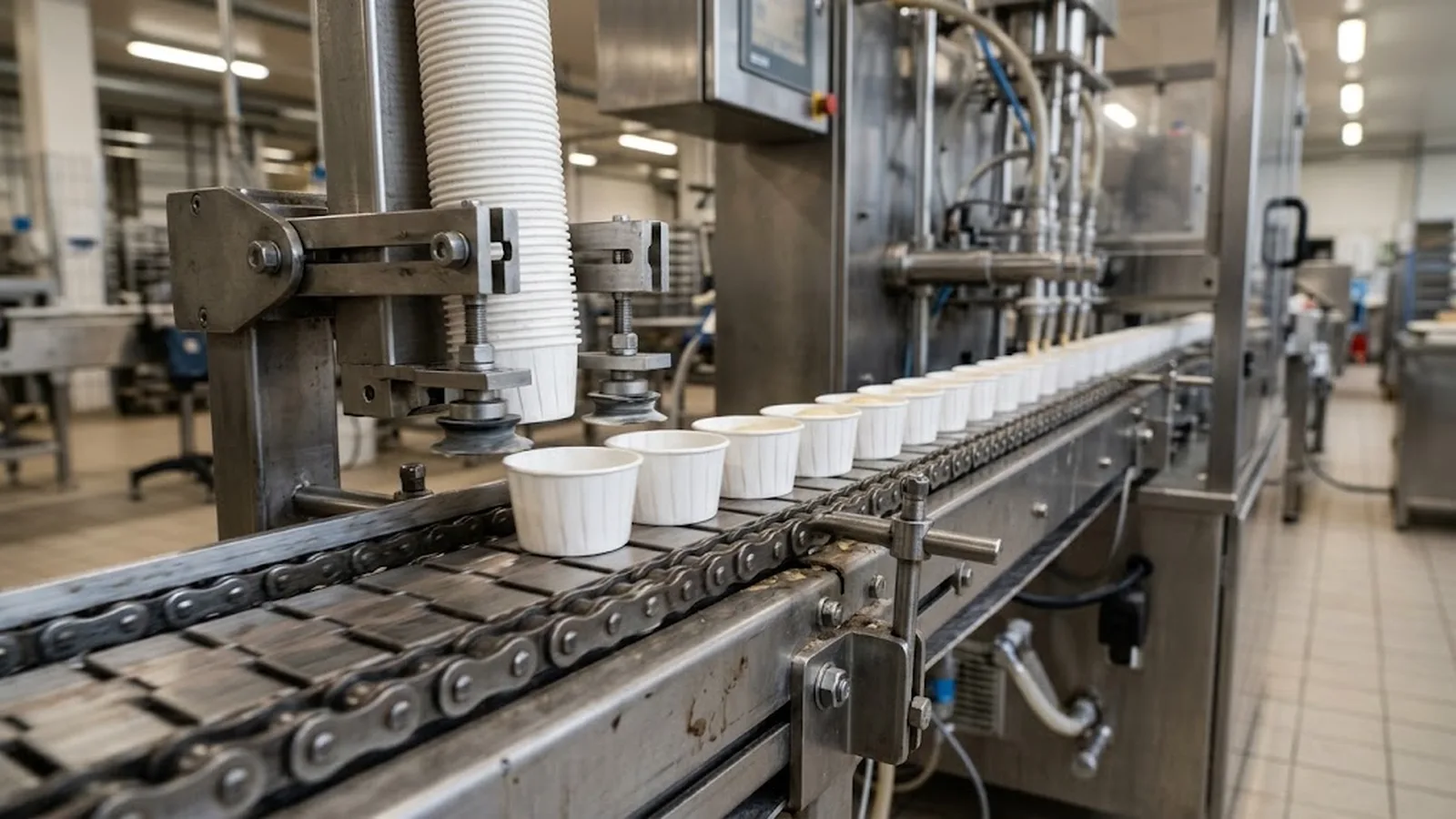
A cake cup that looks perfect in a sample box can still shut down a filling line. In semi-automatic and automatic production, cups are not handled one by one: they arrive as nested stacks, get separated by a denester, picked by suction, vacuum or mechanical fingers, and seated in a tray or chain mold in a fraction of a second. Every property that matters in that sequence — nesting density, separation behavior, wall stiffness, rim geometry — is a paper and construction property, not a machine setting. Buyers who treat feeding as the machine supplier's problem discover the mismatch only when cups bridge, double-feed or collapse at the pick-up point, and the cost is measured in stopped lines and scrapped product. Cup programmes usually ship alongside pan lining; our private-label parchment paper supplier specs cover the sheets and rolls that pair with them.
This guide explains how nested cake cup stacks behave in feeding equipment, which properties determine separation and pick-up reliability, how to run a feeder compatibility test with samples, and what to write into the specification so every future lot feeds like the approved one. Buyers verifying these specifications can review the certificate library alongside supplier documentation requests.
LANGMAI manufactures paper cake cups for wholesale buyers running both manual and automated filling operations, and supplies feeding-relevant specifications on request. The framework applies to any cup supplier.
Why Nesting Behavior Is a Specification, Not an Accident
Two stacks of visually identical cups can feed completely differently. The difference is in properties that only appear under stress: Where a bakery lines trays and moulds product in the same run, our pre-cut parchment paper sheets and rounds are quoted with the cup programme for a single documentation package.
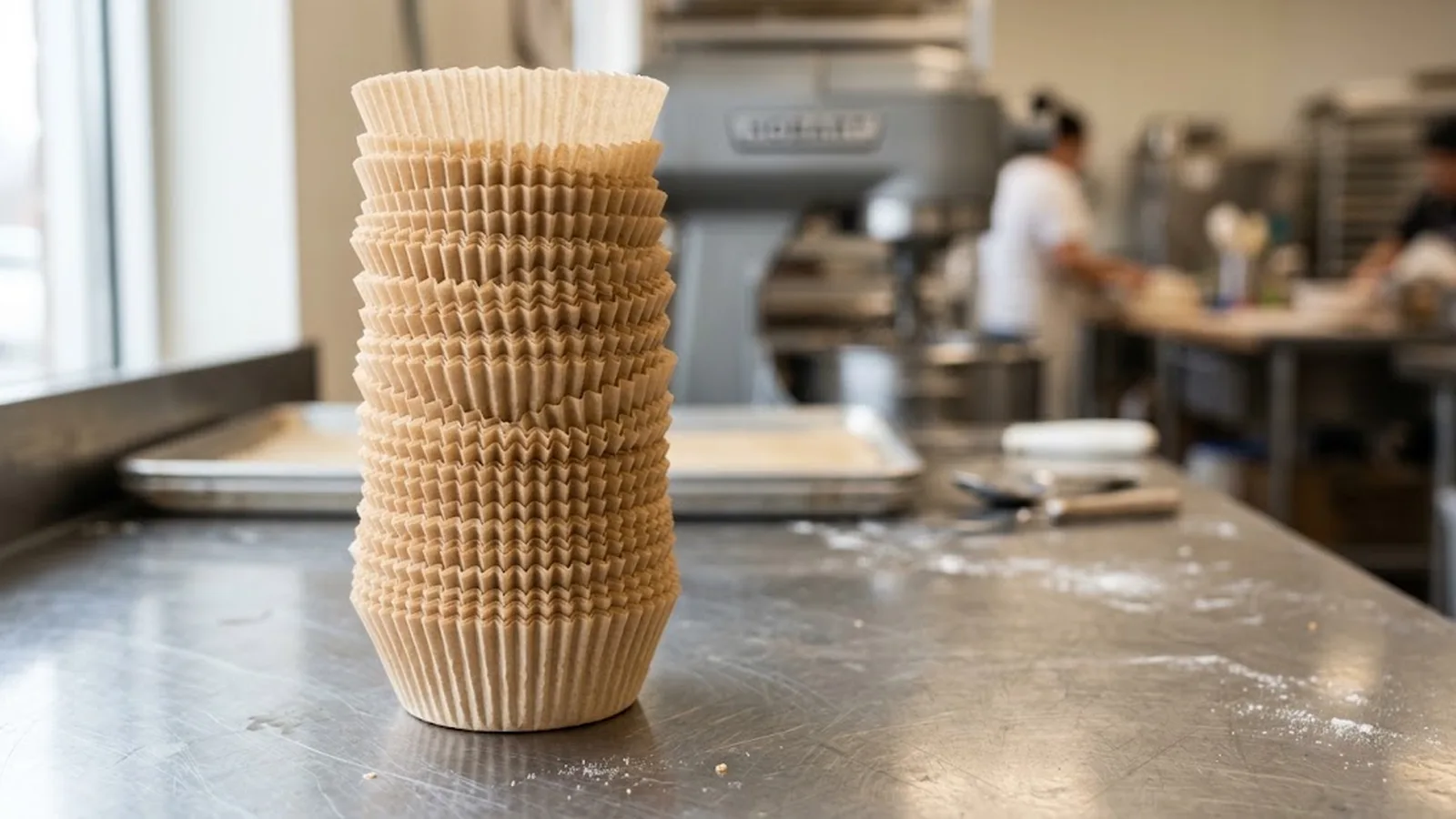
- Nesting density. The number of cups per stack height is controlled by flare angle and wall stiffness. A shallow flare nests tightly — compact for shipping, but the friction between cups can make the denester grab two at once. A generous flare nests loosely — easy separation, but stacks are tall and wobble on the feeder magazine. Both extremes are workable; the wrong extreme for your machine is not.
- Separation friction. Smooth inside surfaces against smooth outside surfaces can bond slightly under stack weight, especially in warm, dry warehouses. Lightweight cups with weak walls deform instead of separating cleanly.
- Wall stiffness at the pick-up point. The denester applies force to the rim or upper wall. A cup that buckles at pick-up is not a defective cup in isolation — it is a mismatch between wall construction and the machine's grip force.
None of these can be judged from a product photo. They must be declared, tested and documented. The factory and certificate library lists the third-party audits and test reports behind these claims.
The Properties That Decide Feeding Success
Rim geometry and flare consistency
The rim is the machine's handle. A cup whose flared rim has consistent diameter and angle from cup to cup feeds predictably; a rim with lot-to-lot variation changes pick-up behavior mid-production. Ask the supplier for rim diameter tolerance in writing, and note whether the flare is formed or merely folded — formed flares hold shape under stack weight, soft flares compress and stick.
Wall stiffness and grammage
Heavier grammage and stiffer paper separate and pick more cleanly but increase cost and stack height per thousand cups. Lighter cups nest tighter and lower freight per unit, but only feed well if the denester is gentle. The correct answer is not "stiffer is better" but "stiff enough for the grip system in use" — which is why the specification should state the intended feeding method.
Stack orientation and packaging
Cups ship nested in sleeves, and the stack's condition on arrival decides the first hour of production. Confirm how stacks are packed: a stack that has shifted and compressed in transit can bridge or jam until an operator re-squares it. For automated lines, ask whether stacks can be supplied in feeder-magazine-compatible heights so operators load whole stacks without pre-counting.
Running a Feeder Compatibility Test
Structure the sample test around your actual line conditions:
- Run at least three full stacks — ideally from different production lots — through the denester at production speed, recording jams, doubles and deformed cups per thousand.
- Test pick-up with your worst-case stack condition: a stack that has been compressed in a carton, and a stack conditioned in a warm dry room. Real warehouses create both.
- Verify seating: cups must land square in the tray or mold, with the rim resting where the machine expects it, before the depositor fires.
- Check the stack's behavior during a full shift, not a ten-minute demo — friction behavior changes as stacks warm and dry out.
- Record the nesting density of accepted stacks (cups per stack height) so incoming goods can be checked against it.
If the machine supplier offers a lab or demo line, send cups from two different lots, not one approved sample, because consistency across lots matters more than a lucky first lot.
What to Put in the Specification
Convert feeding success into paper, not habit:
- Declared rim diameter, base diameter and wall height with tolerances, per the dimensional specification.
- Nesting density or cups-per-stack-height range for the agreed sleeve format.
- A statement of the intended feeding method (manual, semi-automatic suction, automatic mechanical) so the supplier matches wall stiffness and flare to it.
- Packaging details: sleeves per carton, stack protection, and whether stacks arrive feeder-ready.
LANGMAI declares feeding-relevant parameters with quotations, supports line trials with multi-lot samples and works with buyers to match cup construction to their denesting equipment, including private-label programs with feeder-ready stack packaging.
FAQ
Why do my cake cups double-feed in the denester?
Double-feeding usually comes from tight nesting plus smooth contacting surfaces: the denester's separator pulls two cups instead of one. Causes include a shallow flare angle, stack compression in transit, or wall stiffness too low to spring apart on separation. A cup with a slightly larger flare or stiffer wall usually solves it — but confirm with a multi-stack line trial before changing grades.
Can lightweight cake cups run on automatic feeders?
Yes, when construction matches the grip system. Lightweight cups feed well on gentle suction or vacuum systems but may buckle under aggressive mechanical pick-up. The deciding factor is wall stiffness at the rim, which should be stated in the specification and verified with the actual machine, not assumed from grammage alone.
How many cups per stack should I expect?
It depends on flare angle, wall height and grammage, and it varies between cup families — taller and stiffer cups produce shorter stacks for the same count. Ask the supplier to declare cups per stack height for the sleeve format, then use that number as an incoming-goods check: a sudden change in nesting density signals a construction change that will show up at the feeder.
Does LANGMAI test cake cups for feeder compatibility?
Yes. LANGMAI supports line trials with multi-lot samples, declares nesting density and dimensional tolerances with the specification, and can adjust flare and wall construction to match semi-automatic and automatic denesting equipment. Contact Sales with your feeder type and stack-loading method for matched samples.
Conclusion
On an automated line, the cake cup is a mechanical component as much as a packaging product. Nesting density, separation friction, rim consistency and wall stiffness decide whether the denester sees a smooth stream of single cups or a queue of problems. Specify the feeding method, trial with multi-lot samples under realistic stack conditions, and write the feeding-relevant numbers into the signed specification. That is the difference between a cup that fills lines and a cup that stops them. Buyers standardising on one paper supplier can review our custom printed baking parchment paper next to their cup specifications.
CTA
Contact Sales for LANGMAI cake cup samples engineered for your denesting and filling equipment, with declared nesting densities, dimensional tolerances and wholesale quotation for automated and semi-automated lines.