
Introduction
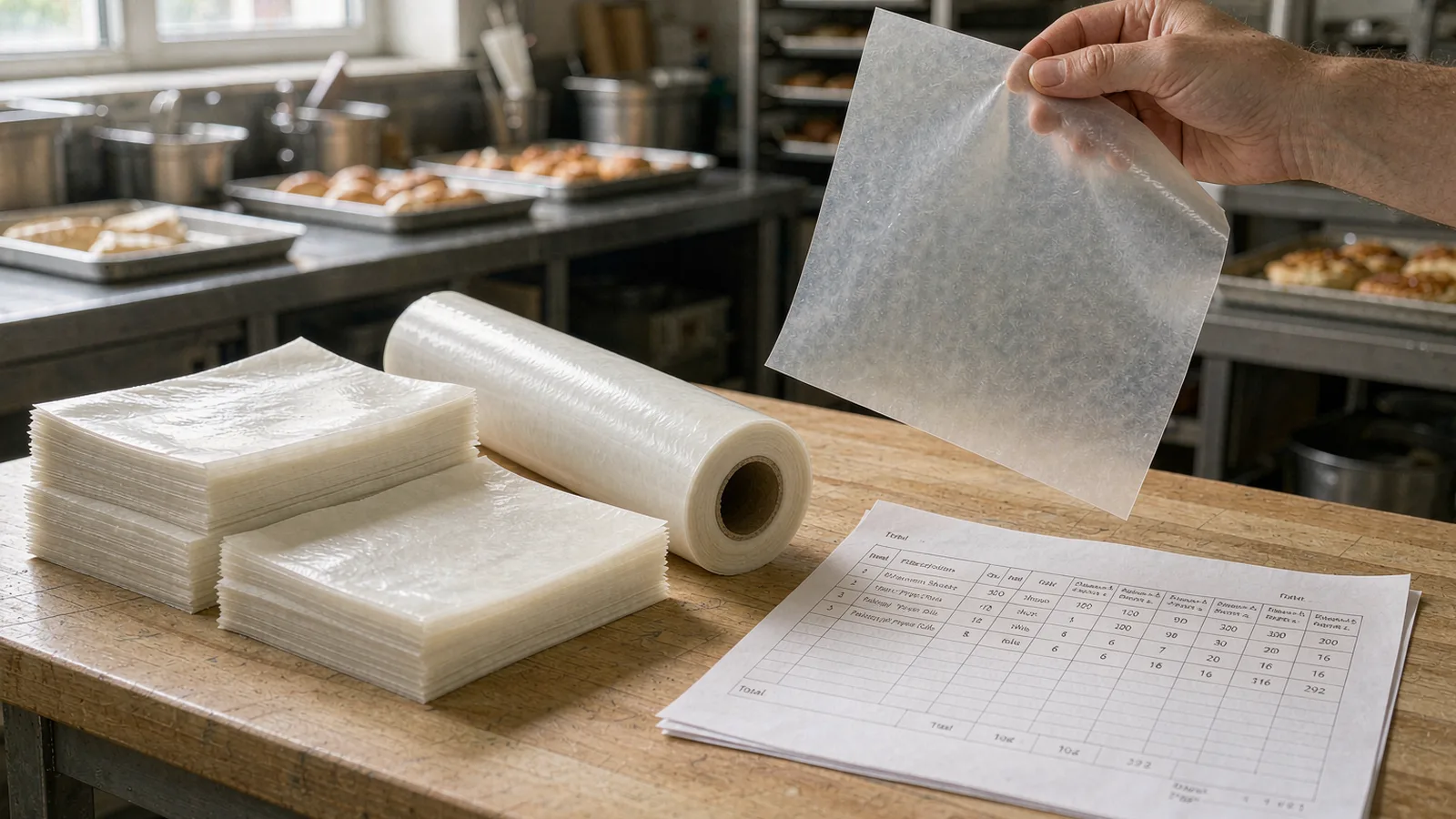
Wholesale buyers of baking paper tend to purchase one purchase order at a time, and the cost of that habit shows up twice a year. Demand for parchment sheets, rolls and die-cut rounds spikes ahead of the Q4 holiday season and again before summer foodservice peaks, and buyers who order only against confirmed orders compete for the same production slots as everyone else, absorb mid-season price adjustments and sometimes switch constructions mid-contract because that was all a factory could slot in. A blanket order agreement — one annual commitment released against a fixed schedule — converts that scramble into planned capacity, locked pricing and consistent construction. It does not require sophisticated procurement machinery; it requires a realistic volume figure, a release calendar and a few contract clauses done properly. For the paper side of these programmes, buyers can review our wholesale parchment paper rolls and sheets specifications and sample terms before structuring the commitment.
Why Baking Paper Suits Blanket Order Structures
Blanket ordering works best on products with stable constructions, long shelf life and consumption that tracks a production plan — and baking paper qualifies on all three. A parchment construction does not expire in the way coated or laminated products can; stored correctly in dry, wrapped conditions, sheets and rolls hold their release performance across many months, which means committed volumes are not a perishability risk. Consumption is also unusually predictable: a bakery or foodservice group can calculate paper usage per SKU from pan counts, bake cycles and line speeds, then roll those figures up into an annual quantity with reasonable accuracy. A plant running forty pans at eight cycles a day knows roughly how many sheet pallets a year looks like.
That predictability is what a manufacturer needs to justify reserving line time and holding raw material positions. Paper mills and silicone coating lines reward forecastable demand with better pricing and priority scheduling, and those gains flow directly into the blanket price. Requests that combine categories can be quoted together; see the baking parchment paper manufacturing programme for the paper component when cups, wraps or liners are also in the same annual basket.
Structuring the Agreement: Volumes, Price Windows and Releases
A workable baking paper blanket agreement has four load-bearing numbers. First, the annual volume: state it as a committed base quantity with a tolerance band — typically plus or minus 10 to 15 percent — so a demand surprise does not breach the contract or strand inventory. Second, the price window: a fixed unit price for 12 months is the normal ask; if a factory will only hold price for six, negotiate an index-linked adjustment rather than an open-ended clause. Third, the release schedule: most buyers release quarterly or monthly against agreed quantities, with the factory confirming a delivery date per release. Fourth, the minimum release quantity, which protects the factory from fragmented calls on production and should be set low enough to keep your working inventory lean.
Forecast sharing is the clause buyers most often omit and most often regret. Provide a rolling forecast — confirmed for the next quarter, indicative for the following two — and the factory can pre-position base paper and coating capacity before your confirmed release arrives. This is also the natural place to agree specifications by reference: attach the approved construction, grammage, coating weight and packing format to the agreement itself, so every release ships to a documented standard rather than to memory.
Capacity Reservation and Peak-Season Planning
The single biggest operational win from a blanket agreement is reserved capacity through the peaks. Q4 demand for baking paper — driven by retail baking, seasonal muffin and cake programmes and holiday foodservice menus — routinely exceeds what spot buyers can secure at short notice. Under a blanket structure, the factory allocates coating line time and finished-goods stock against your release calendar months ahead, and the release dates are negotiated so your shipments land before your peak bake weeks, not during them. Buyers with freezer-to-oven or high-speed depositing lines should also fix the packing format in the agreement, because carton counts, pallet heights and pop-up box configurations affect line feeding and warehouse slots as much as the paper itself.
Capacity reservation works both directions, so be honest about it: a factory that holds line time for your volumes expects releases roughly on schedule. Where genuine uncertainty exists, a smaller committed base with a pre-agreed surge mechanism — defined quantities that can be pulled forward on 30 to 45 days' notice — is more durable than an optimistic forecast that collapses in October. The factory and certificate library lists the third-party audits and test reports behind the production claims you are reserving capacity against.
Construction Consistency and Compliance Across Releases
A blanket agreement is also a consistency instrument. Across ten or twelve releases a year, the risk is drift: a different base paper lot, a changed coating weight, a substituted packing film. Write change control into the agreement — no modification to grammage, silicone coating, bleaching method or food-contact status without written notice and a re-approval sample — and require a certificate of analysis per production lot so each release can be verified against the locked specification. For food-contact documentation, confirm at contract stage that FDA and LFGB test reports, and where required a PFAS-free declaration, are issued against the exact construction named in the agreement and refreshed when any input changes. Buyers verifying these specifications can review the certificate library alongside supplier documentation requests before signing.
Commercial Terms, Pricing Mechanics and Flexibility
Price mechanics deserve more attention than most buyers give them. A fixed 12-month price on a locked construction is the standard commercial package for blanket volumes; where pulp or energy volatility makes a factory hesitant, a cap-and-collar adjustment — price moves only within an agreed band, on an agreed index, with notice periods — protects both sides without reopening negotiation every quarter. Payment terms on blanket agreements typically mirror the incoterms structure already agreed for the account, and early-release discounts can be negotiated where the factory benefits from smoothing production. Finally, define exit conditions in writing: what happens to unshipped committed volume if either party terminates, how a construction change is handled mid-window, and who owns residual finished-goods stock. Buyers consolidating several paper categories under one commitment can review our private-label parchment paper supplier terms, where commercial conditions mirror the MOQ, lead-time and documentation structure described here.
FAQ
What annual volume justifies a blanket order agreement for baking paper?
There is no universal threshold, but structures become commercially interesting once annual usage reaches a level where a factory can plan coating runs around it — commonly the equivalent of a few full container loads per year in mixed sheet and roll formats. Below that, a simple quarterly purchase schedule with agreed pricing often delivers most of the benefit without contract overhead.
How far in advance should releases be confirmed?
Confirm the next release when the previous one ships, and keep a rolling forecast visible two to three quarters out. Peaks and custom constructions benefit from longer visibility; standard stock constructions in steady volumes can run on shorter confirmation windows.
Can a blanket agreement hold the same price for twelve months?
Usually yes, on a locked construction and agreed release pattern. Where input costs are volatile, expect either a shorter price window or an index-linked clause with caps, collars and notice periods rather than an open-ended commitment to a fixed price.
What happens if actual demand falls below the committed volume?
That is what the tolerance band and release minimums are for. Well-drafted agreements carry over unused committed volume into the next window, cap end-of-term exposure, and define a settlement mechanism — rather than leaving a shortfall to be argued about at renewal.
Conclusion
A baking paper blanket order is less a legal exercise than a planning one: a realistic annual volume, a release calendar matched to your bake schedule, forecast sharing, change control on the construction and price mechanics both sides can live with. Buyers who make that shift stop competing for peak-season capacity, stop re-approving constructions every quarter and stop paying for volatility they did not cause. The documentation effort is front-loaded — one well-specified agreement replaces a year of scattered purchase orders — and the factory gains the confidence to reserve line time, hold stock and hold price. That is the entire bargain, and it is available to any buyer prepared to commit to a number and a calendar.
CTA
Planning an annual baking paper commitment for sheets, rolls or die-cut rounds? Send your consumption estimate, target construction and destination market — we will return a blanket-order structure with pricing, release scheduling and full food-contact documentation for review.
Sources
- USDA Economic Research Service — Food price and spending outlook: https://www.ers.usda.gov/data-products/food-price-outlook/
- FDA — Food Contact Substances Notification Program: https://www.fda.gov/food/food-additives-petitions/food-contact-substance-notification-program
- European Commission — Food safety: materials in contact with food: https://food.ec.europa.eu/food-safety/food-contact-materials_en