Introduction
Colour is usually the first argument in a baking paper discussion and the last thing written into a specification. Marketing wants the warm natural tone that reads as less processed, operations wants the white sheet that makes caramelisation easy to judge, and procurement wants whichever option is cheaper this quarter. They are describing three different things. Every document in our compliance library is tied to a specific construction; see how the wholesale parchment paper rolls and sheets programme aligns test reports with the exact grade supplied.
For a wholesale buyer, colour is a process decision with consequences. It changes pulp yield, fibre strength, purchase cost, available grammages, print contrast and sometimes the documentation a retail customer asks for. It rarely changes release performance or oven limits, which come from the base sheet and its silicone coating. Buyers verifying these specifications can review the certificate library alongside supplier documentation requests.
1. Colour Is a Process Decision, Not a Performance Spec
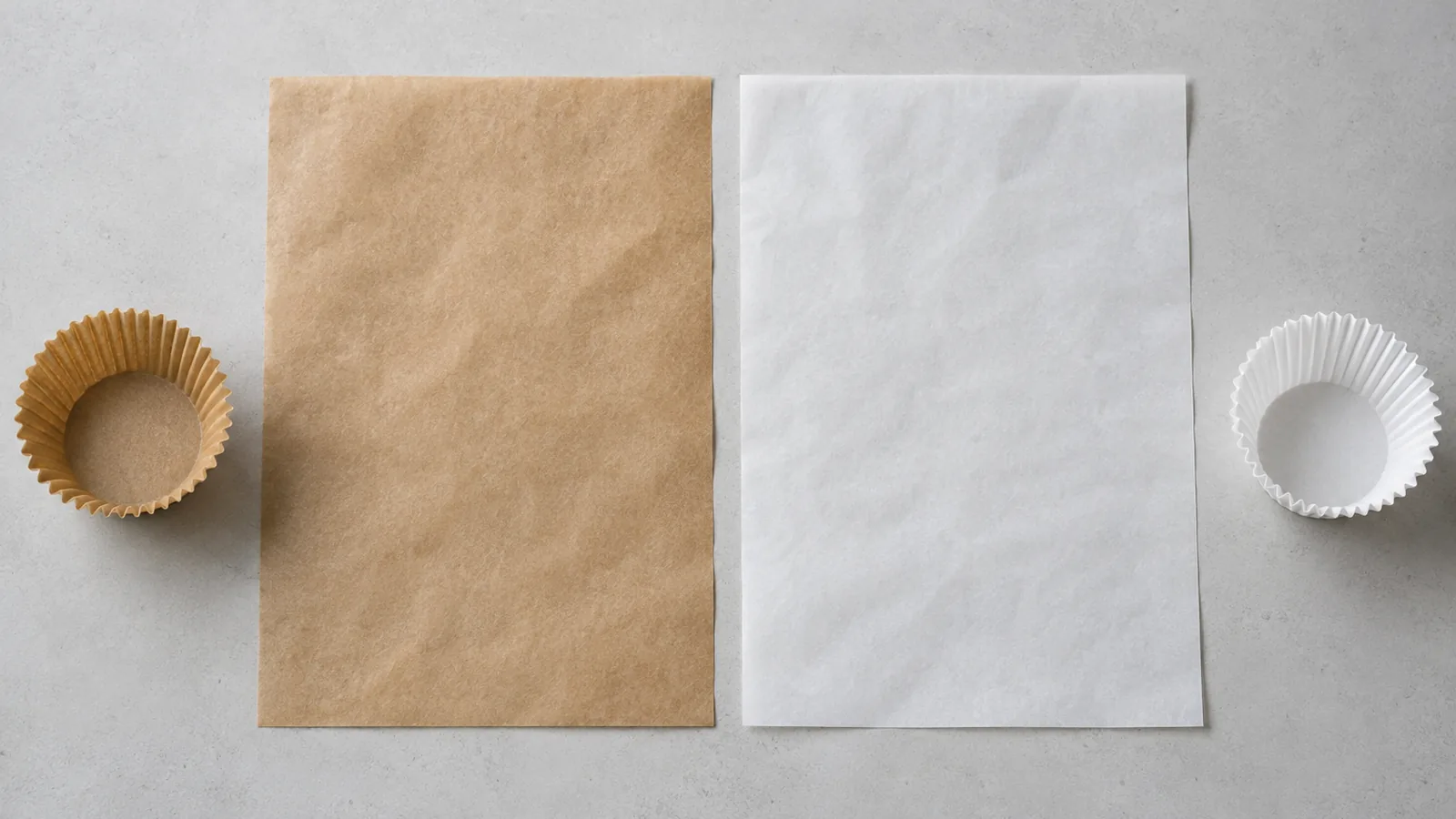
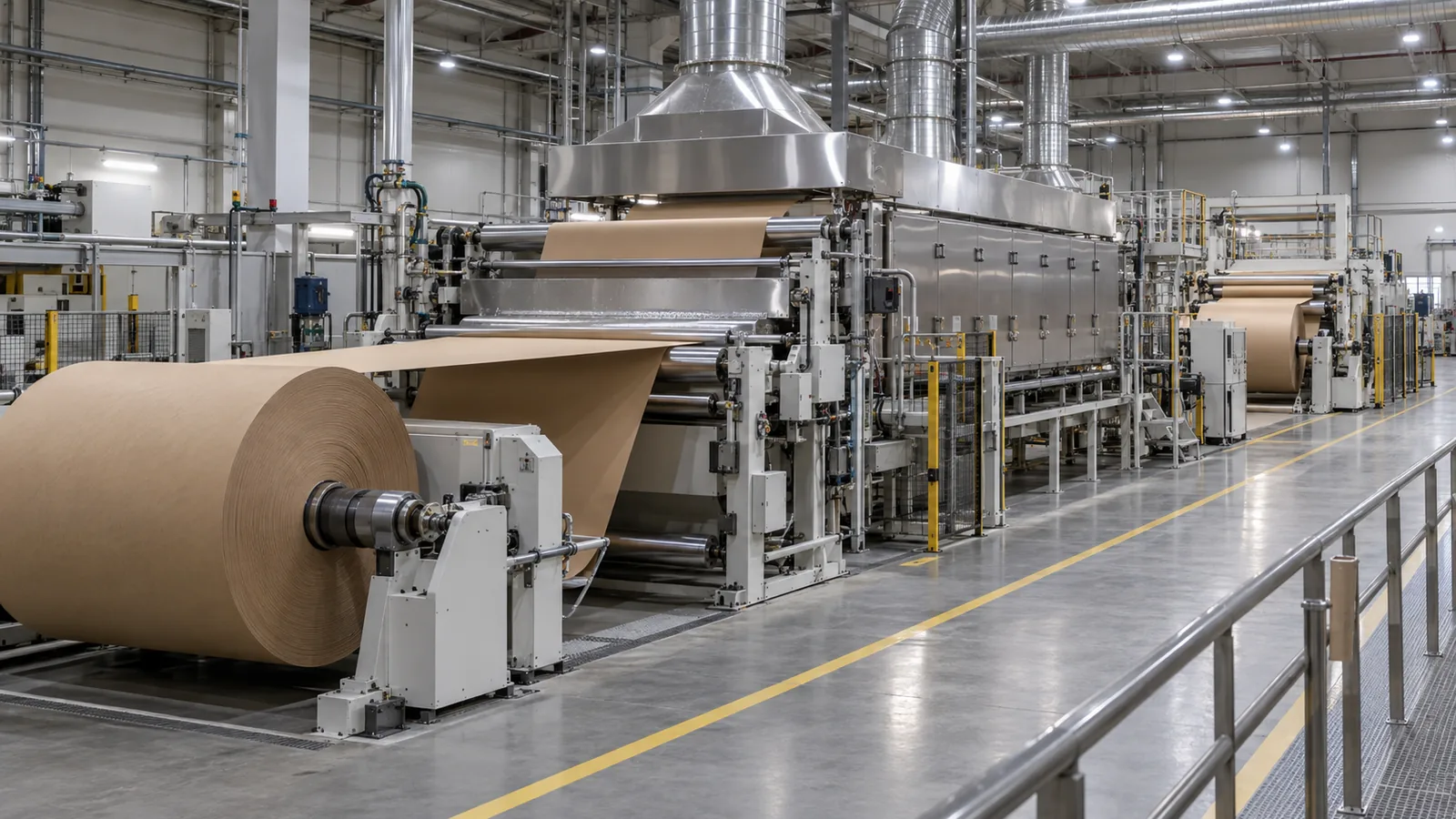
Unbleached paper keeps the lignin that binds cellulose fibres in wood. It is cooked by the kraft process and formed into sheet without delignification, leaving the natural brown tone. Bleached paper passes through additional stages removing residual lignin so the fibre reflects light evenly. Documentation scope is confirmed per SKU and destination market, as outlined on our baking parchment paper manufacturing programme page.
Two routes dominate supply. Elemental chlorine free pulp uses chlorine dioxide, the industry workhorse, delivering high brightness with very low levels of the organochlorine by-products linked to older chlorine bleaching. Totally chlorine free pulp uses oxygen, ozone and hydrogen peroxide and avoids chlorine compounds. The factory and certificate library lists the third-party audits and test reports behind these claims.
Removing lignin costs yield: extra fibre per tonne plus added chemicals, energy and steps. That is the origin of the price gap, and of the small strength advantage held by unbleached sheet, since retained lignin contributes stiffness. What does not change is release, which comes from the silicone coating and base sheet density.
2. Appearance and Consumer Perception
Shopper research links brown fibre with craft, natural and minimally processed cues, and white with cleanliness, precision and premium patisserie. Both associations are learned rather than factual, but they drive conversion on packaged bakery and shape what a retailer accepts on shelf.
Practical consequences follow. On a natural sheet, dark batters read darker still and pale bakes look muddier than they are; on white, caramelisation and leakage are easy to see, which matters for quality control as much as photography. Print differs too: unbleached stock lowers contrast for light inks and pushes artwork toward dark colours, while white stock reproduces fine detail and pastels. Choose colour from the finished presentation, not a swatch held up in a meeting.
3. Bleaching Chemistry and What It Leaves Behind
Historical concern centred on dioxins and furans from elemental chlorine bleaching. That route has largely been replaced in food-grade supply, and modern mills operate under effluent controls that substantially reduce discharges. Where a buyer wants assurance, ask the mill to identify the sequence actually used rather than accept a generic chlorine-free claim, which is often imprecise.
A second issue deserves more attention: optical brightening agents. These fluorescent compounds absorb ultraviolet light and re-emit it in the blue range, making paper appear brighter than its true shade. They serve no function in baking, and several markets restrict them in food-contact paper because of their migration behaviour. If a white sheet looks strikingly bright under retail lighting, ask whether an agent was applied and request that it be omitted.
4. What Food-Contato Rules Actually Cover
Food-contact frameworks do not regulate colour. They regulate composition, extractives and migration of the finished material under intended conditions of use. In the US, paper and paperboard fall under FDA provisions covering their components, including requirements for aqueous and fatty foods and for dry food. In the EU, the framework regulation sets general safety and traceability duties supported by good manufacturing practice rules, while national guidance such as the BfR recommendations informs composition expectations. China applies its own standard for paper products.
So compliance rests on the same document regardless of shade. Request a declaration naming the product code, legal basis, permitted food types and any time or temperature limitations, with migration or extractives testing matched to the intended food. Ask specifically about brightening agents, bleaching residuals, heavy metals and recycled fibre content.
5. Cost, Lead Time and Supply Differences
Bleached sheet costs more per tonne, and the gap moves with pulp and chemical markets. Expect a modest premium rather than a step change, though it compounds through converting, because printing, cutting and packing sit on top of a higher-priced input.
Availability often matters more than price. Unbleached kraft is produced in very large volumes globally and stocked across a wider range of grammages and widths, usually meaning shorter lead times and lower minimum order quantities. Bright white food-grade grades are more specialised, particularly at the low grammages used for baking cups, so narrower availability translates into longer confirmation cycles.
Evaluate cost landed and buffered. A cheaper white programme carrying a longer lead time may need more safety stock than the natural alternative, and carrying cost erases unit savings quickly.
6. Matching Colour to Brand Positioning
Brand fit decides most retail-facing programmes, and it resolves along a simple axis.
Organic, natural, wholefood and craft lines tend to select unbleached paper because the shade supports the claim architecture on pack. The risk is inconsistency, since natural fibre varies more between lots than bleached pulp. Specify brightness as a numeric range with a tolerance band and retain signed reference samples from each lot.
Premium patisserie, celebration ranges and delicate-coloured products generally favour bleached sheet, where contrast and cleanliness carry the proposition. Foodservice and industrial users care least about shade and should choose on availability and landed cost.
7. What Belongs in the Specification
- Shade with measured brightness target and tolerance, plus a physical reference retained by both parties.
- Bleaching route, stated explicitly as unbleached, elemental chlorine free or totally chlorine free.
- Absence of fluorescent whitening agents, stated explicitly.
- Grammage with tolerance, caliper and moisture content.
- Food-contact declaration with legal basis, food types and time and temperature limits, tied to the product code.
- Silicone coating: single or double sided, coating weight and expected release.
- Format details: roll width, core size, sheet dimensions, cup diameter and wall height, each with tolerances.
- Change-notification terms covering pulp mill, bleaching sequence and coating chemistry.
Conclusion
Unbleached and bleached baking paper are not competing performance products. They are the same functional sheet at different points on a processing continuum. Choose on three grounds and in this order: what the finished presentation needs, what the destination market's documentation requires, and what landed cost and lead time the replenishment model can absorb. Bleaching route, brightness tolerance and absence of optical brighteners belong in the written specification, because those are the items that drift when nobody is watching. Release, oven limits and compliance should be specified independently of colour and verified by test reports tied to the product code, not inferred from shade. Buyers who separate those questions get a stable programme in either colour. Our private-label parchment paper supplier programme is audited against the same standards referenced in this guide.
Is unbleached baking paper safer than bleached baking paper?
Not inherently. Safety rests on composition and migration testing of the finished material, and a compliant sheet can be either colour. The meaningful questions are which bleaching route was used, whether a fluorescent brightening agent was applied, and whether the supplier holds a product-specific declaration supported by test reports.
What is the difference between elemental chlorine free and totally chlorine free?
Elemental chlorine free pulp is bleached with chlorine dioxide, the dominant modern route, avoiding the organochlorine by-products linked to historical elemental chlorine bleaching. Totally chlorine free pulp uses oxygen, ozone and hydrogen peroxide and avoids chlorine compounds entirely. Ask the mill which sequence it actually runs.
Why does bleached baking paper cost more?
Bleaching removes lignin, lowering pulp yield per tonne of wood and adding chemicals, energy and process steps. Expect a modest input premium that flows through converting. Weigh it against availability, since unbleached kraft is produced in larger volumes and often offers shorter lead times and lower minimum order quantities.
Does paper colour affect non-stick release or oven limits?
No. Release comes from the silicone coating and base sheet density, and temperature limits are set by the paper and coating system. A natural and a white sheet from the same mill, at the same grammage and coating weight, perform almost identically in the oven.
How do I stop colour varying between shipments?
It can. Colour varies between lots, particularly in natural grades where fibre shade is inherent. Specify a measurable brightness target with a tolerance band, retain signed reference samples from each shipment and compare them under consistent lighting.
CTA
Send LANGMAI the formats you buy, whether rolls, sheets or paper baking cups, together with grammage, dimensions, target brightness, destination market and monthly volume. The team can quote bleached and unbleached options side by side and prepare samples for evaluation.
Sources
- U.S. FDA — Food Contato Substances
- EUR-Lex Regulation (EC) No 1935/2004 on food contact materials
- EUR-Lex Regulation (EC) No 2023/2006 on good manufacturing practice
- BfR Recommendations on Food Contato Materials
- Confederation of European Paper Industries (Cepi)
- ISO — Paper, board and pulps standards