Introduction
Cupcake toppers wholesale orders look simple until the first shipment reaches retail, bakery service or party-kit assembly. A buyer may approve a pretty digital design, then find that the paper board is too thin, the pick is too long for the pack, the colour does not match the liners, the count is inconsistent, or the product is marketed in a way that creates a children's-product review. A reliable bulk order needs a written specification and physical samples, not only theme images.
The direct answer: source cupcake toppers wholesale by defining the sales channel, user, food-contact boundary, topper size, material, pick construction, artwork, pack count, retail label, carton protection and inspection method before comparing prices. Approve production-style samples with the actual cupcake liners, boxes, cake boards or party set components. For EU and US buyers, separate food-contact articles from decorative accessories and review age-positioning, warnings, traceability and component documents for the exact SKU.
This guide is for importers, supermarket buyers, party distributors, bakery wholesalers, ecommerce brands and private-label teams sourcing paper cupcake toppers, cupcake picks, themed decorations or coordinated accessories.
1. Define the Topper's Commercial Job
The first sourcing question is not shape or colour. It is where the topper will sell and how the buyer expects people to use it. A bakery decoration used by trained staff, a retail packet sold for a children's birthday party, and a topper packed inside a coordinated supermarket party set carry different approval questions.
Create a use statement before asking suppliers:
- channel: bakery service, party wholesale, supermarket retail, ecommerce, event supply or private-label kit;
- occasion: birthday, wedding, holiday, seasonal promotion, corporate event or everyday bakery decoration;
- expected user: bakery staff, adult consumer, parent-supervised party use or general retail customer;
- food role: inserted into frosting, placed into wrapped bakery goods, packed beside food-contact items or sold as decorative accessory only;
- product family: paper flag, die-cut paper topper, foil-look decorative card, printed board shape, wrapped pick or mixed topper set;
- companion products: cupcake liners, muffin cups, paper straws, plates, doilies, cake boards, retail boxes or party bags;
- market: EU, US, UK, Middle East, Latin America or another destination market;
- order model: stock design, custom artwork, private-label retail pack or mixed seasonal range.
This use statement prevents vague quotations. If one supplier prices a thin paper flag and another prices a thick die-cut topper with a wrapped pick, the buyer is not comparing the same product.
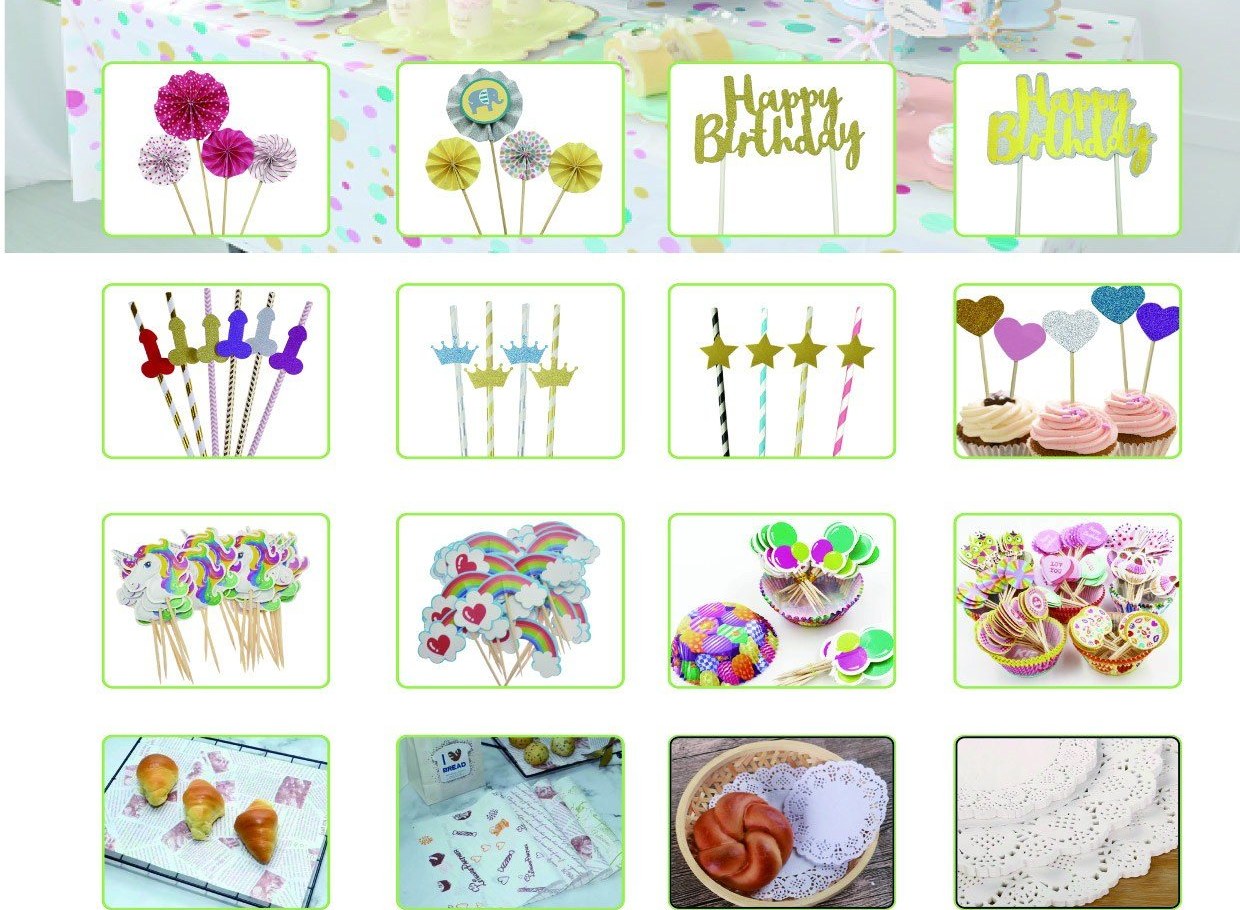
LANGMAI's published product range includes selected paper party accessories, cupcake toppers, paper doilies, cake boards, themed cups, straws and disposable tableware sets for retail and event channels. Buyers can review the party accessories product page and the broader party paper supplies wholesale guide before sending a range matrix.
Planning a coordinated collection? Send LANGMAI one topper, liner and party-set matrix for sample discussion.
2. Decide Whether It Is Decorative, Food-Contact or Both
Cupcake toppers sit near food, but not every topper has the same regulatory role. Some toppers are inserted into frosting and may reasonably contact food. Others are packed separately and described as decorative picks that should be removed before eating. Some may include a paper board, adhesive, ink, bamboo or paper stick, wrap, glitter-like surface, metallic finish or plastic-free claim. Each construction changes the evidence a buyer should request.
For the European Union, the European Commission explains that food-contact materials include articles used during food production, storage, preparation and serving, and that all food-contact materials placed on the EU market must comply with Regulation (EC) No 1935/2004 and good manufacturing practice under Regulation (EC) No 2023/2006. Its legislation page also notes safety, inertness, labelling, compliance documentation and traceability principles. Start with the Commission's food-contact materials overview and legislation page.
For the United States, FDA guidance explains that the regulatory status of a food-contact material depends on the identity of each component and the intended conditions of use. Do not treat "food grade" as finished-product approval. Review FDA's component-status guidance and ask the supplier to connect evidence to the actual paper, ink, adhesive, coating or stick used for the order.
If the product is decorative only, make that role clear in the specification and packaging copy. If consumers are likely to insert it into frosting, the buyer should review it as a foreseeable food-contact use and confirm whether any non-edible component needs removal wording.
3. Build a Quote-Ready Topper Specification
A useful cupcake topper specification should be measurable. Theme words such as "princess," "rainbow" or "Christmas" help the artwork team, but they do not control production.
| Specification field | Buyer decision | Approval check |
|---|---|---|
| Topper type | Flag, die-cut card, round medallion, shaped paper pick or mixed set | Compare physical shape and assembly with target cupcake size |
| Topper size | Width, height, visual area and tolerance | Confirm visibility without overpowering the cupcake |
| Pick length | Exposed length, inserted length and total length | Test stability in frosting and retail pack fit |
| Material | Paper board, kraft paper, foil-look paper, wrap, adhesive and stick material | Match material description to documents and sample |
| Artwork | File version, colour references, print side, die line and bleed | Approve physical colour and cut alignment |
| Food-contact role | Direct contact, incidental contact or decorative only | Confirm document scope and label wording |
| Pack count | Pieces per retail pack, inner bag and master carton | Run count and pack-out inspection |
| Companion SKU | Matching liner, straw, plate, doily, cake board or party set | Review colour and theme together |
| Destination market | Language, responsible-party data and warning review | Check label and import file before mass production |
For custom party ranges, connect the topper file to the buyer's range matrix. The matrix should show which topper belongs with which liner colour, plate design, straw stripe, cake board size or retail kit.
4. Control Artwork, Colour and Physical Finish
Cupcake toppers are often bought for visual impact, so artwork control deserves more attention than many buyers give it. A digital proof can show the idea, but it cannot prove the finished colour on a specific board, the cut tolerance around a small shape, or the way a metallic-look surface behaves under bakery lighting.
Ask suppliers to confirm:
- final dieline with visible cut, fold and glue positions;
- print method and whether the artwork uses spot colours, CMYK or special finish;
- colour reference for the hero colour and acceptable production variation;
- front and back printing requirements;
- whether the pick or stick is visible and whether it needs colour matching;
- edge quality after die-cutting;
- rub, set-off and odour checks after enclosed packing;
- whether any glitter-like, metallic, laminated or novelty finish is proposed.
Avoid unsupported marketing shortcuts such as "chemical-free," "non-toxic," "eco-friendly," "compostable," "recyclable" or "edible" unless the buyer has evidence for that exact material, market and claim. For custom printing control, see LANGMAI's custom printed food-paper packaging guide.
5. Review Age Positioning and Small-Part Risk
Many cupcake toppers are sold for birthdays and children's parties, but a birthday theme does not automatically tell the legal classification. In the US, CPSC guidance explains that children's products are generally consumer products designed or intended primarily for children 12 years of age or younger. CPSC also advises that promotional or decorative product context, marketing and expected use can affect the safety review. Buyers should review the exact product, package, imagery, warnings and sales channel using CPSC's children's-products guidance and promotional-products guidance.
In practical purchasing terms, do not leave age positioning to the supplier's guess. Decide whether the topper is a general-use decorative food accessory, an adult-supervised party item, a product primarily intended for children, or part of a mixed kit that needs specialist review. If the item has pointed sticks, small loose components, detachable decorations, sharp edges, glitter-like parts, licensed characters or child-focused packaging, escalate the review before approving artwork.
The supplier can provide materials, samples and production information, but the importer or brand owner should decide final market classification and warning copy with qualified compliance support.
6. Test Samples as a Complete Use System
A loose topper sample is only the first screening step. It tells the buyer whether the shape, colour and hand feel are plausible. It does not prove bulk packing, food-use stability, retail presentation or repeat order consistency.
Run a sample plan in stages:
- Screen stock or reference samples to choose size, material and style.
- Approve artwork on a digital dieline before making a physical custom sample.
- Test production-style samples with the intended cupcake size, frosting height, liner and box.
- Pack samples in the proposed retail or bulk format and check count, barcode, label and opening.
- Keep signed retained samples for production and pre-shipment comparison.
Application testing should include more than taking product photos. Insert toppers into chilled frosting, room-temperature cupcakes and any high-moisture or high-fat surface expected in use. Check whether paper wicks moisture, bends, transfers colour, releases odour after sealed storage, or stains the frosting. If the topper is decorative only and should not touch food, test whether the packaging and instructions make that expectation realistic.
Buyers can combine this process with LANGMAI's paper baking cup samples checklist when toppers are ordered with cupcake liners or muffin cups.
7. Plan Retail Packs, Barcodes and Carton Protection
Wholesale cupcake toppers often ship as small, lightweight items, but weak packing can still damage the sellable product. Die-cut shapes can curl, sticks can pierce inner bags, retail cards can bend, and mixed packs can be counted incorrectly.
Define the packing hierarchy:
- pieces per consumer pack;
- whether toppers are loose, sleeved, wrapped, header-carded, boxed or sorted by design;
- inner pack count and separator method;
- retail display orientation;
- master carton quantity and carton strength;
- moisture protection and odour control;
- carton marks, SKU labels and artwork version labels;
- pallet or parcel-shipping expectations for the buyer's channel.
For retail programs, barcode ownership and trade-item hierarchy should be settled early. GS1's General Specifications define identification rules across trade-item levels. Buyers should allocate GTINs through the responsible brand or importer process rather than asking a factory to invent a barcode.
8. Include EUDR Traceability in Paper-Sourcing Review
For EU-facing paper products, EUDR should be treated as a sourcing and due-diligence question, not a decorative badge. The European Commission's current EUDR implementation page explains that coverage depends on whether a product is listed in Annex I and made of or containing a listed commodity, and it discusses how standalone paper or wood packaging may differ from packaging used only to support another product. Review the Commission's EUDR implementation guidance and the legal text of Regulation (EU) 2023/1115 with the buyer's compliance team.
For applicable paper toppers, a practical supplier data pack may include paper grade, paper supplier, batch reference, species or fibre information where available, origin data, production lot, finished SKU and shipment record. Do not describe EUDR as a product certificate, and do not assume a paper decoration is outside scope without checking product classification and how it is placed on the EU market.
9. Inspect Bulk Production Against the Approved File
Pre-shipment inspection should compare finished goods with the approved specification and retained sample. Avoid a fixed universal AQL promise because the right sampling plan depends on buyer risk, order history, product complexity, retail channel and customer requirements.
Use this inspection checklist:
- SKU, artwork version, theme name and pack count match the order file.
- Topper size, pick length and die-cut shape match the approved sample.
- Colours are checked against the physical reference, not only the screen proof.
- Printed areas show no unacceptable set-off, smearing or strong odour after packing.
- Edges, points, glue areas and stick attachment are reviewed for the intended use.
- Retail packs are counted, sealed, labelled and scanned where applicable.
- Mixed sets contain the correct components and substitution rules are followed.
- Cartons protect shape, cleanliness and retail presentation.
- Lot references connect to material, production and shipment records.
- Deviations are reported before shipment release.
Inspect first orders more broadly than stable repeat orders. For custom toppers, pay special attention to mixed designs and artwork version control because small accessory SKUs are easy to confuse during packing.
10. Compare Suppliers With a Normalized RFQ
A normalized RFQ helps procurement compare suppliers without reducing the decision to unit price. Send the same brief to every bidder and require stated deviations.
Include:
- product type and intended use;
- food-contact or decorative-only role;
- topper dimensions, pick length and materials;
- artwork files, dieline and colour references;
- retail or bulk pack count;
- target market and language requirements;
- requested documents and traceability data;
- sample route and approval deadline;
- inspection expectations;
- carton quantity, pallet preference and shipping terms;
- forecast volume and reorder plan.
Ask suppliers to identify what they manufacture directly and what is sourced from partner workshops. For mixed party sets, confirm who controls final assembly, inspection and packing records. A supplier that is transparent about component sourcing, document limits and sample differences is usually easier to manage than one that promises every claim without evidence.
FAQ
Are cupcake toppers food-contact products?
They can be. If the topper or pick is inserted into frosting or reasonably expected to touch food, buyers should review food-contact evidence for the finished construction and intended market. If the item is decorative only, packaging and instructions should make that role clear.
What should a cupcake topper specification include?
Include topper type, dimensions, pick length, material, artwork version, colour references, food-contact role, pack count, destination market, label requirements, carton configuration, sample approval rules and inspection method.
Should cupcake toppers for birthday parties be treated as children's products?
Not automatically. Age classification depends on design, marketing, packaging, expected use and jurisdiction. Buyers should review child-focused themes, small parts, sharp points and warnings with qualified compliance support, especially for US retail.
How do buyers test cupcake topper samples?
Test production-style samples with the real cupcake size, frosting, liner, box and pack format. Check stability, moisture wicking, colour transfer, odour after sealed storage, count accuracy, barcode scanning and carton protection.
Can cupcake toppers be ordered with cupcake liners and party sets?
Yes. For coordinated sets, use a range matrix that links every topper design to the matching liner, straw, plate, doily, cake board, pack count and artwork version. Approve the whole set physically before mass production.
Does EUDR apply to paper cupcake toppers?
It depends on material composition, classification and how the product is placed on the EU market. EUDR is a due-diligence regulation, not a product certificate. EU buyers should review scope and request traceability data where applicable.
Conclusion
Cupcake toppers wholesale sourcing is a specification, artwork, safety-positioning and packing task. Start with the sales channel and intended use, decide whether the topper has a food-contact role, define material and dimensions, approve production-style samples with the real cupcake or party set, and inspect bulk goods against the same retained file.
This process helps buyers avoid mismatched colours, weak picks, unclear warning copy, incorrect counts, damaged retail packs and unsupported compliance claims. It also gives suppliers a practical basis for quoting the same product, which makes price comparison more meaningful.
CTA
Share your topper design, cupcake size, pack count, destination market, matching liner or party-set requirements and forecast volume with LANGMAI. Request samples and a wholesale quotation for cupcake toppers, cupcake liners or coordinated paper party accessories.
Sources
- European Commission, Food Contact Materials
- European Commission, Food Contact Materials Legislation
- U.S. FDA, Determining the Regulatory Status of Components of a Food Contact Material
- U.S. CPSC, Children's Produits
- U.S. CPSC, Buying Promotional Produits: A Guide to Federal Safety Laws
- GS1, General Specifications
- European Commission, EUDR implementation
- EUR-Lex, Regulation (EU) 2023/1115
Image Brief
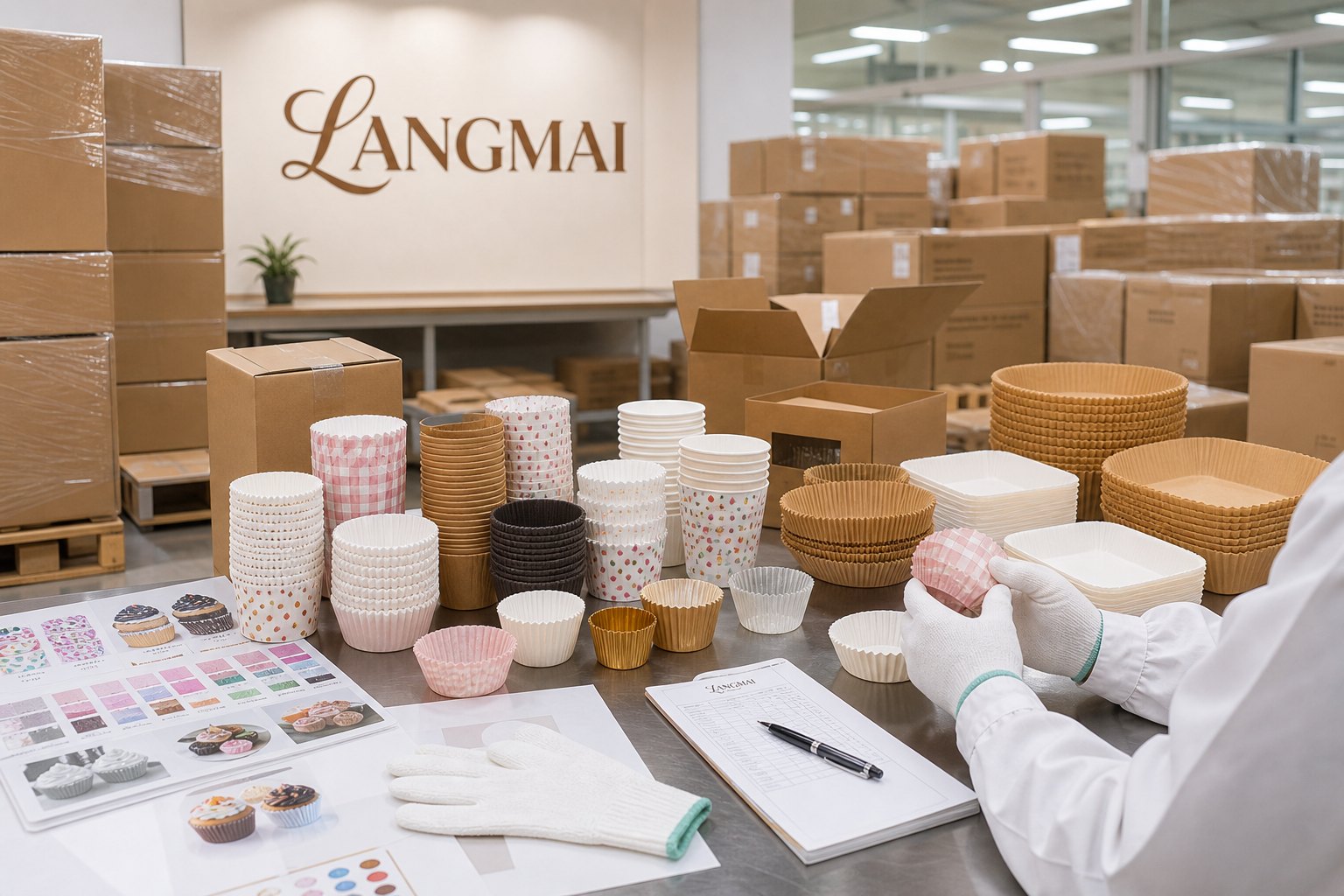
Use the existing truthful LANGMAI party-accessories image or export-packaging image. Do not show edible toppers, fake certification marks, licensed characters, readable customer brands or unsupported safety labels.