Introduction
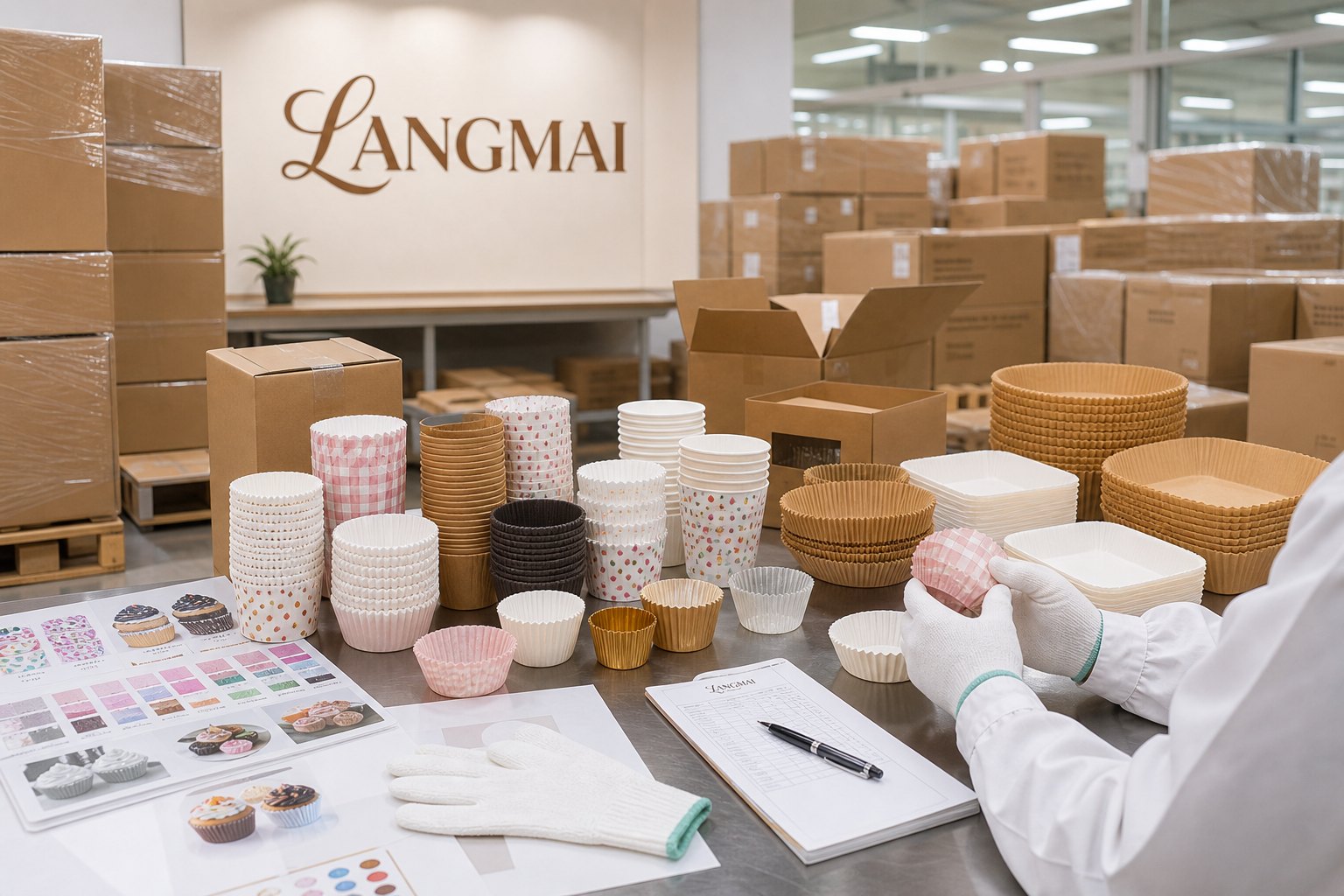
Cupcake liner retail packaging is where a simple paper baking product becomes a sellable SKU. Buyers need more than a nice box mockup. A reliable retail pack connects the liner size, count, material claim, barcode, warning text, food-contact evidence, inner packing, master carton and inspection records into one controlled file.
The short answer: approve cupcake liner retail packaging only after the pack count, dimensions, barcode ownership, label text, artwork revision, carton strength and compliance documents match the actual liner being sold. A private-label pack of 50 seasonal printed liners, a supermarket multipack, and an ecommerce refill pouch can all require different controls.
This guide is written for wholesale buyers, bakery supply distributors, supermarket private-label teams and ecommerce sellers. It explains how to specify retail packaging for paper cupcake liners and baking cups without turning artwork approval into the only checkpoint.
1. Start With the Commercial Pack Format
The retail pack format should follow the buyer's sales channel. A bakery distributor may need bulk sleeves that are easy to count and store. A supermarket buyer may need a hangable color box or pouch with strong shelf identity. An ecommerce seller may need crush resistance and clear product photos because the pack is handled by parcel networks.
Define the commercial unit before asking for artwork:
- liner type, such as standard pleated liner, tulip cup, self-supporting cup or roll-mouth baking cup;
- size code, bottom diameter, top diameter, height and tolerance;
- count per retail pack, inner pack and master carton;
- whether the pack is plain, branded, seasonal, private label or multilingual;
- destination market, barcode owner and importer details;
- claim set, such as grease resistant, oven use, unbleached, compostable or PFAS-free;
- sales channel, including supermarket, distributor, bakery counter, marketplace or direct-to-consumer parcel.
This step prevents a common sourcing problem: the buyer approves attractive packaging before the product size, count and evidence are fixed. Once artwork, barcode and carton layout are printed, a small product change can create rework across the whole pack.
2. Control Pack Count and Denesting
Retail count accuracy is a customer-trust issue. If a pack says 100 liners, the production and inspection plan must make that count repeatable. Cupcake liners also nest tightly, so the buyer should check whether the stack can be separated easily without tearing, flattening or double-picking.
Ask suppliers how the count is controlled. Manual counting, weight-based checks and automatic counting can each work, but the method should be documented. The buyer should approve a retained sample showing the real stack height, pack compression and denesting feel.
For ecommerce packs, do a handling check after the retail unit has been packed in the shipper. Tall tulip cups and self-supporting cups can deform if the inner support is weak. Standard liners can also flare or flatten if the pouch is too loose or the carton is overcompressed.
3. Assign the Barcode Before Artwork Lock
Barcode work should happen before final artwork, not after production. GS1 explains that a Global Trade Item Number can uniquely identify trade items that are priced, ordered or invoiced. For a retail cupcake liner pack, each sellable variant normally needs the buyer to decide who owns the GTIN and which product attributes define a new trade item.
Create a barcode table for the SKU:
| Item | Buyer decision | Why it matters |
|---|---|---|
| GTIN owner | Brand owner, importer, retailer or distributor | Prevents duplicate or unauthorised barcode use |
| Trade item | Size, count, colour, design, material and pack type | Defines when a new GTIN may be needed |
| Barcode symbol | EAN/UPC or other agreed format | Must fit the sales channel and scanning system |
| Print size and quiet zone | Artwork and print proof check | Prevents scan failures at receiving and checkout |
| Human-readable number | Matches barcode data | Helps receiving teams identify artwork mistakes |
| Verification | Scan proof or barcode verification route | Reduces launch risk for supermarket and marketplace listings |
For buyers using marketplaces, barcode ownership should also match the platform listing requirements. A good supplier can reserve print space and provide a proof, but the buyer should control the number assignment and listing data.
4. Separate Food-Contacto Evidence From Retail Claims
The retail pack may carry claims that go beyond basic product description. "Food grade," "oven safe," "grease resistant," "PFAS-free," "unbleached," "compostable" and "recyclable packaging" are not the same type of statement. Each claim needs its own evidence boundary and wording review.
In the United States, FDA explains that the regulatory status of a food-contact material depends on the status of each individual substance in the article. That is a useful reminder for cupcake liner packaging: the buyer should not rely on a broad phrase if the finished liner includes paper, treatment, ink, coating or adhesive. The intended food and use conditions also matter.
For EU-facing sales, Regulation (EC) No 1935/2004 sets general requirements for materials and articles intended to come into contact with food, including that they should not transfer constituents to food in quantities that endanger health, change food composition unacceptably or impair sensory characteristics under normal or foreseeable use. The retail pack should not imply broader suitability than the supplier evidence supports.
The safest procurement method is to create a claim matrix:
- exact claim wording on the front, back and online listing;
- product component covered by the claim;
- evidence source, date, report number or declaration owner;
- destination market and language;
- approval owner on the buyer side;
- change-control trigger if material, ink, treatment, supplier or artwork changes.
This keeps marketing language, compliance review and production control connected.
5. Write Practical Use and Warning Text
Cupcake liner packaging should tell the user what the product is, how to use it and what not to assume. Warning text does not need to be alarming, but it must be practical and consistent with the tested use.
Depending on the product, consider:
- intended use with cupcake or muffin pans;
- maximum oven temperature or tested use condition, if approved by the buyer;
- whether direct flame, grill contact or empty-cup heating is prohibited;
- storage instructions, such as keeping the pack dry and away from odour sources;
- food-contact side or print-side information where relevant;
- count, size and compatible pan note;
- importer, distributor or responsible company details required by the buyer;
- country-of-origin wording and lot identification.
Do not copy warning text from another product without checking the actual liner. A tulip cup, self-supporting baking cup and standard pleated liner may have different use limits.
6. Design the Master Carton Around the Retail Unit
Retail packaging can fail before it reaches the shelf. The master carton should protect the shape, print surface, barcode area and pack count. The carton plan should include inner quantity, master carton quantity, net weight, gross weight, carton dimensions, stacking orientation, pallet pattern and carton marks.
ASTM D5276 covers free-fall drop testing of loaded containers such as boxes, bags and sacks. ISTA also publishes packaged-product test procedures used for transport-performance evaluation. Buyers do not need to over-specify every order, but they should decide whether a parcel, pallet or mixed-distribution route needs drop, compression or vibration checks.
For ecommerce programs, test the retail unit inside the actual parcel shipper. For supermarket programs, check shelf-ready carton opening, carton print, receiving labels and whether the retail pack still scans after transport.
7. Approve Artwork With a Revision System
Artwork approval should be a controlled record, not a chat screenshot. Use a revision code and approval date on the final PDF or production proof. The supplier should know which artwork version is active before printing starts.
Check:
- brand name, product name and size;
- count per pack and compatible use;
- barcode, quiet zone and human-readable number;
- claim wording and language versions;
- importer, distributor and contact details;
- country-of-origin statement;
- recycling marks, material marks or other disposal icons where approved;
- colour target and print process;
- bleed, dieline, fold lines, glue areas and barcode placement;
- lot-code area and date-code area if used.
For seasonal cupcake liners, build the same controls into each design. A holiday pattern does not remove the need for barcode, count, claim and document checks.
8. Inspect Before Shipment
Pre-shipment inspection should compare real packed goods with the approved retail pack and master carton. The inspector needs the artwork file, approved sample, purchase order, product drawing and packaging specification.
Use this inspection checklist:
- confirm product name, SKU, artwork revision and barcode number;
- count liners in randomly selected retail packs;
- measure liner size and compare with approved sample;
- inspect print colour, registration, smudging and odour;
- check retail pack sealing, hang holes, windows or closures;
- scan barcode from several packs and carton labels;
- inspect master carton marks, dimensions, weight and packing quantity;
- check for crushed cups, deformed stacks, torn packs and contamination;
- confirm lot code, production date and document references;
- photograph defects and retain production samples.
Inspection should also confirm that the document pack belongs to the same SKU. A food-contact report or declaration for a different liner, ink or coating is not enough.
FAQ
What should be included on cupcake liner retail packaging?
At minimum, buyers should control product name, size, count, barcode, responsible company details, country-of-origin wording, use instructions, relevant warnings, lot identification and any approved claims. Requirements vary by market and channel.
Does every cupcake liner retail pack need its own barcode?
Each distinct trade item usually needs a clear identification decision. Size, count, material, design, language set or sales channel can affect whether a separate GTIN is needed. The buyer should confirm this with its GS1 or retailer requirements.
Can the supplier provide the barcode?
The supplier can reserve artwork space and print the barcode, but barcode ownership and number assignment should be controlled by the brand owner, importer, retailer or distributor responsible for the SKU.
How should buyers verify pack count?
Request the supplier's counting method, approve a production-representative packed sample and include count checks in pre-shipment inspection. For nested liners, also test denesting and stack deformation.
What documents should match the retail pack?
The product specification, artwork approval, barcode table, food-contact evidence, claim matrix, packaging specification, carton plan, inspection report and shipment documents should all identify the same SKU and revision.
How can ecommerce buyers reduce crushed cupcake liner packs?
Use a retail pack and shipper that protect the cup shape, then run parcel-style handling checks. Inspect carton compression, void fill, stack height and whether the product still looks retail-ready after transport.
Conclusion
Cupcake liner retail packaging is a procurement system, not only a printed box. Buyers should lock the liner specification, pack count, barcode, claims, warning text, artwork, carton plan and inspection criteria before mass production. That makes the SKU easier to list, receive, scan, sell and reorder.
LANGMAI can support wholesale and private-label buyers with sample review, retail packaging coordination, artwork proofing and export carton planning for cupcake liners, muffin cups and paper baking cups. Send the target market, pack count, size, artwork needs and annual volume to prepare a quote-ready retail packaging specification.
Sources
- GS1, Global Trade Item Number
- GS1, Barcodes
- U.S. FDA, Determining the Regulatory Status of Components of a Food Contacto Material
- EUR-Lex, Regulation (EC) No 1935/2004 on food-contact materials and articles
- ASTM, D5276 Standard Test Method for Drop Test of Loaded Containers by Free Fall
- ISTA, Test Procedures