
Introduction
Most wholesale buyers judge baking paper by the finished sheet: it releases cleanly, lies flat, holds its strength when wet, and survives the oven. Yet every one of those properties is created long before packing — in the fiber choice, in how the base sheet is formed, in how the silicone is applied and cured, and in how jumbo reels are converted into the rolls, sheets and rounds your line actually uses. Buyers who understand how baking paper is made ask sharper questions, read quotations more accurately, and can tell a genuine manufacturer from a converter. This guide walks through the parchment manufacturing process stage by stage — pulp selection and sheet formation, silicone application and curing, converting into commercial formats, and the process controls that hold quality stable — and closes with the audit points a purchasing team should verify on site. For buyers mapping process knowledge onto commercial terms, our wholesale parchment paper rolls and sheets page mirrors the specification and documentation structure described here.
1. Why the Manufacturing Process Matters to Wholesale Buyers
A baking paper specification looks simple — grammage, coating weight, tensile values, grease resistance — but each number is the output of a specific stage in the mill. Release performance is decided largely at the silicone application and curing stage; wet strength and tear resistance are set in fiber selection and refining; flatness and curl behavior depend on how evenly the sheet was dried and how symmetrically the coating was applied; dimension accuracy is a function of the converting equipment. When a buyer understands which stage produces which property, three things change. Quotations become readable, because a price gap between two offers can be traced to a real construction difference instead of margin. Complaints become diagnosable, because if release fails mid-roll the question shifts from "replace the goods" to "what changed at application or curing." And factory visits become effective: the team can inspect the specific stages that govern the properties they buy. Process knowledge converts sourcing from price comparison into technical evaluation.
2. From Pulp to Base Sheet: Fiber Selection, Refining and Formation
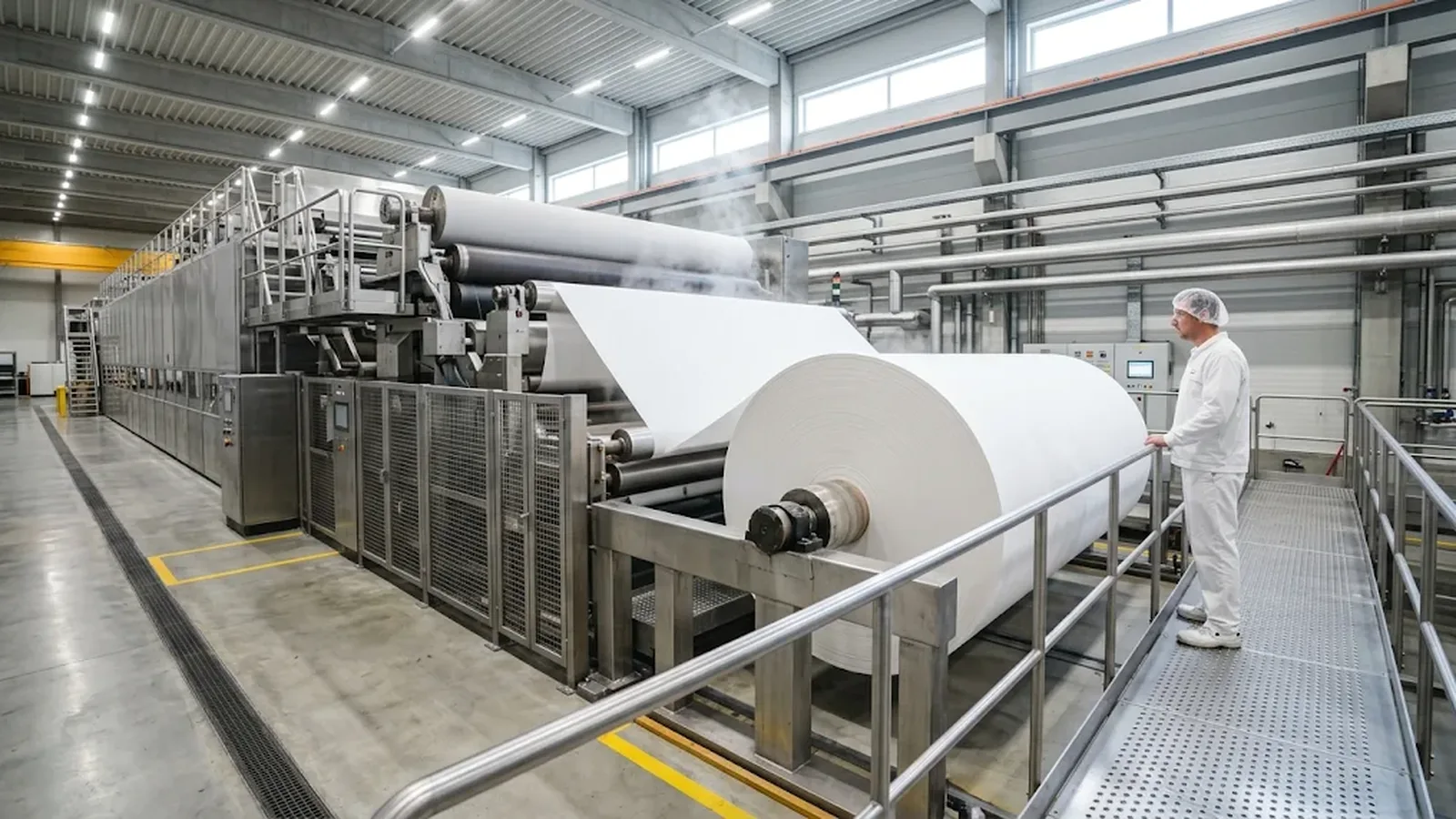
The process begins with the fiber furnish. Baking parchment is made from cellulose pulp, and the grade chosen — and whether it is bleached or unbleached — sets the ceiling on the paper's strength, cleanliness and color before any coating exists. The pulp is dispersed in water, cleaned and refined, then diluted and streamed onto the forming wire of the paper machine, where the sheet is built fiber by fiber and drained. Pressing and heated drying follow, and this is where two quiet quality drivers sit. Drying profiles run too aggressively or asymmetrically lock internal stresses into the sheet, which shows up later as curl in a hot oven. Uneven formation — thick and thin patches across the width — produces inconsistent coating pickup downstream and inconsistent release in the bakery. A well-run mill controls moisture profiles across the web, not just on average, because an edge-to-edge uniform base sheet is what lets every later stage be uniform too. Buyers should ask which grammage band the mill runs continuously; a factory whose base-paper platform matches the target construction holds tolerances far more easily.
3. Silicone Application and Curing: Where Release Performance Is Created
The second stage gives baking paper its defining property: non-stick release. A silicone formulation is applied to the base sheet at a controlled coating weight — in commercial baking parchment typically within the 0.7–1.5 g/m² range, on one or both sides depending on the grade — and then cured so the silicone crosslinks and anchors to the paper surface. Three variables govern the result. Coating weight determines how much release "budget" each bake has; uniformity across the web determines whether every sheet behaves the same way; and the cure state determines whether the silicone stays put or transfers under heat and fat. A mill that measures coating weight across the width, not just in the center, and verifies cure with standard transfer tests, produces release that is predictable at sheet ten thousand as well as sheet one. This stage is also where food-contact status is built: the silicone system and its curing chemistry are part of what compliance documentation describes, so confirm the construction quoted is the construction the declarations reference. Release performance is not a claim to be argued about; it is a controlled process to be audited.
4. Converting: Jumbo Reels into Rolls, Sheets and Die-Cut Formats
Everything up to this point exists as reels of coated paper kilometers long. Converting is where the product takes the commercial form a bakery or foodservice chain actually handles: rewinding into roll widths, sheeting into flat sheets with the cut size and squareness your specification states, or die-cutting into rounds, squares and custom shapes for pans and trays. Each conversion step has its own tolerances — width and diameter on rolls, length, width and squareness on sheets, diameter and shape accuracy on die-cuts — and each is where a weak operation shows itself. Slitting that wanders produces rolls that track poorly in dispensers; sheeting with dull blades leaves dusted or fused edges; imprecise die-cutting shows up as rounds that seat unevenly in standard pans. Converting also includes packaging, where moisture-barrier liners and carton counts are set: paper that is perfect on the machine can still arrive wavy after weeks at sea. Buyers sourcing pre-cut parchment paper sheets and rounds should treat the converting line as part of the factory audit, not an afterthought — tolerances are cheapest to hold when the equipment and the discipline already exist.
5. Process Control and Audit Points: What Purchasing Teams Should Verify
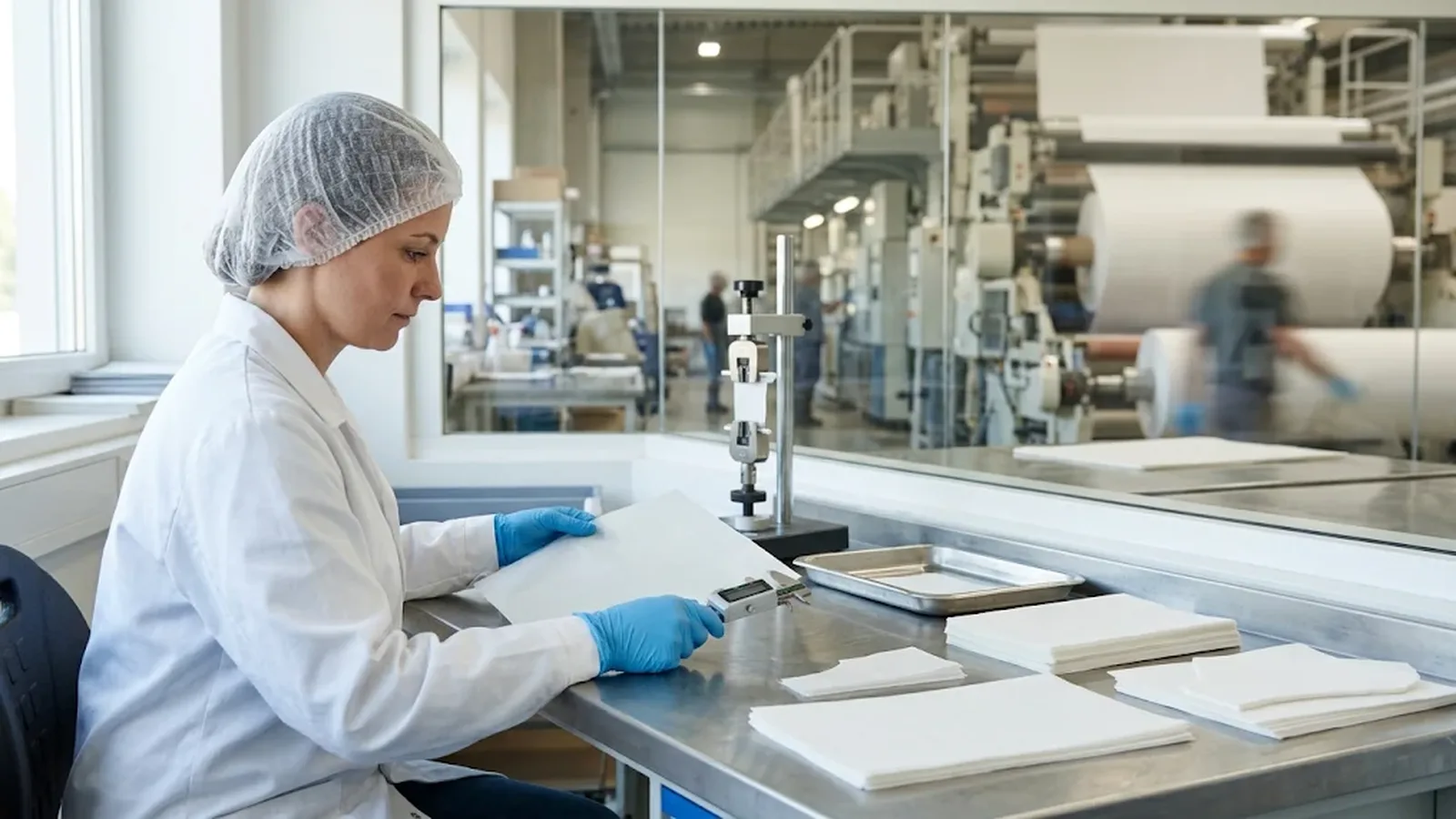
A process-focused audit asks a few pointed questions at each stage. At the fiber and forming stage: which base-paper constructions does the mill run continuously, and what in-process moisture and formation checks exist? At application and curing: how is coating weight measured across the web, how often, and what release and transfer tests gate each lot? At converting: what tolerance regime governs sheeting and die-cutting, and how are dimensions verified — by operator sampling or by inspection equipment with records? Across the whole plant: is there traceability from a finished carton back to the production lot, the coating batch and the pulp lot, so a complaint can be investigated rather than guessed at? Finally, review the compliance and certification file in the same visit: food-contact test reports tied to the exact construction, per-lot certificates of analysis, and third-party audits of the site. The factory and certificate library lists the third-party audits and test reports behind these claims. A factory that can answer these questions with records, not assurances, is one whose quotations and specifications can be trusted.
FAQ
How is baking paper made, step by step?
Cellulose pulp is cleaned, refined and formed into a base sheet on a paper machine, then pressed and dried under controlled moisture profiles. A silicone layer is applied at a defined coating weight and cured onto the surface, and the coated reels are finally converted into rolls, sheets or die-cut formats and packed with moisture protection.
Does the manufacturing process affect how parchment releases?
Yes. Release is created at the silicone application and curing stage, and it depends on coating weight, uniformity across the web and cure state. A base sheet with uneven formation or drying inherits uneven coating and inconsistent release, which is why process control upstream matters as much as the specification itself.
What should we check when auditing a baking paper factory?
Verify each stage against records: continuous base-paper constructions and in-process moisture checks, coating-weight measurement across the web, release and transfer test results per lot, converting tolerances with dimensional verification, traceability from carton to production and coating lots, and food-contact documentation tied to the exact construction supplied.
Is there a difference between a mill and a converter for baking paper?
Yes. Some suppliers only convert jumbo reels bought from paper mills; others run the full process from pulp to packed product. Neither is automatically wrong, but the scope defines where quality is controlled, so buyers should know which stages their supplier actually owns before awarding a program.
Conclusion
Understanding how baking paper is made reframes the buying decision: release, strength, flatness and dimensional accuracy are not attributes a supplier claims, but outputs of stages a buyer can inspect — fiber and formation, silicone application and curing, converting, and the process controls that tie every lot to records. Use the process map to read quotations, focus factory audits on the stages that govern your critical properties, and hold documentation to the construction you actually purchase. For the paper side of these programmes, buyers can review our baking parchment paper manufacturing programme specifications and sample terms. Buyers verifying these specifications can review the certificate library alongside supplier documentation requests.
CTA
Sourcing baking paper directly from the factory? Send us your grammage, coating weight and format requirements, and we will quote the construction with pre-production samples and the full process documentation behind it.
Sources
- FDA — Indirect Food Additives: Paper and Paperboard Components (21 CFR Part 176): https://www.ecfr.gov/current/title-21/chapter-I/subchapter-B/part-176
- European Commission — Food Contacto Materials: https://food.ec.europa.eu/food-safety/food-contact-materials_en
- TAPPI — Technical Association of the Pulp and Paper Industry (test methods): https://www.tappi.org
- FSC — Forest Stewardship Council (chain of custody): https://fsc.org