
Introduction
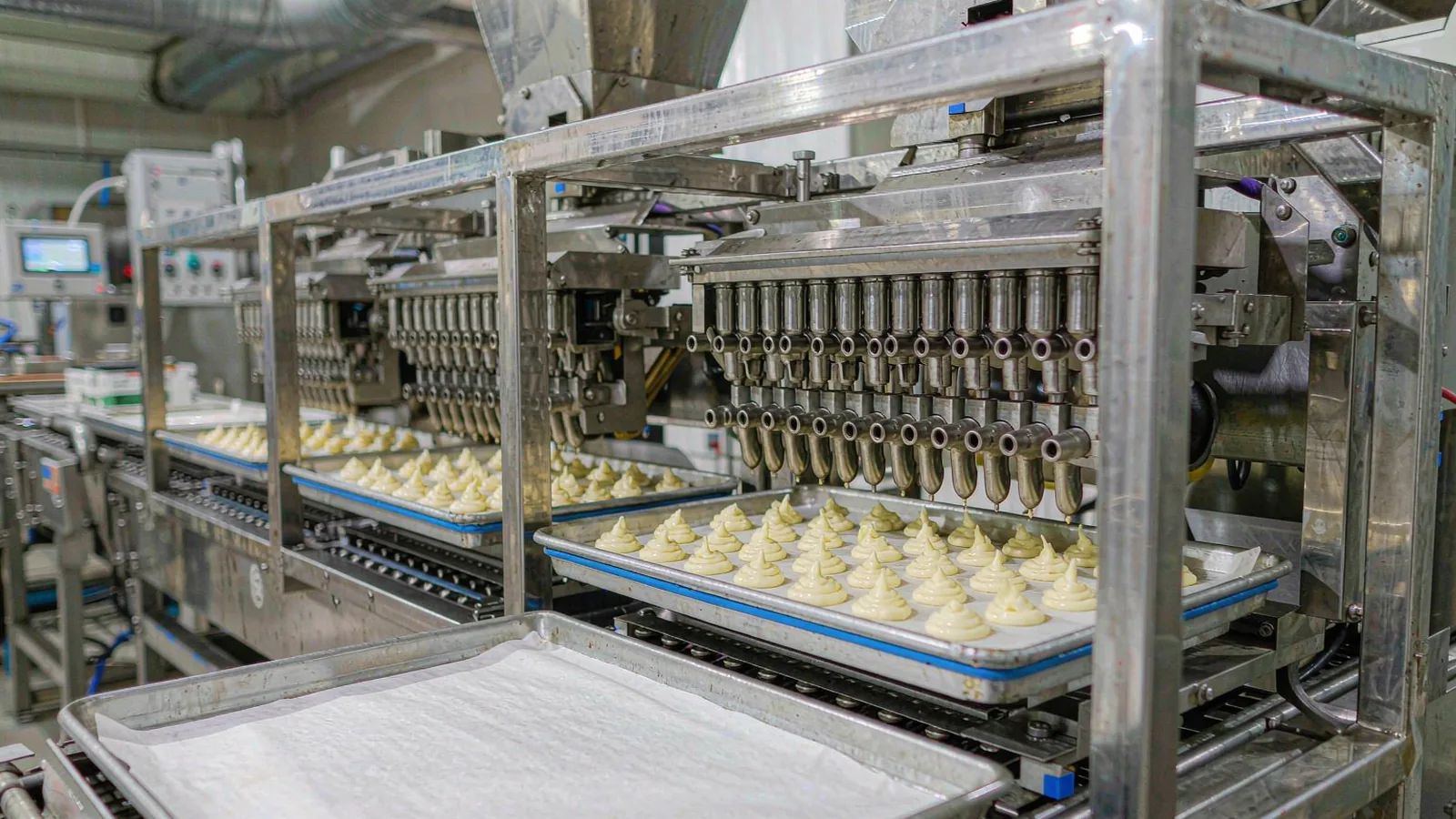
Automated depositing lines have changed how industrial bakeries produce muffins, sponge cakes, pancakes and filled batters. Multi-nozzle depositors run at hundreds of units per minute, and every variable downstream of the hopper — including the paper that lines trays and belts — has to keep pace. When the liner releases poorly, mis-feeds, or sheds fibres into product, the result is stopped lines, scrap batter and missed shipping windows. Choosing baking paper for an automated depositing line is therefore an engineering decision, not a commodity purchase. For production volumes, the same construction logic applies to our silicone-coated parchment sheets and rolls line, quoted per roll, sheet or die-cut format.
What an Automated Depositing Line Demands from Baking Paper
A depositing line puts three simultaneous stresses on the liner. First, release: wet, high-moisture batters bond aggressively to uncoated or under-coated paper, and a liner that releases at 90% still generates manual rework at line speed. Second, dimensional stability: sheets must stay flat through the denesting magazine, under the depositor, and into the oven, without curling at the leading edge where photo-eyes and feed rollers are sensitive. Third, food-contact integrity: the paper touches raw batter before baking, so coating and base paper must hold up under migration and contact testing.
Buyers should also map the paper to the line layout. Trays lined with die-cut sheets behave differently from belt-fed rolls; antistatic treatment matters more on high-speed vacuum pickups; and edge trim tolerances that look trivial on a sample table cause double-feeds in the magazine. Documenting these variables per SKU is what separates a liner specification from a lucky order.
GSM, Coating Weight and Release: Specifying for High-Speed Batter Lines
Base grammage and silicone coating weight should be specified together, not separately. Lighter papers (around 35–40 gsm) run economically on tray lines with short dwell times, while heavier constructions hold flatness better in long ovens and under double deposition. Coating weight — typically adjustable in the 0.7g–1.5g/m² range — determines release against sticky, high-sugar batters; a heavier single-side coating often outperforms a light double-side coating on one-sided tray applications, at lower cost.
Release performance should be validated with your actual batter, not a generic test. Request line trials that measure peel force after baking, fibre transfer, and sheet flatness at exit temperature. A supplier that publishes the test data behind each grade makes this comparison straightforward: our wholesale parchment paper rolls and sheets programme publishes the test data behind each grade so specifications can be verified before ordering. Insist on retained samples from the trial run so that any future production batch can be verified against the approved construction.
Sheet Feeding, Static and Format Selection
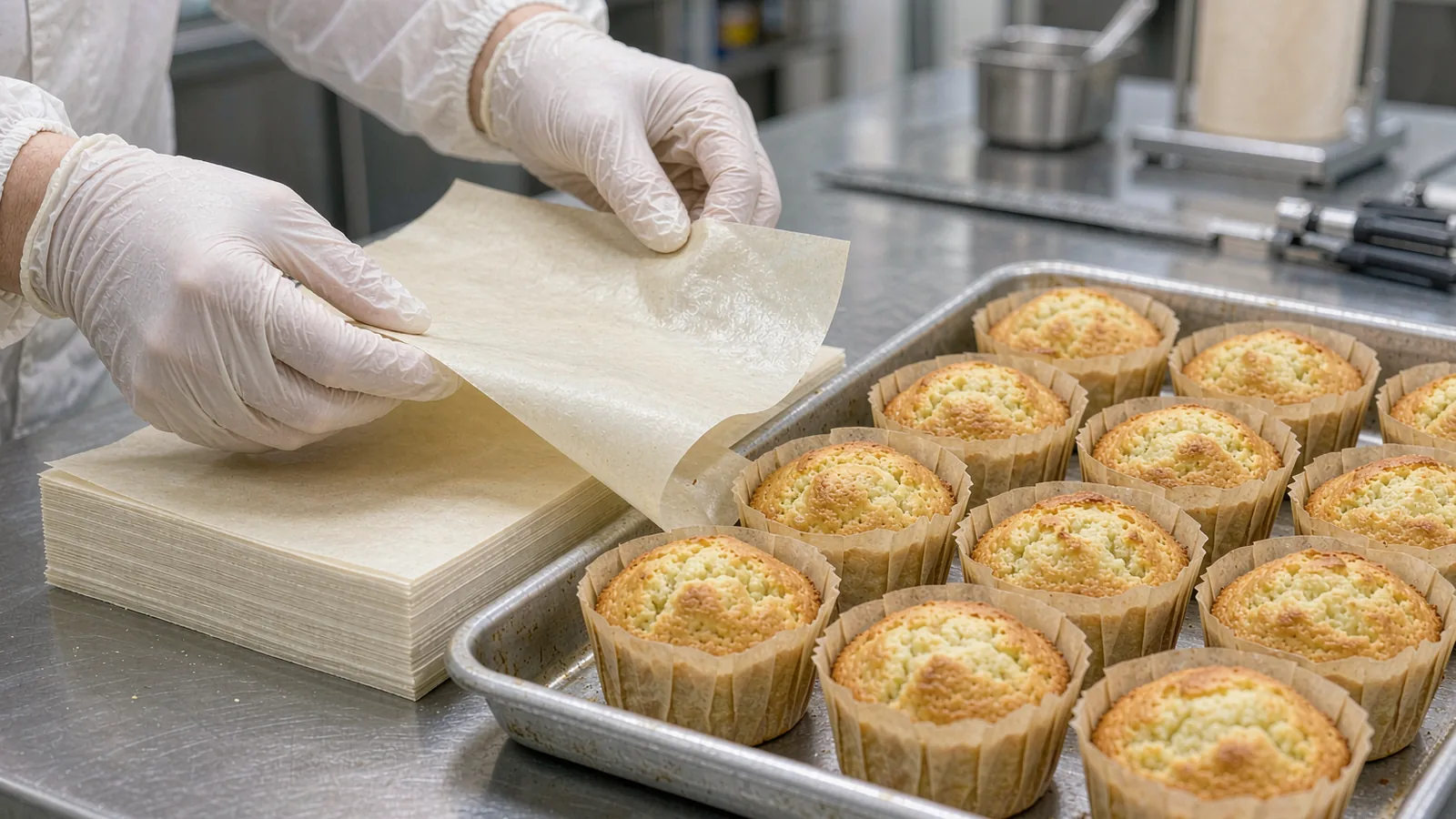
The best coating fails if the sheet will not feed. High-speed denesting and vacuum pickup systems are sensitive to static cling, moisture uptake and tolerance drift on die-cut dimensions. Buyers should specify: sheet length and width tolerances, corner radius, grain direction relative to the feed direction, and moisture barrier packaging for storage in humid bakeries. Rolls used on in-line sheet dispensers need consistent parent-roll width and low telescoping on the core.
Format selection follows the line. Die-cut sheets suit fixed-tray muffin and cake lines; perforated sheets suit products that need bottom airflow; interfolded stacks suit manual top-up stations feeding an automated line. Buyers standardising one supplier across tray lining and product formats can review the certificate library alongside supplier documentation requests, keeping both the paper and the audit trail under one programme.
Compliance and Documentation for Food-Contacto Paper
Because depositing-line paper contacts raw batter, it is a direct food-contact material in most jurisdictions. Buyers in the EU typically request declarations and migration test reports aligned to food-contact legislation for the intended food type and contact conditions; US buyers typically review FDA-related documentation for the paper and coating system. PFAS-free positioning is now standard in tenders, and many retail and foodservice customers require a written confirmation per construction.
The factory and certificate library lists the third-party audits and test reports behind these claims. Treat the documentation package as part of the specification: a liner that performs on the line but cannot be evidenced in an audit is a recall risk waiting to be priced in.
Sourcing Checklist: From Sample to Production Roll
A disciplined sourcing sequence for depositing-line paper looks like this:
- Define the line data: depositor type, oven profile, tray format, target units per minute.
- Shortlist constructions by base grammage, coating weight and format (sheet, roll, die-cut).
- Run a physical trial with retained samples and measured release results.
- Confirm the food-contact documentation set per destination market.
- Agree tolerances, packaging and replenishment terms before the first production order.
Each step shortens the gap between an approved sample and a repeatable production supply.
FAQ
What GSM baking paper works best on automated depositing lines?
Most tray-based batter lines run well on 35–45 gsm silicone-coated parchment. Heavier batters, double deposition or long tunnel ovens usually justify the upper end of that range or a heavier construction. Trial data with your own batter beats any generic rule.
Do I need perforated or solid sheets under a depositor?
Solid sheets protect trays and simplify cleaning; perforated sheets improve bottom airflow and help uniform browning in products that bake directly on the liner. Match the choice to your oven airflow and product spec, and validate both in a line trial.
How is release performance tested for wet batters?
Typical tests measure peel force after baking, residue transfer to the paper, and fibre pick from the sheet. Because sugar and fat levels drive adhesion, tests should use your production batter under your real oven profile.
What documents should a wholesale supplier provide?
At minimum: food-contact declarations for the destination market, migration test reports for the construction, PFAS-free confirmation where required, and certificates from audited production. Request that documents reference the exact grade and coating weight supplied.
Conclusion
Baking paper on an automated depositing line is a running component of the production system, specified with the same rigour as the depositor itself. Release, flatness, feed behaviour and food-contact documentation all need to be evidenced before the first pallet ships, and re-verified as volumes scale. Suppliers who control coating application in-house and publish per-grade test data remove most of the risk from that process. Buyers comparing these specifications can review our baking parchment paper manufacturing programme, where coating weight, base grammage and release values are documented per construction.
CTA
Ready to qualify a liner for your depositing line? Request a free sample pack with your batter profile and oven data, and our engineers will recommend a construction with documented release and compliance results. Wholesale enquiries for rolls, sheets and die-cut formats are quoted with full export documentation.
Sources
- US FDA — Food Contacto Substances: Inventory of Effective Food Contacto Substance notifications
- EU Regulation (EC) No 1935/2004 on materials and articles intended to come into contact with food
- German Federal Institute for Risk Assessment (BfR) — Recommendations on paper and board for food contact
- Industry trade publications on industrial bakery automation and baking paper manufacturing practice