Introduction
Can paper baking cups bake without a muffin pan? Some can, but only when the finished cup is designed for self-supporting use and passes a trial with the buyer's batter portion, oven, tray layout, cooling process and package. A fluted liner that depends on a metal cavity for support should not be treated as pan-free merely because it feels firm when empty. For a wholesale order, approve the finished construction under production conditions before describing it as self-supporting.
That is the direct answer because “self-supporting” is a functional requirement, not a universal product category. Base diameter, wall height, taper, folds, rim construction, seams, paper structure and any coating all influence how a cup carries wet batter and heat. Batter density and fill level matter too. A format that stays upright with a light cake recipe may spread, tilt or leak with a heavier or higher-fat formulation.
This guide helps bakery groups, industrial bakers, importers, foodservice distributors and private-label buyers specify and evaluate self supporting baking cups wholesale. It covers format selection, representative baking trials, line handling, food-contact evidence, packaging, inspection and supplier comparison without assuming that one sample or certificate proves suitability for every use.
1. Separate Pan-Supported and Self-Supporting Uses
Start the RFQ by stating whether the cup will sit inside a profiled pan, on a flat baking tray, in a carrier with wide openings or in another support. These are different mechanical conditions. A conventional fluted liner transfers much of the batter load to the pan wall. A self-supporting cup must retain an acceptable base and sidewall profile while carrying the load itself.
Do not approve a product from the name. Ask the supplier to identify the proposed finished construction and intended use, then prove the application through testing.
| Cup format | Typical support condition | Main buyer check | Incorrect assumption to avoid |
|---|---|---|---|
| Thin fluted liner | Closely fitted muffin or cupcake pan | Cavity fit, pleat stability and release | Firm empty paper will hold wet batter alone |
| Tall or tulip-style cup | Often used with a supporting pan or tray system | Wall position, fill height and presentation | Extra height automatically means self-supporting |
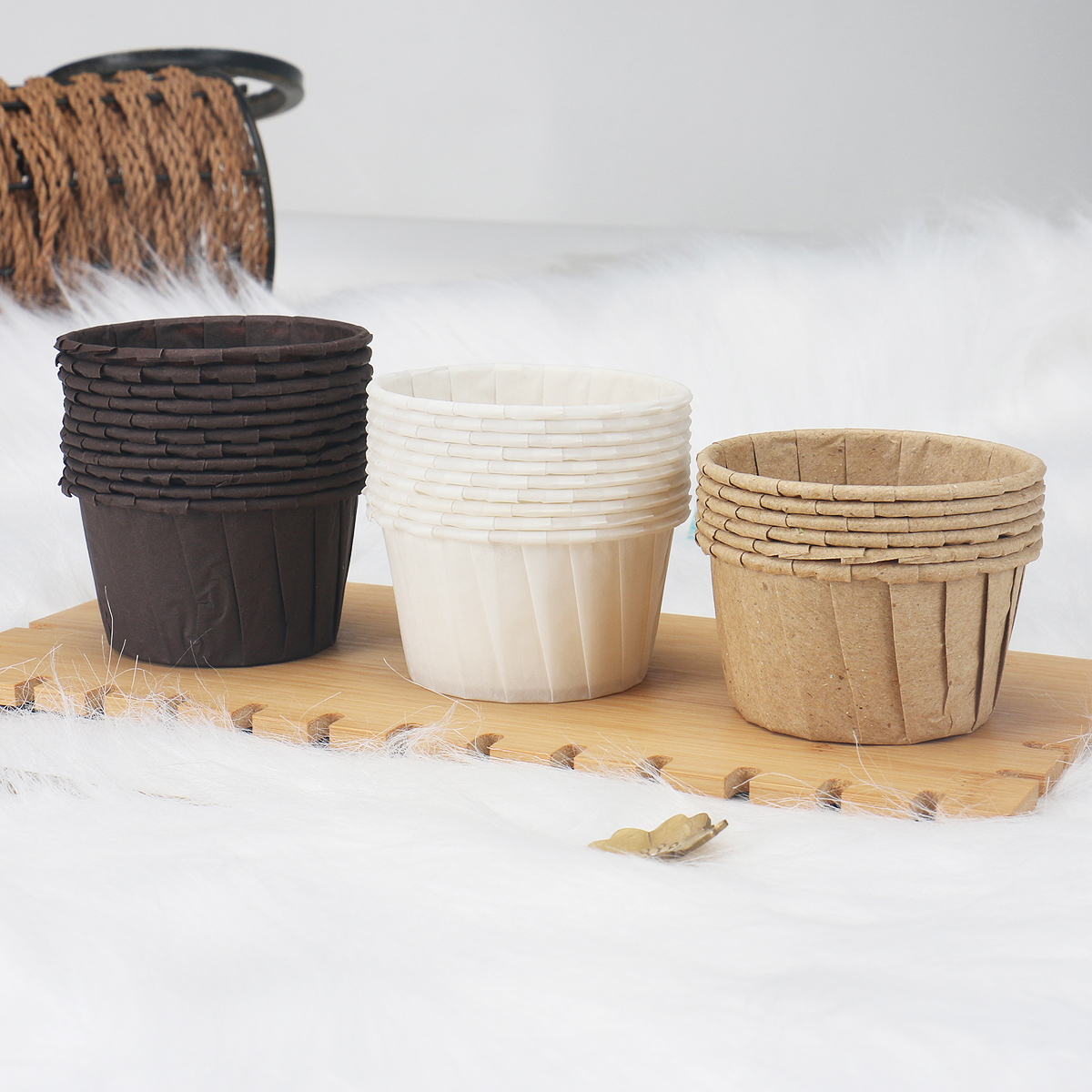
| Rigid formed baking cup | May be proposed for a flat tray, depending on design | Base stability, spreading, seam integrity and actual bake | Every formed cup can be used without support |
| Roll-mouth or reinforced-rim cup | Support depends on the complete structure and supplier's intended use | Rim, sidewall, base and package performance | A rolled rim alone proves pan-free suitability |
If the bakery wants to remove metal muffin pans, document that goal. Pan-free baking may change tray capacity, loading, airflow, spacing, bake profile and handling.
2. Convert the Application into a Measurable Specification
A useful specification begins with the food and process. Record the product type, target batter deposit, batter characteristics relevant to loading, oven type, set point, residence time, tray material, cup spacing, cooling method and downstream handling. Use recipe codes rather than disclosing confidential formulations when appropriate.
Define cup geometry with a drawing. Include top diameter, base diameter, vertical height, taper and the points from which each dimension is measured. If the cup has a rolled rim, petal, seam, bonded base or folded structure, show it. Add dimensional tolerances only after the supplier explains the forming process and the bakery determines what the application can accept.
LANGMAI's local product information includes roll-mouth paper baking cups described as PET-coated and designed with a rigid shape, as well as conventional cake cups and muffin formats. These descriptions and listed dimensions are starting points, not proof of pan-free performance or international standards. Buyers should reconfirm the current material, drawing, intended use and package in the quotation and production-representative sample. The roll-mouth baking cup product page can support an initial format discussion.
Specify acceptance by outcome
Avoid vague requirements such as “strong enough” or “no deformation.” Define what the bakery will inspect and when. Relevant outcomes can include:
- the cup remains upright during depositing and transfer into the oven;
- base spread and sidewall movement stay within an agreed physical reference or measured limit;
- cups do not tip, open at a seam or adhere to one another on the tray;
- the baked product retains the approved appearance after cooling and packing;
- grease staining, release and odour meet the buyer's defined method; and
- printed areas remain acceptable after forming, baking, cooling and handling.
Use a retained approved sample and trial record alongside numeric criteria. Some appearance differences are easier to judge against a controlled reference than from text alone.
3. Run a Pan-Free Trial with the Real Batter and Oven
An empty-cup squeeze test cannot establish self-supporting performance. The approval trial must reproduce the load and heat that the cup will experience. Use production-representative samples made from the proposed paper, coating, forming and print combination.
Prepare a controlled comparison
Test the candidate beside the current approved format or another control where possible. Condition all cups in the same environment. Use the same batter batch, controlled deposits and comparable tray positions. Record oven position because airflow and heat distribution can affect spreading and colour.
Run enough pieces to expose variation between stacks and positions. A single successful cup is not representative of a bulk order. The buyer's technical team should determine the quantity based on process risk and variability rather than adopting a generic number.
Pan-free application trial checklist
- Record sample code, drawing revision, material description, print version and production date.
- Measure representative empty cups and photograph the base, sidewall, rim and any seam.
- Place cups on the intended tray at the planned spacing; check whether they rock, lean or interlock.
- Deposit the normal batter amount and a justified high-load condition within the bakery's process range.
- Observe stability during depositing, tray movement and oven loading without manually correcting selected pieces.
- Record oven settings, actual time, tray position and any rotation used in normal production.
- Measure or compare spread, lean, wall movement, seam condition and finished-product shape after baking.
- Inspect after the normal cooling period for grease appearance, release, odour, colour change and handling damage.
- Run the intended wrapping, tray, carton or display-pack process and check package clearance.
- Retain labelled samples, photos and the completed record with the approval decision and use limitations.
If several recipes, depositors, ovens or sites will use the cup, challenge the foreseeable extremes. Approval for one recipe on one line should not silently become approval for every product.
4. Evaluate Tray Layout, Airflow and Bakery Throughput
Changing from profiled pans to flat trays can alter the process around the cup. Freestanding cups may be placed closer together, but crowding can affect airflow, sidewall contact and browning. Wide spacing may improve access but reduce output per oven load. The correct layout comes from a controlled trial, not a supplier's catalogue image.
Check whether cups slide when a tray accelerates or turns. For manual loading, assess placement time and ergonomic handling. For automated depositing, test whether the equipment centers the nozzle without contacting the rim. If cups are denested automatically, run the actual stack through the feeder and record double-feeds, missed picks, static, leaning stacks and rim damage.
Compare total process cost, not only cup price. A more structured cup may remove one pan-handling step for a validated process, but it can also cost more, occupy more shipping volume or require slower placement. Include oven capacity, labour, rejects, cleaning, package size and freight in the commercial comparison.
Need to validate a proposed format? Send LANGMAI the cup drawing, batter deposit, oven process, tray layout, destination market and package requirement so the sample discussion starts with the actual application.
Discuss a Pan-Free Baking Trial
5. Match Material and Construction to Intended Use
Basis weight alone does not define a self-supporting cup. Two papers at the same nominal weight can differ in caliper, stiffness, fibre structure, moisture response and forming behaviour. Coatings, laminations, folds, seams and rim design can change the performance of the finished article.
Ask the supplier to describe the complete proposed construction without relying on a generic “food-grade paper” label. The specification should identify the paper or board grade, colour, surface treatment or coating, forming method, seam or bonding system where present, print system, food-contact side and any relevant orientation.
Do not assume a stiffer cup is automatically better. Excess rigidity can complicate denesting, consumer opening or eating, while a brittle structure may crack during transport. The target is sufficient stability for the validated process with acceptable release, handling and pack efficiency.
Buyers comparing broader paper structures can consult the greaseproof paper versus PET-coated paper guide, but the final decision still belongs to a test of the exact formed cup.
6. Review Food-Contact Evidence for the Finished Use
Pan-free capability and food-contact suitability are separate questions. A cup can hold its shape yet lack evidence for the intended food and baking conditions. Connect the paper, coating, inks, adhesives or other components to the finished article, destination market and actual time-temperature use.
For EU-bound orders, Regulation (EC) No 1935/2004 requires food-contact materials under normal or foreseeable conditions of use not to transfer constituents in quantities that could endanger health, unacceptably change food composition or deteriorate organoleptic characteristics. It also establishes traceability principles. Regulation (EC) No 2023/2006 covers good manufacturing practice and includes controls relevant to printing on the non-food-contact side and set-off in stacks.
Paper and board are not covered by one fully harmonised EU-specific measure equivalent to the plastics regulation. Destination-market requirements and the finished construction therefore need careful review. BfR Recommendation XXXVI for paper and board for food contact can be relevant technical evidence within its stated scope, but BfR recommendations are not EU-wide product approvals.
For US projects, FDA's food types and conditions of use distinguish moist bakery products with and without free fat or oil and identify cooking above 250°F as a condition-of-use category. This does not create a universal temperature rating for a finished cup. The supplier and buyer should match each relevant authorization or evidence basis to the actual component and use. FDA also explains that an effective Food Contact Substance Notification can be specific to the manufacturer, substance and conditions identified in the notification in its component-status guidance.
Request documents that identify the tested or declared sample, construction, regulatory basis, conditions, results, issuing party and date. Resolve mismatches, such as evidence for plain paper when the order is printed, coated and formed. Application trials do not replace regulatory review or required laboratory work.
7. Approve Packaging Around Shape Protection and Line Use
Self-supporting cups can lose value if export packaging compresses rims, distorts bases or allows stacks to lean. Define the nesting direction, pieces per stack, inner bag or sleeve, separators where needed, stacks per carton, case dimensions, carton strength, lot marking and pallet pattern. Confirm these details with a production-style packed sample.
Avoid over-compression. A tight carton may appear freight-efficient but can ovalise cups or increase denesting force. Excess clearance can allow stacks to fall and rub. Measure the real packed product instead of calculating carton dimensions from an empty-cup drawing.
For bakery operations, open the inner pack at the actual work station. Check whether staff can remove a stack without damage, whether partly used packs remain clean and identified, and whether the stack loads into any feeder. For private-label packs, add artwork revision, pack count, barcode ownership, language, importer details and destination-market claim review. Scan production barcodes rather than relying only on artwork files.
8. Build a Quote-Ready RFQ and Supplier Comparison
Every candidate should receive the same controlled information. Otherwise one supplier may price a pan-supported liner while another includes a rigid formed cup and retail pack, producing quotations that cannot be compared.
Include these RFQ fields:
- intended bakery product and whether the cup sits on a flat tray or another support;
- batter deposit range, oven process, tray type, spacing and cooling method;
- dimensioned cup drawing and acceptable finished profile;
- required material and construction disclosures;
- plain or printed design, food-contact side and artwork status;
- production-representative sample and trial quantity requirements;
- unit, inner, case and pallet packaging with lot identification;
- destination market and documents required for buyer review;
- order quantity, forecast pattern and delivery destination;
- approved-sample retention and change-control expectations; and
- shipment inspection scope, defect definitions and acceptance method.
Ask suppliers to state exceptions and assumptions. Compare proposed construction, sample status, document scope, packaging, freight cube and process results alongside price. Claims such as “oven safe” or “self-standing” should be linked to supported conditions and buyer validation, not accepted as unrestricted promises.
9. Lock the Approved Version and Inspect Bulk Production
After a successful trial, issue an approved specification that references the drawing, material construction, artwork, application record, retained sample and packing standard. Define which changes require written approval. A switch in paper, coating, adhesive, forming dimensions, print coverage or pack compression can affect the validated result.
Pre-shipment inspection should be risk-based. Agree the sampling plan, defect categories and acceptance rules for the order; do not copy a fixed AQL from an unrelated product. Pull cartons across pallet positions and lots, then check identity, quantity, dimensions, visual condition, forming, print, nesting, inner packs, case marks and traceability. Repeat selected functional checks against the retained sample when the buyer's plan calls for them.
Inspect for failure modes specific to the project: rocking bases, open seams, crushed rims, leaning stacks, contamination, odour, print set-off, count errors and carton damage. If baking verification is part of release, define the recipe or controlled test method before production rather than improvising after a dispute.
FAQ
Are all rigid paper baking cups self-supporting?
No. Rigidity when empty does not prove that a cup can carry wet batter through depositing, tray movement and baking. Confirm the supplier's intended use and validate the finished cup with the actual process.
Can a tulip baking cup be used without a muffin pan?
Not automatically. Many tulip-style cups are used with supporting pans. The buyer must evaluate the exact construction, base, wall, batter load and tray process before approving pan-free use.
What should be measured during a pan-free baking trial?
Record empty dimensions, tray stability, loaded lean, spread, sidewall movement, seam condition, finished shape, grease appearance, release and package fit. Compare several pieces and tray positions with a controlled reference.
Does a higher paper weight guarantee better support?
No. Basis weight is only one variable. Paper stiffness, caliper, moisture response, coatings, forming, folds, seams, rim design and cup geometry all influence finished performance.
Which food-contact documents should a buyer request?
Request evidence that identifies the relevant finished construction or components, intended food and conditions, destination-market basis, sample, date and issuing party. Resolve gaps between plain-material reports and printed, coated or formed production cups.
How should self-supporting cups be packed for export?
Approve a production-style pack that protects bases and rims without excessive compression. Define stack count, inner protection, case dimensions, lot marks and pallet pattern, then test opening and denesting at the bakery work station.
Conclusion
Buying self supporting baking cups wholesale is an application-validation project. First distinguish true pan-free use from a pan-supported liner. Then specify the complete geometry and construction, trial production-representative samples with the actual batter and oven, review food-contact evidence for the intended market, and protect the approved shape through packaging and shipment.
The most defensible purchase decision links one controlled cup version to one documented use range. It does not rely on a product name, empty-cup feel or generic certificate. A retained sample, trial record, revision-controlled specification and risk-based inspection plan make supplier comparisons and repeat orders more reliable.
CTA
Share your cup drawing, batter deposit, oven and tray process, packaging format, destination market and forecast volume with LANGMAI. Request a sample discussion and quote-ready review for a self-supporting or supported baking cup project.