

Introduction
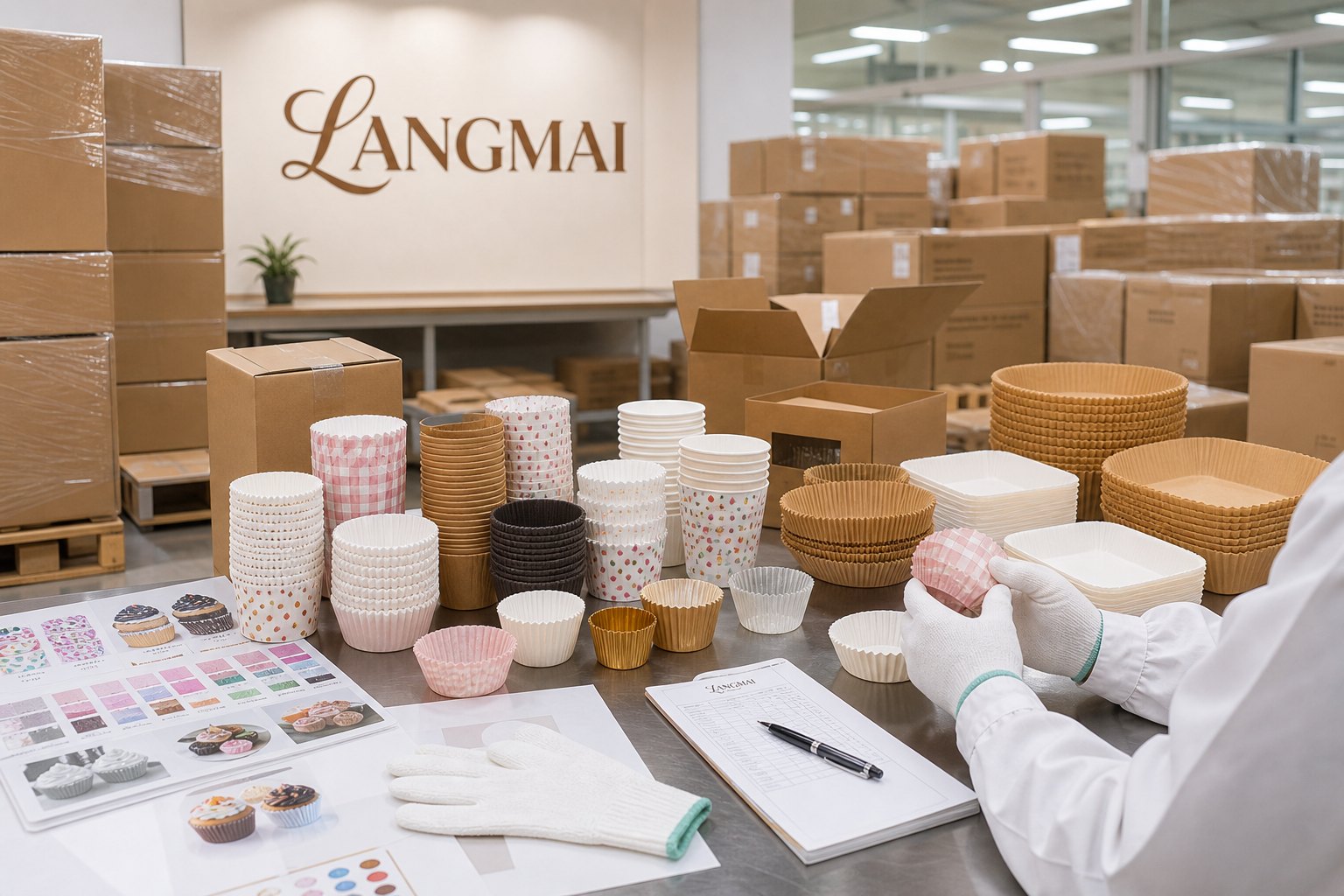
What should buyers check before ordering burger wrapping paper wholesale? The direct answer is: define the food, wrap format, grease exposure, heat and holding time first, then approve production-representative samples through oil resistance, moisture, print, odour, pack-count, carton and document checks. A sheet that looks clean around a dry sandwich can fail around a hot burger with sauce, cheese, fried protein or steam.
Burger wrapping paper is a small component, but it carries a large part of the customer experience. It touches the food, controls mess, protects presentation, supports counter speed, and often carries the brand pattern that customers photograph. For B2B buyers, the sourcing decision should connect material construction, food-contact evidence, application testing, printing, packaging hierarchy and shipment inspection into one controlled specification.
This guide is written for importers, foodservice packaging distributors, QSR procurement teams, bakery and deli chains, supermarket private-label teams and ecommerce sellers sourcing greaseproof burger wrap paper in bulk. It focuses on practical buyer decisions: what to ask suppliers, what to test before approval, what documents to review and how to avoid weak claims such as "food grade" without evidence.
1. Define the Real Burger Wrap Job
Start by describing how the paper will be used. A burger wrap for a fast-service counter is not the same as a sheet for a chilled deli sandwich, bakery pastry, fried snack tray liner or delivery bag insert. Heat, fat, sauce, steam and handling time change the paper requirement.
Your RFQ should state:
- food type: burger, sandwich, wrap, pastry, fried chicken, chips, tacos, bakery item or deli product;
- food condition: hot, warm, chilled, frozen-to-reheat, oily, sauced, acidic, wet or dry;
- service route: dine-in, takeaway, drive-through, delivery, supermarket display, catering or event service;
- holding time before consumption;
- wrap style: full wrap, half wrap, basket liner, tray liner, interleaving sheet or deli sheet;
- target sheet size, fold method and pack count;
- print requirement, ink coverage and food-contact side;
- destination market and document expectations.
This prevents the most common sourcing error: buying by sheet size and price while leaving the application risk undefined. A useful supplier cannot recommend the right greaseproof food paper if the buyer has not explained the food profile, service route and approval standard.
LANGMAI's broader greaseproof paper sheets guide is useful when buyers are still comparing sheet formats. This article narrows the question to burger and foodservice wrap applications where speed, grease control, branding and pack handling matter.
2. Build a Quote-Ready Specification
The best wholesale quotations start with a written specification, not a product name. For burger wrapping paper, the specification should cover the sheet, surface function, print, packaging and evidence file.
| Specification field | What to define | Why it matters |
|---|---|---|
| Sheet size | Width, length, tolerance and fold direction | Controls wrapping speed, coverage and waste |
| Paper construction | Colour, grammage, stiffness and supplier material code | Affects hand feel, folding, opacity and grease control |
| Grease resistance | Required test method or buyer application test | Prevents oil staining and weak presentation |
| Food profile | Fat, sauce, moisture, acidity and serving temperature | Drives sample testing and document relevance |
| Print design | Number of colours, coverage, repeat pattern and print side | Controls brand appearance, odour and set-off risk |
| Pack format | Inner pack count, dispenser pack, sleeve, carton and pallet | Supports counter speed and inventory control |
| Documents | EU, US or buyer-specific evidence tied to finished article | Reduces compliance and importer-review risk |
| Inspection | Dimensions, count, print, odour, stains, carton marks and lot link | Confirms the shipment matches the approved sample |
Do not treat paper grammage alone as a performance guarantee. A heavier sheet may feel stronger, but grease resistance, surface treatment, fibre structure, coating if used, printing and food profile all affect real use. If your team is comparing paper weights across several food-paper formats, LANGMAI's baking paper grammage guide explains why gsm is only one part of the purchasing decision.
3. Separate Greaseproof Performance From Compliance
Greaseproof performance and food-contact compliance answer different buyer questions. Greaseproof testing asks whether the paper controls oil, moisture and presentation in the buyer's application. Food-contact review asks whether the finished article and its components are suitable for the intended food-contact use in the target market.
For EU buyers, the European Commission explains that food contact materials placed on the EU market must comply with Regulation (EC) No 1935/2004. The same official guidance notes that transferred constituents can affect food safety and also the food's taste, smell and appearance. EU food-contact legislation also identifies Regulation (EC) No 2023/2006 as the good manufacturing practice regulation for food-contact materials and articles.
For US projects, FDA's food-contact framework is component-based. FDA guidance on regulatory status explains that the overall status of a food-contact material depends on each individual substance that comprises the article and may reasonably migrate to food. FDA's conditions-of-use table also separates refrigerated storage, frozen storage and reheating situations. A hot held burger wrap, a chilled deli wrap and a frozen prepared-food insert should not be approved as if they were the same use.
In practical procurement, ask for evidence that matches the finished burger wrapping paper: paper grade, treatment or coating if present, printing ink, print side, adhesive if used, pack contact and the planned food type. A generic "food grade paper" statement is not enough for importer due diligence.
4. Test With Real Food, Not Only Oil Drops
Laboratory-style grease tests can help compare materials, but buyer approval should also include real application testing. Burger wraps face heat, fat, cheese, sauce, steam, compression, hand contact and time. A clean result after a short static test may not predict a 20-minute delivery hold.
A practical sample approval plan can include:
- Record the sample code, sheet size, paper grade, grammage, surface function, print status and supplier lot.
- Wrap the buyer's real burger or sandwich at the planned serving temperature.
- Include high-risk variants such as double patties, fried fillings, cheese, sauce or acidic toppings.
- Hold the wrapped product for the target dine-in, takeaway or delivery time.
- Check oil penetration, wet marks, tearing, sticking, odour, print rub, colour transfer and hand feel.
- Test the fold pattern that staff will actually use during service.
- Photograph accepted and rejected samples with time and food notes.
- Keep reference samples for repeat-order comparison.
If the same sheet will be used as a basket liner and a wrap, test both. Basket liners see plate contact and open-air presentation; full wraps face compression, steam and customer handling. Different uses can justify different sheet sizes, paper grades or pack formats.
5. Control Custom Printing and Brand Appearance
Custom printed burger wrapping paper is valuable because it turns a simple sheet into a visible brand touchpoint. It can also create avoidable risk if artwork, ink coverage, print side and sensory review are not controlled.
Buyers should lock:
- approved artwork file and version;
- repeat pattern direction and cutting position;
- colour references and acceptable variation;
- print side and food-contact side;
- maximum ink coverage if the design is heavy;
- odour review after printing and packing;
- rub, set-off and condensation checks;
- carton mark and inner-pack label rules.
Printed food paper should be reviewed as a finished article. Do not approve a plain white sample and assume the same result after high-coverage printing. The custom printed food paper packaging guide gives a deeper workflow for artwork, ink, document and sensory controls.
Mid-Article CTA: Prepare a Burger Wrap Sample Brief
Before asking for a bulk price, send LANGMAI the food type, sheet size, wrap style, serving temperature, holding time, grease and moisture risk, artwork status, print coverage, pack count, destination market and document requirements.
Send your burger wrapping paper requirements or compare related greaseproof food paper options.
6. Choose Packaging for Speed and Count Accuracy
Foodservice wrapping paper has to work at the counter. A perfect sheet is frustrating if the pack tears, the count is inconsistent, the sheets are hard to separate or the carton cannot survive distribution.
For wholesale foodservice programs, specify the packaging hierarchy:
- sheets per inner pack;
- folded or flat sheet format;
- dispenser box, sleeve or poly inner pack;
- inner-pack label and lot code;
- master carton quantity and dimensions;
- gross weight and carton strength;
- pallet pattern and stacking rules;
- moisture and dust protection during storage;
- barcode, item code or customer SKU requirements.
GS1 states that a Global Trade Item Number can uniquely identify trade items that are priced, ordered or invoiced. For retail and distributor programs, buyers should confirm which selling unit, inner pack, case or pallet level needs identification. If pack count, dimensions, gross weight or a certification mark changes, review whether item master data or GTIN handling also needs to change under the buyer's system.
7. Review Documents Before Mass Production
Document review should happen before artwork approval and bulk production, not after goods are ready to ship. For burger wrapping paper, the document file may include food-contact declarations, test reports, material descriptions, ink information, paper supplier references, traceability records, artwork approval, packing specification and retained-sample rules.
Ask whether each document identifies:
- the finished article or exact material code;
- paper, surface function and printing status;
- food-contact side and food type;
- time and temperature conditions;
- destination-market framework;
- report date, issuing lab and test scope;
- buyer SKU, PO or approved sample connection.
Avoid broad phrases such as "FDA approved paper" or "EU certified" unless the supplier can explain exactly what component, test, declaration or regulation is being referenced. Stronger files use precise wording, traceable sample IDs and clear limits.
8. Compare Suppliers With a Burger Wrap Scorecard
Price matters, but it should be compared beside specification strength. A lower quote can become expensive if the sheet stains, the print smells, cartons collapse or documents do not match the finished article.
| Evaluation area | Evidence to request | Warning sign |
|---|---|---|
| Application fit | Real-food wrap test using buyer menu items | Approval based only on catalogue photos |
| Grease control | Grease-resistance evidence plus timed use test | No link between paper code and food profile |
| Printing | Artwork proof, ink-side control and odour review | Heavy design approved without sensory check |
| Packaging | Inner pack, carton, pallet and count specification | Pack format discussed after price approval |
| Documents | Finished-article evidence for target market | Generic food-grade wording with no scope |
| Inspection | Dimension, count, print, odour and carton checks | Shipment released by quantity only |
| Change control | Notice for paper, treatment, ink, supplier or tooling changes | Supplier can change material without reapproval |
Use the same scorecard for every supplier. That makes exclusions visible and helps purchasing, QA and marketing teams compare the same product instead of comparing incomplete quotes.
9. Inspect the Shipment Against the Approved Sample
Pre-shipment inspection cannot prove food-contact compliance or replace application testing, but it can prevent practical failures from entering the supply chain. Inspectors should compare the production lot with the approved reference sample and purchase specification.
Inspection points include:
- SKU, PO, artwork revision and destination market;
- sheet width, length, tolerance and cut quality;
- paper colour, stiffness, surface consistency and visible defects;
- print registration, colour, rub, set-off and abnormal odour;
- greaseproof appearance compared with approved samples;
- inner-pack count, pack closure and label accuracy;
- master carton strength, quantity, marks and gross weight;
- pallet pattern, moisture protection and export packing;
- document revision, lot code and retained sample connection.
Set sampling and acceptance rules in the purchase agreement based on buyer risk and product requirements. Avoid unsupported universal AQL promises. For a broader quality workflow, use LANGMAI's baking paper quality-control inspection guide.
10. Send a Complete RFQ
A quote-ready burger wrapping paper RFQ should include:
- target sheet size and tolerance;
- food type, temperature, fat, sauce and holding time;
- use mode: full wrap, basket liner, tray liner, deli sheet or takeaway wrap;
- paper colour, grammage target and greaseproof requirement;
- print design, coverage, colour references and print side;
- food-contact document requirements for the target market;
- sample quantity and real-food test plan;
- pack count, inner pack, carton, pallet and barcode requirements;
- inspection checklist and retained-sample rules;
- estimated order quantity, delivery terms and repeat-order schedule;
- change-control requirements for paper, ink, treatment and packaging.
This level of detail helps a supplier quote the product you actually intend to approve. It also reduces the back-and-forth between procurement, QA, marketing and operations because the document, sample and packaging assumptions are visible from the start.
FAQ
What is the best paper for burger wrapping?
The best paper depends on the food and service route. Hot burgers with sauce and cheese usually need a greaseproof sheet tested for oil, moisture, steam, odour, tearing and holding time. Buyers should approve samples with their real menu items.
Is burger wrapping paper the same as deli paper?
Not always. Some deli sheets are used for chilled or dry foods, while burger wraps may face higher heat, fat, sauce and compression. A sheet can serve both jobs only if it is specified and tested for both uses.
Can burger wrapping paper be custom printed?
Yes, but buyers should control artwork version, ink coverage, print side, colour tolerance, odour, rub and set-off. A printed sample should be approved as the finished article before bulk production.
What documents should importers request?
Request food-contact evidence tied to the finished paper, including material code, surface function, printing status, intended food type and time-temperature use where relevant. Also request packing specifications, lot traceability and artwork approval records.
Does greaseproof mean waterproof?
No. Grease resistance helps control oil and fat staining, but it does not automatically make the sheet waterproof or suitable for every wet food. Test with the real sauce, steam and holding time.
What pack format is best for foodservice distributors?
The best format depends on warehouse, counter and customer needs. Common decisions include sheet count per inner pack, flat versus folded sheets, dispenser packs, master carton quantity, carton strength, pallet layout and barcode requirements.
How should buyers inspect a burger wrap shipment?
Compare the shipment with the approved sample and specification. Check sheet size, paper appearance, print, odour, pack count, labels, carton marks, lot codes, retained samples and document revision before release.
Conclusion
Burger wrapping paper wholesale sourcing should not start and end with a sheet size and price. The buyer needs a controlled file that connects food profile, greaseproof performance, printing, packaging, documents, application testing and inspection.
The strongest process is simple: define the job, request production-representative samples, test with real food, review finished-article documents, lock the packaging hierarchy and inspect the lot against the approved sample. That gives importers, foodservice distributors, QSR teams and private-label buyers a clearer basis for comparison and repeat orders.
CTA
Sourcing burger wrapping paper for a foodservice, retail or private-label program? Send LANGMAI your sheet size, food type, grease and moisture risk, artwork, pack count, destination market, document needs and target order volume. Ask for production-representative samples before approving bulk production.
Sources
- European Commission, Food Contact Materials
- European Commission, Food Contact Materials Legislation
- U.S. FDA, Determining the Regulatory Status of Components of a Food Contact Material
- U.S. FDA, Food Types and Conditions of Use for Food Contact Substances
- GS1, Global Trade Item Number (GTIN)
- GS1, Global Data Model Attribute Implementation Guide