
Introduction
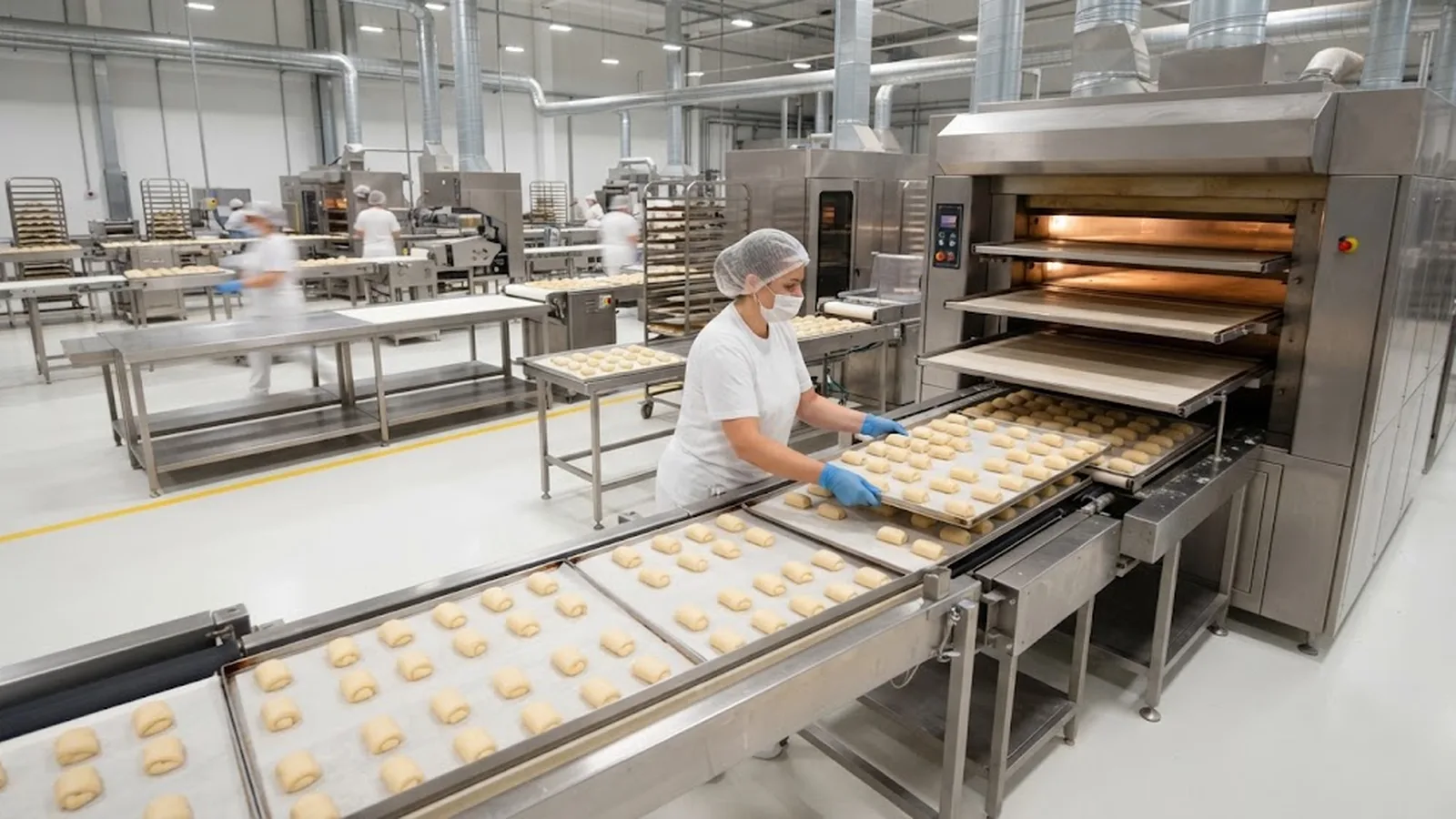
On a manual line, a sliding sheet is a small annoyance. On an automated line, it is a stoppage. When baking paper shifts while a tray moves through a proofer, an oven loader or a cooling conveyor, product slides with it and operators lose seconds re-placing liners. Over a shift of thousands of trays, liner movement converts directly into rejected product and lost line speed.
Most liner movement traces back to four causes: a sheet cut larger or smaller than the tray footprint, a coating that is too slick for the dough weight on top of it, oven airflow that lifts lightweight sheets, and transfer points where trays tilt. None of these are paper defects — they are mismatches between sheet construction and application. That is why the fix is usually a specification change, not a brand change: adjusting sheet dimensions, grammage, coating distribution, or moving to a construction with a grip texture or perforation pattern that anchors the sheet to the tray. Buyers comparing these constructions can review our silicone-coated parchment sheets and rolls programme, where sheet dimensions and coating distributions are documented per grade.
This guide covers where liner movement comes from, which non-slip options exist and what each costs in release performance, and how to specify a sheet that stays flat through proofing, baking and high-speed transfer.
Why Baking Paper Shifts During Production Baking
Understanding the mechanics helps you diagnose which specification to change. The most common cause is dimensional mismatch. A sheet cut to nominal tray size leaves a border of bare steel; during oven loading, air currents catch that border and slide the sheet toward the trailing edge. Oversize sheets curl up the tray walls and relax during baking, pulling the sheet inward.
The second cause is weight asymmetry. A light 35–40 gsm sheet under a small, dense item — a cookie puck, a macaron shell — has almost nothing pressing it down, so convection currents act on the exposed surface and the sheet moves. Complaints cluster around light pastries, cookies and open trays.
The third cause is the coating itself. Silicone is a release agent; its job is to be slippery. A uniformly coated sheet is intentionally low-friction on both sides, and on a smooth aluminium tray that combination is close to frictionless. The final trigger is mechanical: tilt at transfer points, pick-and-place heads that drag the liner, and denesting vibration — each adds a lateral force an unanchored sheet cannot resist.
Non-Slip Options: Grip Texture, Perforation Patterns and Sheet Fit
There is no single "non-slip baking paper" product category — there are four construction strategies, each solving a different part of the problem.
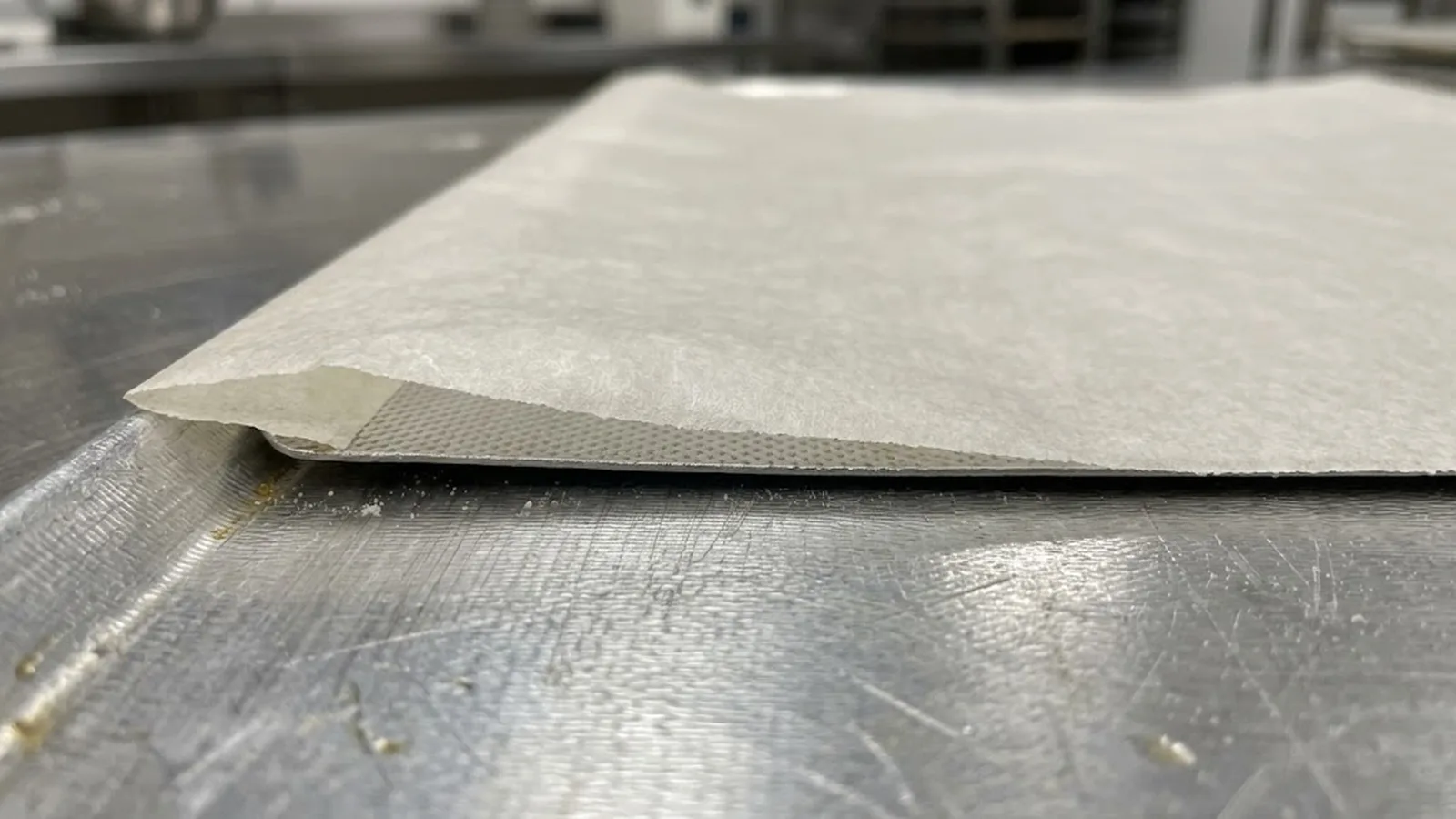
Grip or embossed texture. A light embossing pattern on the tray side raises micro-ridges that increase friction against the tray surface without meaningfully affecting release on the food side. It is the most direct anti-slip construction and preserves full-sheet coverage. The trade-off: embossing slightly reduces smoothness on one side, irrelevant for bread, pastry and cookies but worth noting for high-gloss applications.
Perforation patterns. Perforated sheets solve two problems at once. Holes let convection air pass through instead of catching the sheet edge, which reduces lift, and in vented applications they improve airflow around the product. Specify the pattern for air relief, not maximum open area — a sparse pattern usually stops edge flutter while keeping sheet strength intact. Perforation reduces the grease barrier area, so very wet or high-fat batters need release re-validated against the hole layout.
Dimensional fit. The cheapest fix is often the correct sheet size. Sheets cut to the exact tray footprint leave no border for air to catch, and for lipped sheet pans, sheets sized flat on the pan bottom prevent curl-and-pull. For hand-loaded foodservice trays, a slightly oversized sheet tucked under the product at two opposite edges provides anchoring without any texture change.
Combined constructions. High-speed lines running light products on open trays often combine all three: a fitted sheet, a tray-side texture and a light perforation. For production volumes, the same construction logic applies to our pre-cut parchment paper sheets and rounds line, quoted per roll, sheet or die-cut format, with the anti-slip features built into the conversion.
The practical way to choose is to test against your actual failure mode. If sheets slide at the oven loader, texture and fit matter most. If sheets flutter on open trays mid-bake, perforation matters most. If sheets move during transfer only, fit and edge behaviour dominate. The factory and certificate library lists the third-party audits and test reports behind these constructions, so specification claims can be verified before a trial order.
Specifying Anti-Slip Parchment for Automated Lines
Once the failure mode is known, the specification conversation has five variables: base grammage, coating weight and distribution, texture or perforation pattern, sheet dimensions and tolerance, and packing format. Base grammage drives stiffness — a sheet that is too light wrinkles at transfer points. Coating distribution matters more than total coating weight for slip: a slightly reduced or patterned coating on the tray side gains friction exactly where it is needed while keeping full release on the food side.
Sheet tolerance is the variable most often left vague in RFQs. State the target tray dimension, the acceptable sheet tolerance, and whether the sheet must sit inside a pan lip or across a flat tray. Packing format closes the loop: sheets delivered stacked in loading orientation, in counts matched to tray-stack size, reduce the handling where misalignment creeps in. Buyers running branded or colour-coded liners can review our custom printed baking parchment paper options, where print and anti-slip features are specified together on one construction.
Before committing to volume, run a controlled comparison: same product, same oven programme, three constructions (current sheet, textured sheet, perforated sheet), scored on sheet position after bake, product loss and line stoppages. Most bakeries that run this test find that one variable — usually fit or texture — explains the majority of their movement, which keeps the final specification simple and the unit cost close to a standard sheet. Documentation scope for the selected construction is confirmed per SKU and destination market before the volume order.
FAQ
Does embossing or a grip texture affect release performance?
Not on the food side. Tray-side texture increases friction against the pan while the food side keeps its full silicone coating and release behaviour. Where both sides contact food, the texture is specified at a low relief depth so it does not imprint on delicate doughs.
Will perforated baking paper stop sheets from sliding?
It helps with the lift component — air passes through the holes instead of pushing the sheet — and it reduces edge flutter on open trays. It does not add friction, so for sheets sliding at transfer points, fit and tray-side texture are the more effective fixes.
Is a heavier grammage automatically more non-slip?
No. Heavier paper resists flutter and wrinkles better, but weight alone does not create friction against a smooth tray. Grammage should be selected for stiffness and heat performance; slip is addressed by texture, coating distribution and fit.
Can we combine non-slip features with custom sizes or printing?
Yes. Sheet dimension, perforation pattern, tray-side texture and print are all specified on the same construction. The constraint is order quantity — tooling for custom patterns and print has MOQs.
How do we validate a non-slip sheet before switching lines?
Run the three-construction comparison on one oven and one product family first. Score sheet position after bake, product loss and stoppages per shift, then approve a pre-production sample of the winning construction before the full-volume order.
Conclusion
Liner movement is a specification problem, not a paper problem. Sheets slide because of dimensional mismatch, low-friction coatings meeting smooth trays, oven airflow on lightweight constructions, and lateral forces at transfer points. Each cause maps to a specific fix: fitted dimensions, tray-side grip texture, light perforation for air relief, or a combination for high-speed lines running light products.
The commercial upside is direct — fewer stoppages, less rejected product, and liners that survive proofing through baking without operator correction. Because the fixes are construction changes on standard parchment, the cost premium over a plain sheet is small relative to the line time recovered. Buyers verifying these specifications can review the certificate library before running a production trial.
CTA
If liner movement is costing your line time, send us your tray dimensions, product type and failure description. We will match a construction — fitted sheets, tray-side texture, light perforation, or a combination — and supply pre-production samples for a controlled on-line comparison before you commit to volume.
Sources
- Silicone coating and paper release mechanisms: https://www.sciencedirect.com/topics/food-science/silicone-coating
- FDA guidance on food-contact substances: https://www.fda.gov/food/food-ingredients-packaging/food-contact-substances-fcs
- European food contact framework (EC 1935/2004): https://eur-lex.europa.eu/legal-content/EN/TXT/?uri=celex%3A32004R1935
- Oven airflow and tray handling in baking: https://www.bakingbusiness.com/