
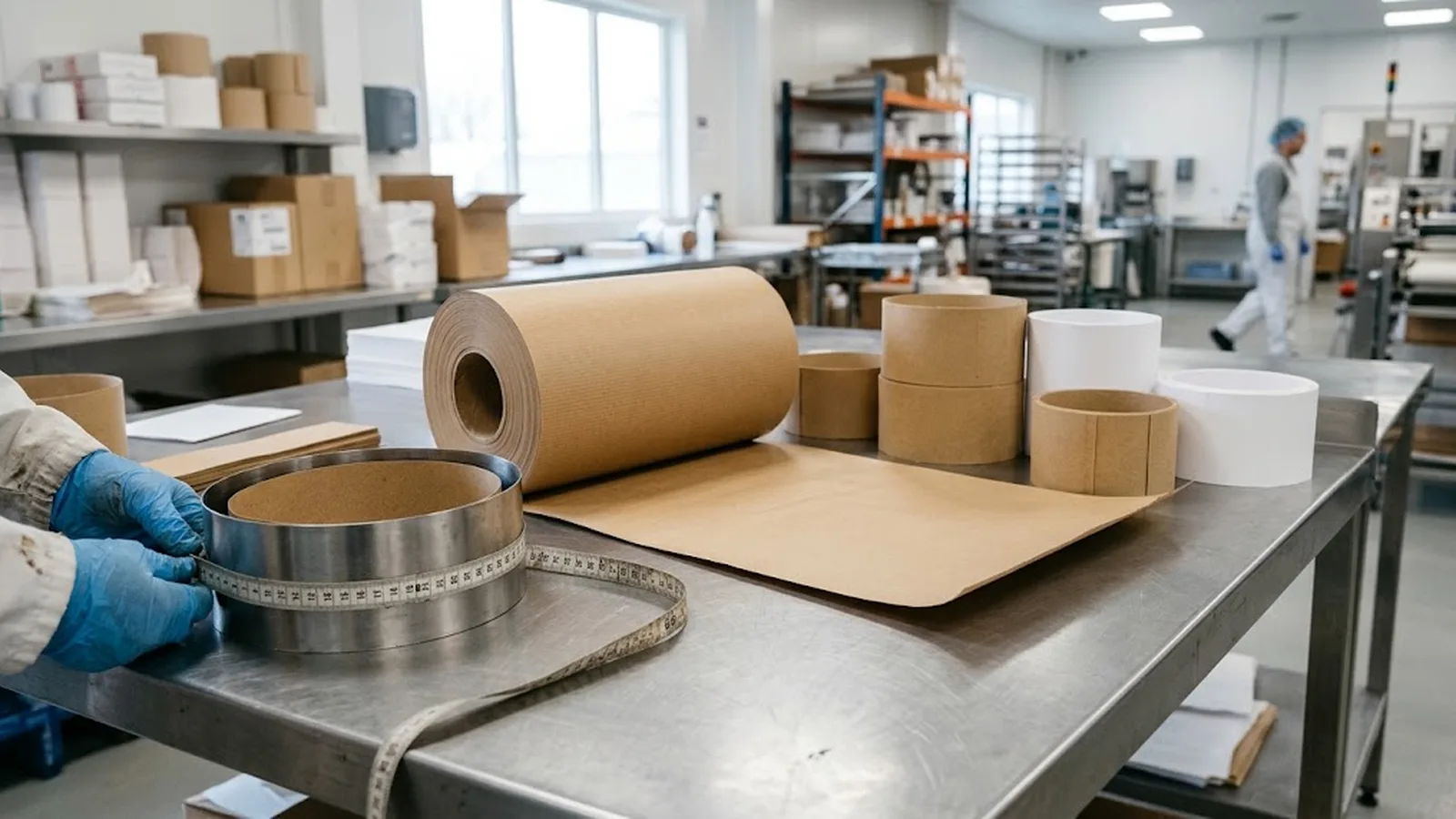
Introduction
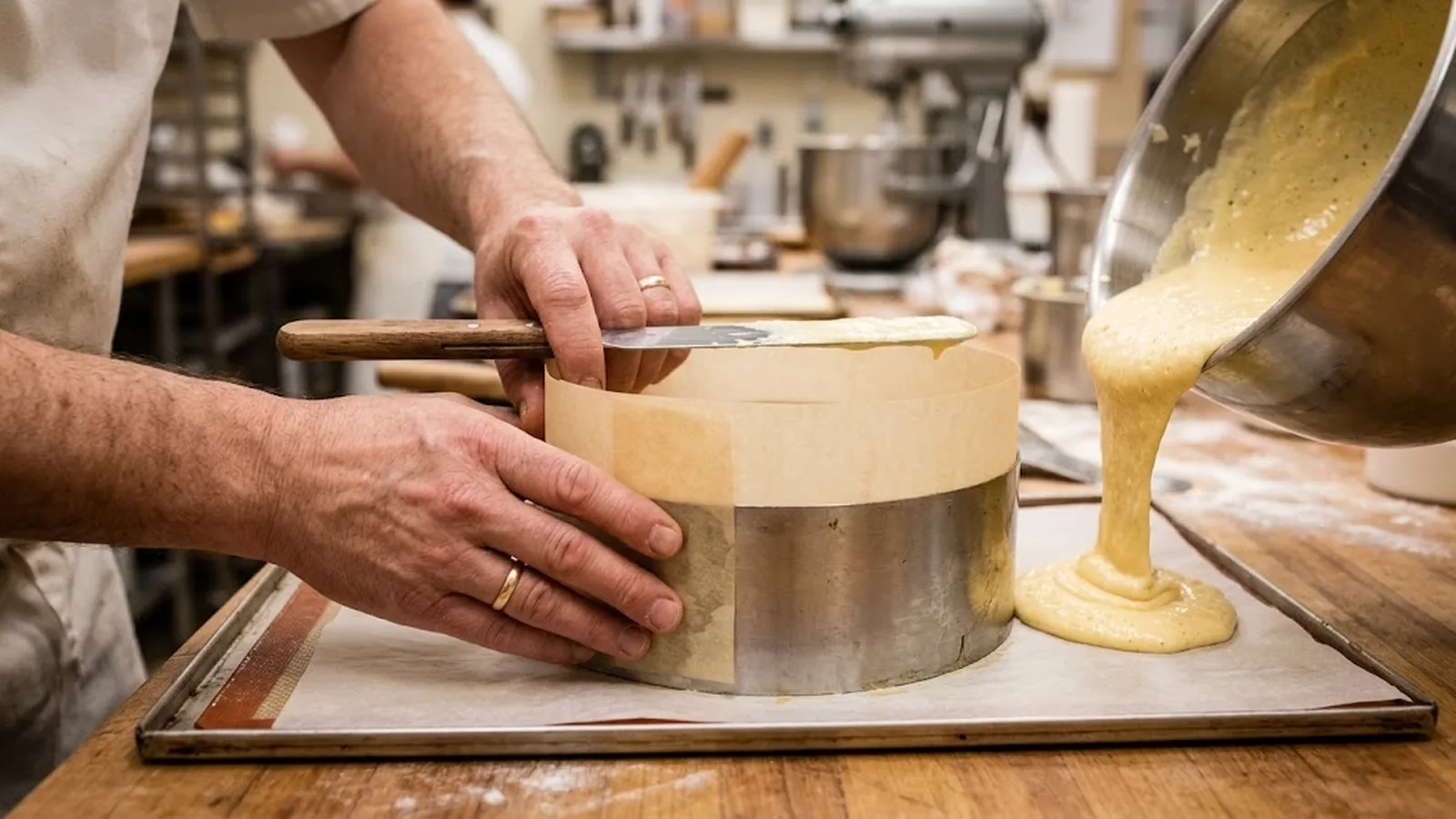
Deep cakes, mousse tortes and tall sponges baked in rings all depend on a component most catalogue buyers never think to specify: the side liner, commonly called a cake pan collar. It is the tall band of paper wrapped around the inside wall of a cake ring, springform or deep pan, and it decides whether the product releases with a clean vertical edge or tears, sticks and has to be trimmed by hand. In industrial and foodservice bakery production, collars also carry the batter load at full height, hold their overlap seam through the bake, and present a consistent wall on chilled, un-moulded desserts. Yet collars are still frequently ordered by diameter alone, with no stated height, paper construction or tolerance, which is where demoulding defects and line slowdowns begin. Buyers standardising on one paper supplier can review our silicone-coated parchment sheets and rolls next to their collar specifications, so pan bases and side walls are documented under one programme.
What Collars and Side Liners Do in Production
A collar performs three jobs at once. First, it is the release surface at the wall: the paper interface that lets a baked sponge or a set mousse slide out without picking or scraping, protecting both the product edge and the pan or ring finish. Second, it is a height-control component: for batters that rise above the pan rim, the collar extends the working wall so the crown stays supported and the finished cake can be level-cut for layering. Third, it is a presentation surface — on chilled desserts that are served directly in the ring or collar, the visible wall carries the brand impression, which is why printed collars are common in patisserie and dessert manufacturing.
Production conditions differ sharply between baked and chilled applications. In an oven, the paper must hold its seam, resist fat strike-through from rich batters and release cleanly at serving temperature. In chilled display, it must survive condensation, high-fat dairy fillings and days of contact without wrinkling or transferring fibre. Specifying one "all-purpose" collar for both cycles is the most common source of returns; the fix is declaring the application cycle on the purchase specification and letting the construction follow it.
Material and Construction Options
Wholesale collars fall into a few practical families. Food-grade greaseproof paper collars suit most baked sponges and butter-rich batters, where grease holdout keeps the wall readable and the release clean. Double-side silicone-coated constructions are the choice where baked release is critical — chocolate sponges, caramelised sugars and sticky fruit preparations — because the coating, not the fibre, takes the release load. Heavier uncoated or lightly treated kraft constructions work for chilled mousse and cheesecake programmes where structure and presentation matter more than oven release, while fluted or embossed collars add stiffness and a decorative wall and smooth-wall formats print and wrap more easily.
Two construction details are worth writing into the specification. One, the overlap seam: collars are supplied as pre-cut bands with a lap, or as rolls cut to length on the line, and the seam behaviour through filling and baking should be verified with the actual product. Two, food-contact status: the collar is in direct contact for the full product cycle, so the declaration must cover the exact construction, including any coating and ink. Where a programme also lines pan bases, our pre-cut parchment paper sheets and rounds are quoted alongside the collar construction so the full lining set ships under a single documentation package.
Sizing, Tolerance and Fit
Collar fit is a dimensioning exercise, not a size-chart lookup. The internal circumference of the ring or pan, the finished wall height and the overlap allowance together define the die-cut dimensions, and each of the three carries a tolerance. A collar cut 3–4 mm short on circumference opens a batter leak at the seam; one cut too tall folds over at the rim and prints the fold into the cake crown. Buyers should specify declared circumference, height and lap width as separate referenceable values, and confirm whether their rings are true circles — adjustable mousse rings and springform sides vary more than stamped pans.
Height selection follows the product, not the pan. Baked sponges that rise above the rim typically need 40–80 mm of wall above pan height; chilled desserts served in the collar need the full serving height plus a grip margin for the customer. Because tolerances on cheap collars drift between batches, ask for the declared tolerance band in writing and verify it on received samples with a simple circumference and height check. The factory and certificate library lists the third-party audits and test reports behind these claims.
Verifying Performance Before You Order
A collar datasheet proves nothing on its own; the verification is a demould trial with the real product. The sequence that works: wrap the candidate collar in the production ring with production batter or filling, process the full cycle — bake, chill or freeze as applicable — then demould and grade the wall for clean release, seam integrity, edge definition and grease strike-through. Run at least one full batch at line speed, because a collar that performs in a single trial tin may jam the wrapping or filling step in production. For printed collars, add an ink-contact check: the print sits against the product for the full cycle, so the ink system must be declared food-contact suitable and verified for transfer on the actual filling. This is also the point to confirm packing format — flat-packed in sleeves, nested in stacks or on reels — because feeding behaviour at the wrapping station depends on it.
Cost, Custom Print and Ordering Terms
Collars are die-cut products, so tooling and minimum order quantities shape the commercial conversation. A standard ring diameter in a stock construction is quoted against existing tooling with low MOQs; a custom diameter, height or printed wall requires die-cut tooling and a print run, which is usually recovered over a season of production. Buyers consolidating lining programmes with one factory can pair collar specifications with our wholesale parchment paper rolls and sheets so bases, collars and tray liners share tooling, freight and documentation. State the application cycle, ring geometry and annual volume up front, and let the supplier propose the construction — buyers who negotiate collars purely on unit price usually buy back the difference in hand-trimming labour and rejected edges.
FAQ
What paper is used for wholesale cake pan collars?
Common constructions are food-grade greaseproof paper, double-side silicone-coated parchment for baked release, and heavier kraft or board formats for chilled presentation desserts. The right choice depends on the application cycle — baked, chilled or frozen — and the fat content of the filling, so specify the cycle and let the construction follow.
How do I size a collar for a cake ring or springform pan?
Measure the true internal circumference of the ring, add the overlap lap, and set height as pan height plus the rise allowance for baked products, or full serving height plus a grip margin for chilled desserts. Confirm all three dimensions and their tolerances on physical samples before tooling.
Can cake pan collars be used in the oven?
Only constructions declared for direct food contact under baking conditions should be used in the oven. Verify release, seam integrity and grease holdout with your actual batter and oven profile, and keep the declared construction, coating and ink system documented per SKU.
Conclusion
Cake pan collars and tall side liners are engineered components, not packaging accessories. Buyers who declare the application cycle, specify circumference, height, lap and tolerance as separate values, and validate demoulding with production batter get collars that release cleanly at wholesale volumes — whether the product is a baked sponge or a chilled mousse served in the ring. The same specification discipline applies across the lining programme, from pan bases to collars, and it is what keeps industrial cake production profitable at scale.
CTA
Ready to specify collars for your cake or dessert programme? Send your ring geometry, product cycle and annual volume, and our engineers will recommend a construction with verified release and seam performance. Wholesale enquiries are quoted with samples, declared tolerances and full food-contact documentation.
Sources
- EU Regulation (EC) No 1935/2004 on materials and articles intended to come into contact with food
- FDA 21 CFR Part 176 — Indirect food additives: paper and paperboard components
- German Federal Institute for Risk Assessment (BfR) — Recommendations on paper and board for food contact
- ISO 536 — Paper and board: determination of grammage (basis weight)
- TAPPI test methods for grease resistance and paper stiffness as applied in food packaging qualification