
Introduction
Paper weight is the single specification that most influences how a cake cup behaves in production, on the retail shelf and in the customer's hands. Expressed in grams per square metre (gsm), it determines sidewall rigidity, how the cup holds its shape after denesting, how it carries batter weight in the oven, and — at scale — a large share of the landed unit cost. Yet many wholesale buyers still order cups by colour and diameter alone, then discover at line trial that a cup specified 10 gsm too light collapses in the auto-feeder or leaks fat onto oven decks. Treating grammage as an engineering input rather than a catalogue detail is what separates a reliable cup programme from an expensive one. Buyers standardising on one paper supplier can review our food-grade die-cut parchment rounds next to their cup specifications, so tray lining and cups are documented under one programme.
Why GSM Is the Core Specification for Cake Cups
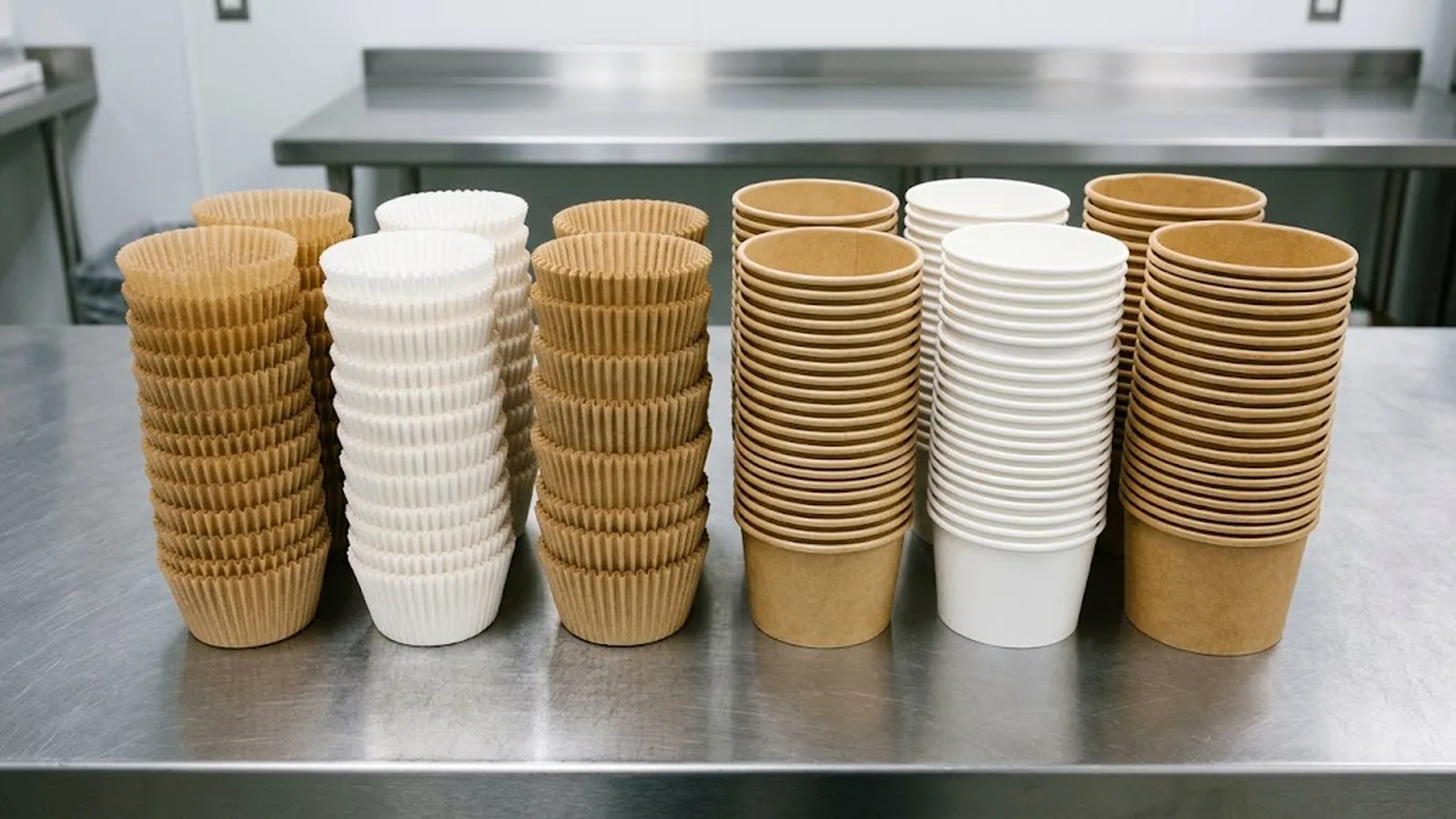
For paper cake cups and muffin cups, base grammage typically sits anywhere between roughly 40 gsm and 250 gsm depending on the construction. Light-weight single-wall cup papers at the lower end suit portion cups and short-dwell bakery applications; mid-range weights around 120–180 gsm are the workhorse zone for self-supporting baking cups that must stand upright in trays and display packs without a mould; heavier boards approaching 250 gsm appear in dessert cups and presentation formats that carry fillings without baking.
Three properties scale with grammage. First, sidewall stiffness: heavier base paper resists buckling under batter load and keeps a clean fluted or rolled rim after baking. Second, dimensional stability through moisture: as cups absorb steam in the oven, a heavier fibre network holds geometry better and sheds fewer fibres into product. Third, denesting behaviour: in automated feeders, cups that are too light stick together in the stack or mis-feed, while an over-heavy grade can jam the magazine. Weight is therefore not a "heavier is better" decision — it is a match to the filling process, the oven and the packaging line downstream.
Matching GSM to Cup Format and Application
Format and application should drive the target band, and the bands overlap more than most catalogues admit. Standard fluted muffin and cupcake cups for tray baking commonly run in a mid-weight band because the pan supports the wall during baking; the paper's job is release, grease holdout and presentation. Self-supporting cups — the tall, free-standing formats used for display bakery and foodservice — need the upper part of the weight range, often with a reinforced rim, because the wall itself is the structure. Portion cups for chilled desserts, mousses and no-bake formats can drop lighter again, since cold fillings load the cup differently from hot batter.
Application temperature and fat content matter as much as weight. A high-fat chocolate muffin batter stresses the grease barrier at the same time the oven stresses the fibre, so buyers frequently pair a mid-to-heavy grammage with a higher grease-resistance treatment rather than simply adding weight. Where cups travel straight from oven to chilled display, the construction also needs to survive the condensation cycle without softening at the rim. Documenting the full cycle — fill, bake, cool, pack, display — against a candidate grammage is the fastest way to avoid rework. Programmes that pair cups with pan lining can quote the matching pre-cut parchment paper sheets and rounds alongside the cup construction for a single documentation package.
Verifying Weight and Performance Before You Order
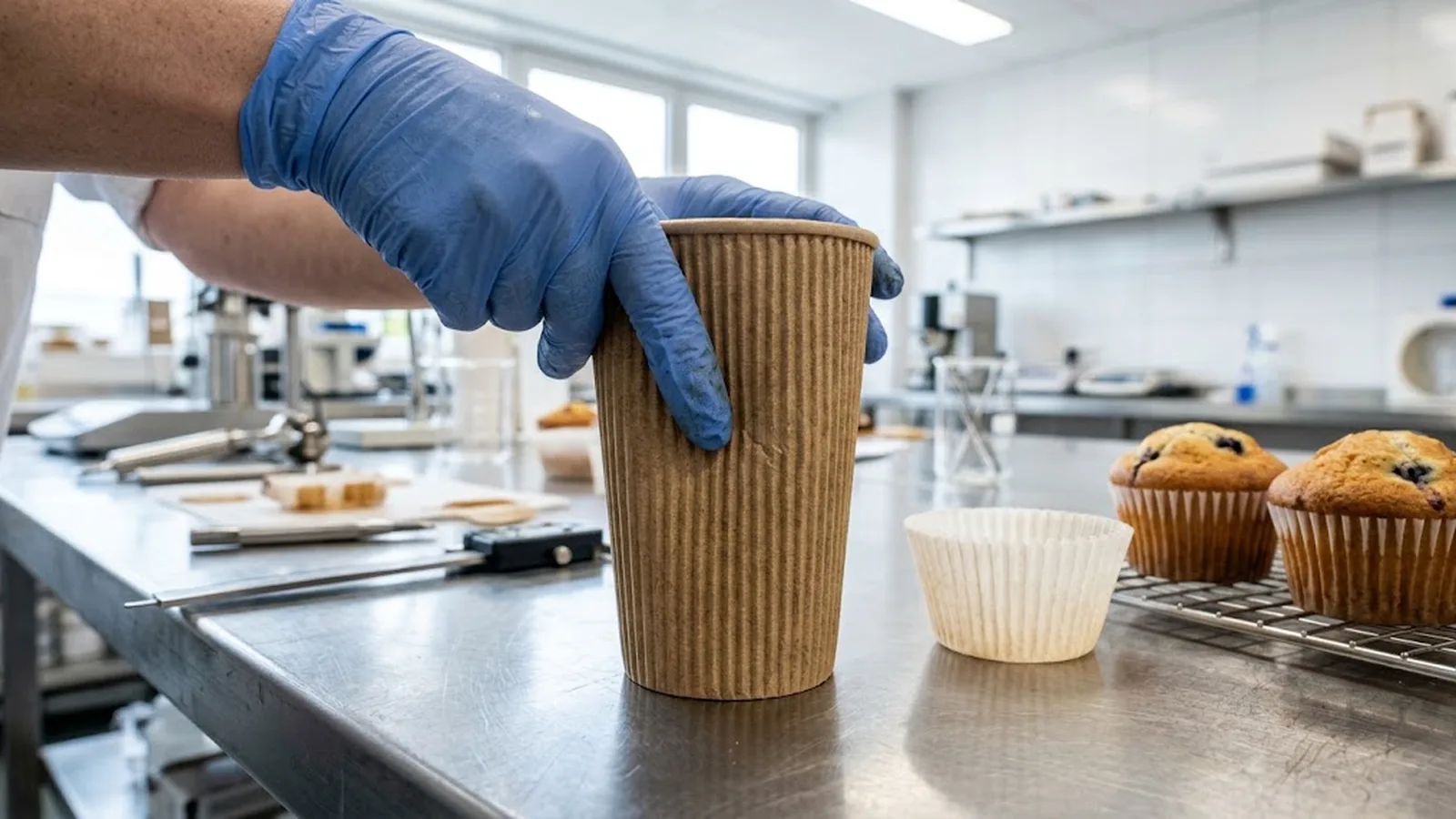
Grammage on a datasheet is only the starting point; what buyers actually purchase is performance. A disciplined verification sequence looks like this: measure basis weight on received samples against the declared gsm and its tolerance; run a sidewall rigidity or crush test that reflects your filling height; bake with your actual batter and oven profile and inspect wall geometry, rim definition and grease strike-through after release; and finally run the cups through your denester and packing line at production speed. Weight tolerance matters as much as the number itself — an unspecified ±15% swing between batches will show up as inconsistent feeding long before it shows up on a scale.
Buyers verifying these specifications can review the certificate library alongside supplier documentation requests, so the test reports behind each claim are tied to the exact construction quoted. Insist that the datasheet states base paper grammage, finished cup weight, grease-resistance level and food-contact status as separate, referenceable values — combined "quality grade" labels hide the variables that actually drift in production.
Cost, Freight and Ordering Implications of GSM
Because paper is sold by weight, grammage flows directly into unit cost, and the effect compounds across container loads. Moving a self-supporting cup from 180 gsm to 150 gsm base paper can reduce material cost meaningfully per unit — but only if the lighter construction still passes the rigidity and denesting tests above. The commercial conversation with a factory is therefore a trade-off discussion, not a price list lookup: state the application and the performance floor, and let the supplier propose the lightest construction that clears it.
Weight also affects freight and storage. Heavier cups consume container weight allowances faster and cost more to inventory per thousand units, which matters for seasonal programmes where cups are ordered ahead of peak. For seasonal peaks, agree grammage and tooling early so the approved construction is locked before capacity tightens.
FAQ
What gsm is typical for wholesale paper cake cups?
It depends on format. Fluted baking cups commonly sit in a mid-weight band where the pan supports the wall; self-supporting display cups use heavier constructions, often with reinforced rims; portion and dessert cups can run lighter. Request the declared basis weight and tolerance for each candidate rather than relying on format names.
Does heavier paper always mean better baking performance?
No. Beyond the point where the wall holds geometry under your batter load, added weight mostly adds cost and can even slow heat transfer to the product. Fat content, oven profile and grease treatment usually matter more than an extra few gsm once the construction is structurally adequate.
How is cake cup rigidity tested before a wholesale order?
Common checks include crush or sidewall stiffness tests at filling height, bake trials with production batter, and denesting runs at line speed. Test with your own filling and packaging equipment — rigidity in a catalog photo says nothing about behaviour in your feeder.
Should gsm tolerance be written into the purchase contract?
Yes. Specify declared grammage, tolerance band, grease-resistance level and food-contact documentation per construction. Weight drift between batches is one of the most common causes of inconsistent cup performance in automated lines.
Conclusion
Cake cup paper weight is a controllable engineering variable, not a background detail. Buyers who specify declared grammage with a tolerance band, validate rigidity and release with their own batter and lines, and tie every claim to a documented construction get cups that feed, bake and display predictably at wholesale volumes. The same discipline applies across the paper side of the programme: buyers comparing these specifications can review our baking parchment paper manufacturing programme, where coating weight, base grammage and release values are documented per construction. For high-fat batters and direct food contact, the grease-resistance side of that documentation is covered in our PFAS-free baking paper overview, which pairs naturally with a declared cup grammage.
CTA
Ready to lock a grammage for your cup programme? Send your cup format, filling weight and oven profile, and our engineers will recommend a construction with measured rigidity and release data. Wholesale enquiries are quoted with samples, weight tolerances and full export documentation.
Sources
- ISO 536 — Paper and board: determination of grammage (basis weight)
- EU Regulation (EC) No 1935/2004 on materials and articles intended to come into contact with food
- German Federal Institute for Risk Assessment (BfR) — Recommendations on paper and board for food contact
- TAPPI test methods for paper stiffness and grease resistance, as applied in food packaging qualification
- Industry trade publications on paper bakery packaging manufacturing practice