
Introduction
Launching a wholesale or private-label baking paper program into Australia or New Zealand raises a question that surprises many buyers: neither country maintains a positive list of authorised paper substances for food contact. Instead, both markets work on a suitability basis — packaging must not contaminate the food it touches — so the burden of proof falls on documentation. For buyers sourcing from Asian parchment mills, the specification you approve and the test reports you collect are the regulatory defence itself. This guide explains how the Food Standards Code treats baking paper, which international benchmarks to request, how AS 2070 fits in, why PFAS-free declarations are becoming the retail default, and what customs and biosecurity steps apply when the paper ships. Commercial terms on our wholesale parchment paper rolls and sheets page mirror the MOQ, lead-time and documentation structure described here.
1. How Australia and New Zealand Regulate Food-اتصل بنا Paper
Australia and New Zealand share the FSANZ Food Standards Code, which governs the food rather than the packaging directly; there is no national register of cleared paper additives and no mandatory certification scheme for food-contact paper. What binds the supply chain instead is a general obligation — enforced through state and territory Food Acts in Australia and the Food Act 2014 in New Zealand — that food must be safe and suitable and that packaging must not transfer substances into food at harmful levels. Contaminant provisions such as Standard 1.4.1 set limits for metals and other impurities, and enforcement officers can ask what evidence sits behind packaging choices. In practice, buyers operate on a documented-suitability model: the importer or brand owner decides what evidence is adequate and holds it on file. That is why the specification sheet and test reports behind each grade matter more here than in a market with a statutory checklist. The factory and certificate library lists the third-party audits and test reports behind these claims.
## 2. The Evidence Stack: Which International Benchmarks to Request Because the Food Standards Code does not prescribe paper testing, buyers evaluate baking paper against recognised international benchmarks. The most widely accepted are the US FDA framework for paper and paperboard (21 CFR 176.170 for aqueous and fatty foods, 176.180 for dry foods), German BfR Recommendation XXXVI for paper and board, and European Regulation (EC) No 1935/2004 with a Declaration of Compliance and migration testing. A credible package includes: base paper and silicone coating named by grammage and coating weight; a Declaration of Compliance naming the tests performed; certificates of analysis per production lot covering moisture, release and microbiology. Ask that every document be dated, version-controlled and traceable to the exact construction supplied — a generic letter quoting "food grade" is not evidence. Retail QA teams audit this stack before listing, so collect it at sourcing stage. Every document in our compliance library is tied to a specific construction; see how the [pre-cut parchment paper sheets and rounds](/products/baking-parchment-paper/) programme aligns test reports with the exact grade supplied.3. AS 2070 and Adjacent Standards: What They Do and Do Not Cover
A frequent sourcing question is whether AS 2070 satisfies Australian requirements for baking paper. The standard — AS 2070-1999, Plastics materials for food contact use — is the closest thing Australia has to a national food-contact standard, but it was written for plastics, not paper. It remains a useful reference for adjacent components such as polymeric coatings, yet it does not provide a testing regime for parchment or greaseproof grades. Where it is useful is in tenders and internal QA policies: Australian food businesses often cite it as the general benchmark; a supplier who states plainly which framework their paper is tested against — FDA 21 CFR Part 176 or BfR XXXVI — reads as more competent than one claiming compliance with everything. Write this into the purchase specification: name the benchmark and test laboratory, and require re-issue of the declaration whenever the construction, coating system or pulps change.
4. PFAS and Grease-Proofing: The Rising Bar from Australian Retail
Grease-resistant paper historically relied on fluorochemical treatments, and this is where Australian expectations have moved fastest. State agencies are restricting PFAS use, and major grocery retailers have added PFAS-free declarations or total organic fluorine screening to packaging requirements for food-contact items, including baking papers. For a wholesale buyer this changes the conversation in two ways. First, grease performance must be demonstrated by the paper's engineering — densified base stock, tuned silicone coating — rather than assumed from a grease-resistance claim, so kit-rating or release data should accompany the declaration. Second, the declaration needs to be specific: manufactured without intentionally added PFAS, tied to the production site and construction, refreshed when inputs change. Buyers who collect this evidence at qualification can reuse it across retailer onboarding instead of reconstructing it under deadline pressure. Where a PFAS-free declaration is required, our PFAS-free baking paper programme documents the transition grade by grade.
5. Importing Baking Paper into Australia: Customs, Biosecurity and Logistics
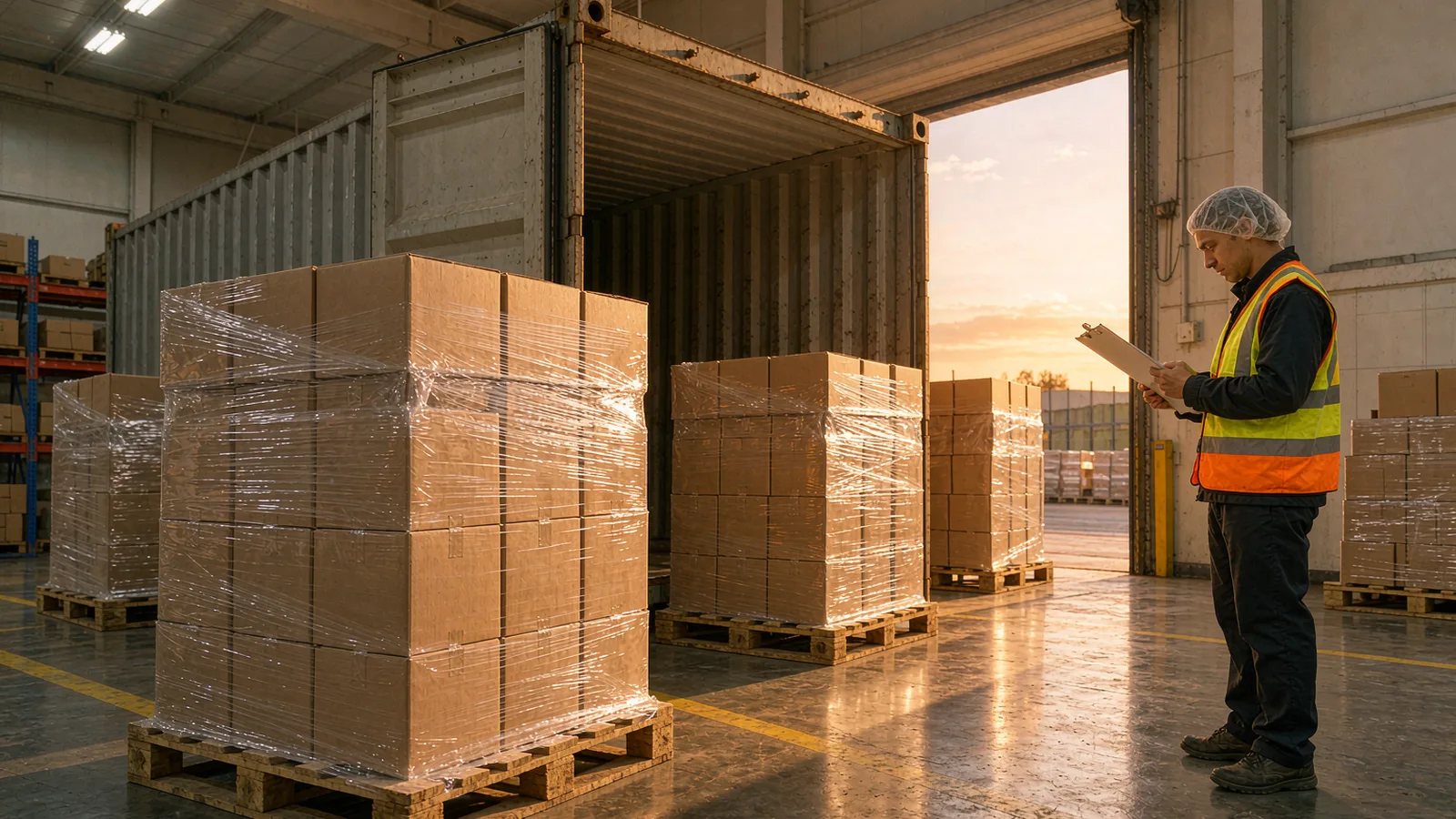
Once the documentation stack is agreed, the physical import runs through routine but unforgiving steps. Classification comes first: finished sheets, rolls and die-cut formats typically fall under coated-paper headings in chapter 48 of the Harmonized System, with retail-packed formats under different subheadings than bulk conversions; classification determines duty treatment and GST at the border. Biosecurity is the second pillar: the Department of Agriculture, Fisheries and Forestry requires clean containers and packaging, and timber pallets must be ISPM 15 compliant or the shipment faces treatment, delay or re-export. Moisture protection matters as much as at the mill — cartons without liners can arrive wavy after weeks at sea, so the packaging spec belongs in the contract, not the packing note. Plan the paperwork in parallel with production: invoice and packing list aligned to the HS classification, the compliance package digitised for your QA file, and the pallet plan agreed with the mill so container utilization does not erode landed cost. Buyers consolidating these import lines can pair the pallet and carton plan with our food-grade die-cut parchment rounds programme, quoted per roll, sheet or die-cut format.
FAQ
Does Australia require a specific certificate for baking paper?
No single certificate is prescribed. Australia regulates food-contact paper through general food-safety obligations under the Food Standards Code, so buyers assemble a documented evidence stack — typically FDA 21 CFR 176 or BfR XXXVI test reports, a Declaration of Compliance and per-lot certificates of analysis — and hold it on file.
Is AS 2070 compliance enough for parchment paper?
AS 2070-1999 applies to plastics, not paper. It is a useful benchmark in Australian QA policies, but parchment grades should be evidenced against FDA 21 CFR Part 176, BfR Recommendation XXXVI or EU Regulation (EC) No 1935/2004 instead.
Do we need PFAS-free baking paper for the Australian market?
There is no federal mandate specifically for baking paper, but state-level PFAS restrictions and retailer packaging policies are pushing programs toward PFAS-free declarations and total organic fluorine screening; for retail private-label supply, treat it as a de facto requirement.
What are the main import steps for wholesale baking paper?
Classify the product under the correct chapter 48 heading for duty and GST treatment, meet DAFF biosecurity requirements including ISPM 15 pallets and clean packaging, protect the paper against ocean-freight moisture, and align invoices, packing lists and the compliance package with the shipment.
Conclusion
Sourcing baking paper into Australia and New Zealand is a documentation exercise built on a suitability model: no prescriptive national paper standard, the buyer holding credible evidence, and retail customers raising the bar through PFAS-free and traceability requirements. Qualify each grade against named international benchmarks, keep declarations tied to the exact construction, and plan customs and biosecurity as engineering constraints rather than afterthoughts. For the paper side of these programmes, buyers can review our custom printed baking parchment paper specifications and sample terms. Buyers verifying these specifications can review the certificate library alongside supplier documentation requests.
CTA
Building a wholesale or private-label baking paper program for the Australian or New Zealand market? Send us your specification and destination requirements for a documented quotation with pre-production samples and a full compliance package.
Sources
- FSANZ — Food Standards Code (Australia New Zealand Food Standards Code): https://www.foodstandards.gov.au
- Standards Australia — AS 2070-1999 Plastics materials for food contact use: https://www.standards.org.au
- FDA — Indirect Food Additives: Paper and Paperboard Components (21 CFR Part 176): https://www.ecfr.gov/current/title-21/chapter-I/subchapter-B/part-176
- BfR — Recommendations on Food اتصل بنا Materials (Recommendation XXXVI, Paper and Board): https://bfr.bund.de
- Australian Border Force — Importing goods: https://www.abf.gov.au
- Department of Agriculture, Fisheries and Forestry — Biosecurity import conditions (BICON): https://www.agriculture.gov.au