Introduction
Almost every wholesale baking paper buyer eventually faces the same fork in the road. A supplier quotes attractively and answers emails in fluent English — but is it the plant that coats and converts the paper, or a trading company that will pass the order to someone else? Neither route is automatically right. Factories offer process control, customization depth and audit access; trading companies offer aggregation, flexibility and export administration. What damages buyers is not choosing either route, but choosing one while believing it is the other. Buyers comparing these specifications can review our food-grade die-cut parchment rounds programme, where coating weight, base grammage and release values are documented per construction.
This guide sets out what each route actually delivers across the dimensions that matter in food packaging paper — price structure, quality control, customization, compliance documentation and continuity — and gives buyers a practical verification method to establish who is really on the other side of the contract before the first deposit is paid. Buyers verifying these specifications can review the certificate library alongside supplier documentation requests.
1. What "Factory Direct" Actually Buys You
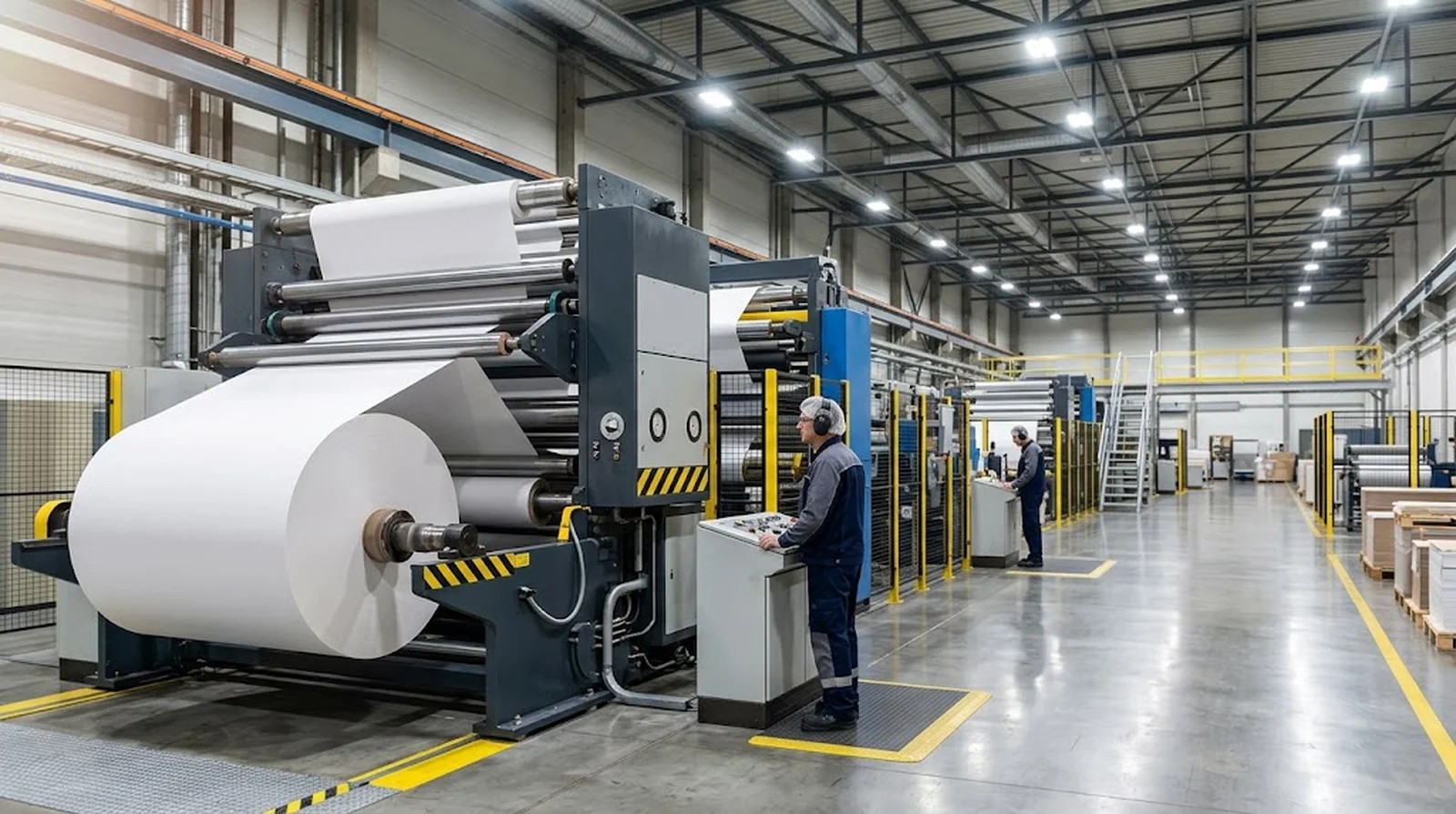
A genuine baking paper manufacturer controls the steps that determine product quality: base paper furnishing, silicone or greaseproof treatment, coating weight, and the converting that turns jumbo rolls into sheets, rounds and baking cups. Buying direct from such a plant buys four concrete advantages. For production volumes, the same construction logic applies to our custom silicone-coated baking parchment paper line, quoted per roll, sheet or die-cut format.
First, process-level quality control. When a release problem or curl issue appears, a factory can trace it to coating weight, drying profile or furnish and fix it at the source; a trader can only relay the complaint and negotiate a replacement. Second, customization depth. Custom die-cut shapes, printed baking cups, custom grammages and private-label artwork all move faster when the people making the decision sit next to the machine. Third, price structure. Removing a trading margin lowers unit cost at scale — though less than buyers hope at small volumes, where factories price small export orders unattractively on purpose. Fourth, audit access. Food packaging customers running GMP supplier audits need to walk the line that makes their product; only the factory can host that audit. The factory and certificate library lists the third-party audits and test reports behind these claims.
The factory route has costs too. Minimum order quantities are higher, flexibility across unrelated product categories is lower — a baking paper plant will not supply your wooden cutlery — and export documentation competence varies. A factory that makes world-class paper but ships in the wrong carton spec can cost more in claims than a professional trader would have.
2. Where Trading Companies Earn Their Margin
A good trading company is not a parasite on the supply chain; it performs functions factories often cannot. Aggregation is the core one: buyers building a mixed foodservice program — baking paper, baking cups, greaseproof sheets, paper straws — can consolidate suppliers, shipments and payment terms. For buyers below true factory MOQs, a trader holding stock in smaller increments is frequently the only economically viable route.
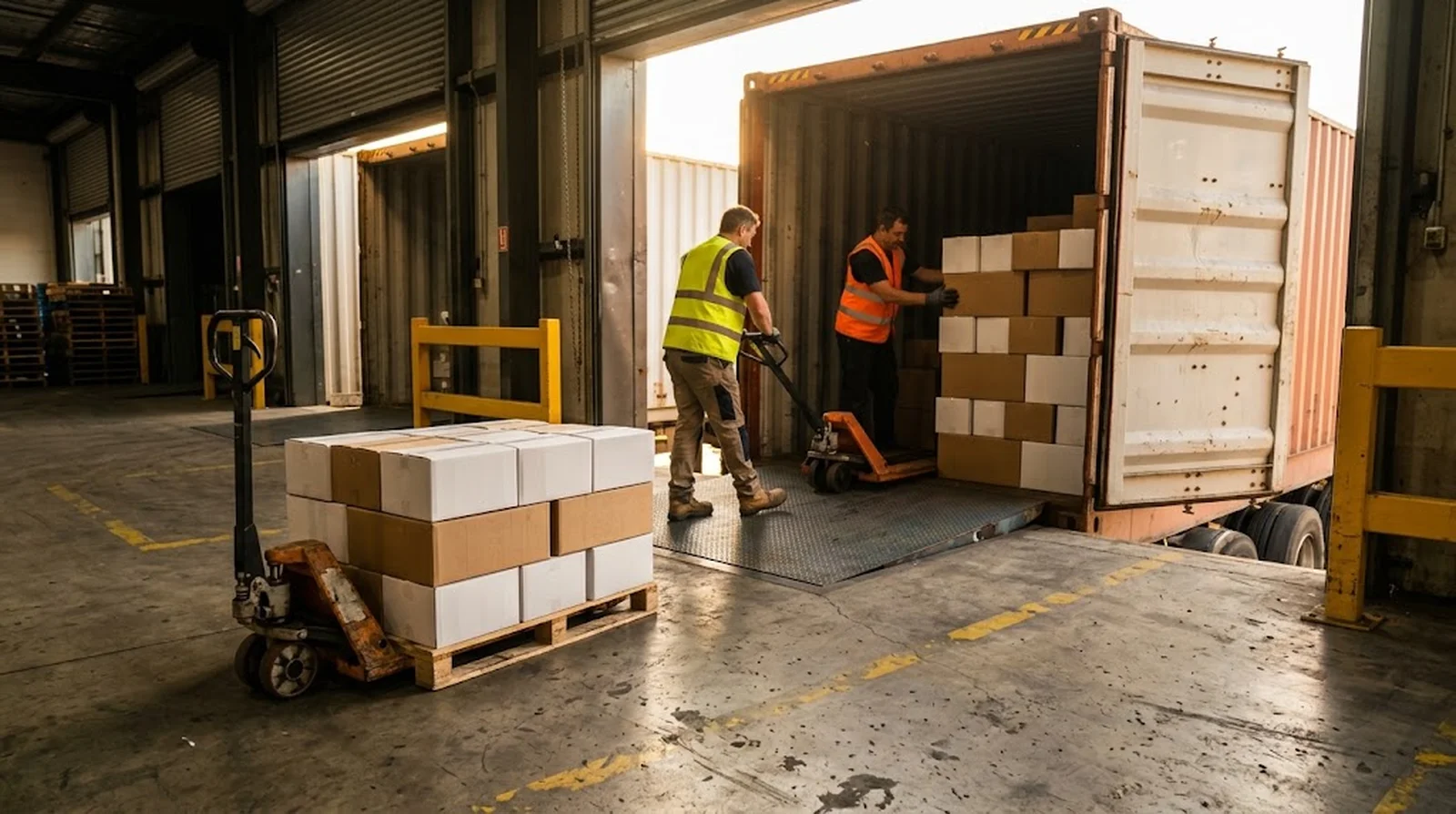
Traders also bring export administration depth: consolidated documentation, multi-factory consolidation into one container, experienced handling of customs paperwork and, in the best cases, real inspection capacity that catches problems before loading. When a buyer's volume is spread across categories, one accountable intermediary with a claims procedure can be easier to manage than five factories.
The risks are equally real. Quality control is borrowed, not owned — the trader's QC is whatever its inspection budget buys. التخصيص is one step removed from the machine, so technical requests get translated twice. Compliance documentation is the sharpest risk in food packaging: a LOG or test report issued by a trading company for a product it does not make is a document with no author. And continuity depends on the trader's relationship with its factory, which the buyer cannot see and cannot influence.
3. Verifying Who You Are Actually Talking To
Because both routes are legitimate, the buyer's real task is classification, not moral judgment. Four checks settle it quickly.
- Business scope and registered capital. The supplier's business license (freely obtainable) states whether manufacturing is within its registered scope and gives registered capital. A company registered as a trading consultancy with modest capital claiming to run coating lines deserves skepticism.
- Certificate entity match. BRCGS, FSSC 22000 and ISO certificates are issued to a named legal entity at a named address. If the certificate holder is not the company signing your quotation, you are dealing with an intermediary — which may be acceptable, but should be priced and contracted as such.
- Audit or video line-walk. An in-person GMP audit is the gold standard; a live, unedited video walkthrough of the converting line — with today's date visible — is a strong substitute. Factories walk their own floor confidently; intermediaries go quiet or offer edited footage.
- Sample-to-production continuity. Ask that production samples come with the run's coating and grammage data. Factories produce this reflexively; traders produce certificates from a third plant with different lot numbers.
None of these checks requires trust, and all of them cost a day, not a fortune. Buyers running annual supplier reviews should repeat them periodically — trading companies do open factories, and factory sales arms do start trading.
4. Pricing the Two Routes Honestly
The factory-direct price advantage is real at volume but is frequently overstated at the quotation stage. A useful discipline is to compare total landed cost per pallet, not unit price: factory quote plus its less-polished export packaging, higher MOQ-driven inventory cost, and slower response on claims, against the trader quote plus its margin but with consolidation savings and stock flexibility. Below roughly a full-container annual volume per product family, the trader route often wins on total cost of ownership; above it, direct supply usually justifies the qualification effort. Food packaging adds one more weighting: compliance risk is asymmetric. For direct-contact baking paper and baking cups, the buyer's file depends on the manufacturer's data — and every layer between buyer and machine weakens that data's provenance.
FAQ
How can I tell if a baking paper supplier is a real factory?
Check the business license scope, match BRCGS or ISO certificate holders against the legal entity quoting you, request a live video walkthrough of the coating and converting lines, and ask for production lot data with your samples. Factories pass all four checks easily; intermediaries typically fail at least two.
Is buying through a trading company acceptable for food packaging?
It can be, provided the arrangement is explicit and the compliance chain is intact. Require that Letters of Guarantee, formulation data and test reports come from the actual manufacturing plant, name that plant in your file, and hold the trader accountable for inspection and claims. The unacceptable version is a trader reselling certificates it did not earn for paper it has never seen produced.
Do factories really offer lower prices than trading companies?
At container-scale volumes for their own product range, yes — the trading margin comes out. At small volumes the picture reverses, because factories price uneconomical orders up or decline them, while traders holding stock can sell small increments competitively. Compare total landed cost, including MOQ, inventory and claims handling, rather than the headline unit price.
Conclusion
The factory-versus-trading question is not a slogan; it is a matching exercise between your volume, your compliance obligations and each route's genuine strengths. Verify who you are dealing with before the first order, buy direct when process control and documentation provenance matter most, use capable intermediaries when aggregation and flexibility dominate — and never let a supplier's self-description substitute for a license check, a certificate match and a look at the floor where your paper is actually made. Our wholesale parchment paper rolls and sheets programme publishes the test data behind each grade so specifications can be verified before ordering.
CTA
LANGMAI is a manufacturer of baking paper, baking cups and foodservice papers — and we say so with verifiable evidence: factory audits welcome, live line walkthroughs on request, and compliance documentation issued by the same legal entity that coats and converts your paper. اتصل بنا our wholesale team for samples, a quotation and an audit date.
Sources
- BRCGS — Global Standard for Packaging Materials
- FSSC 22000 — Food Safety Management Certification
- FDA — 21 CFR 176 Indirect Food Additives: Paper and Paperboard Components
- EU Regulation 1935/2004 — Materials and articles intended to come into contact with food
- TAPPI — Technical resources for pulp and paper testing