Introduction
Every roll of baking paper a bakery finishes leaves something behind: the cardboard core, the plastic or paper plugs at each end, the master carton, the stretch wrap around the pallet. Multiply those by thousands of rolls a year and packaging waste becomes a measurable line item — in disposal costs, in EPR fees, and increasingly in customer and retailer scorecards that ask brands to account for the packaging their supply chain generates. Most buyers already audit product quality closely, yet the waste side of the same purchase orders is rarely specified at all. Buyers reviewing their supply programme can start from our wholesale parchment paper rolls and sheets specifications, where formats, core construction and packing details are documented per grade.
Baking paper packaging waste is unusually easy to attack, because the components are few, predictable and mostly paper-based. Cores and cartons are clean enough to recycle if specified and handled correctly, and the biggest wins usually come from decisions made at the ordering stage rather than from new equipment. This guide walks through where the waste actually comes from, which materials decisions determine recyclability, what EPR and PPWR rules mean for buyers, and how take-back and closed-loop options work for high-volume plants. The factory and certificate library lists the third-party audits and test reports behind the packaging claims referenced here.
1. Where the Waste Actually Comes From in a Baking Paper Supply Chain
A single pallet of jumbo rolls generates four waste streams: the cores, the end plugs, the corrugated master cartons and the pallet wrap. A plant running pre-cut sheets instead of rolls eliminates the core entirely but still receives cartons, inner poly bags and a stretch-wrapped pallet, so the profile changes rather than disappears. The first practical step is a simple waste audit: for one month, weigh or estimate each component as it leaves the production area and record where it goes — cardboard recycling, general waste, or a mixed compactor where it becomes contaminated. The audit usually shows that cores and cartons are the cleanest, highest-value recyclable material on site, while light, bulky stretch wrap is the component most often miscounted. For buyers who want to design the core waste out altogether, our pre-cut parchment paper sheets and rounds are supplied in counted cartons with no core or plug component at all.
2. Core and Plug Materials: What Recyclability Actually Depends On
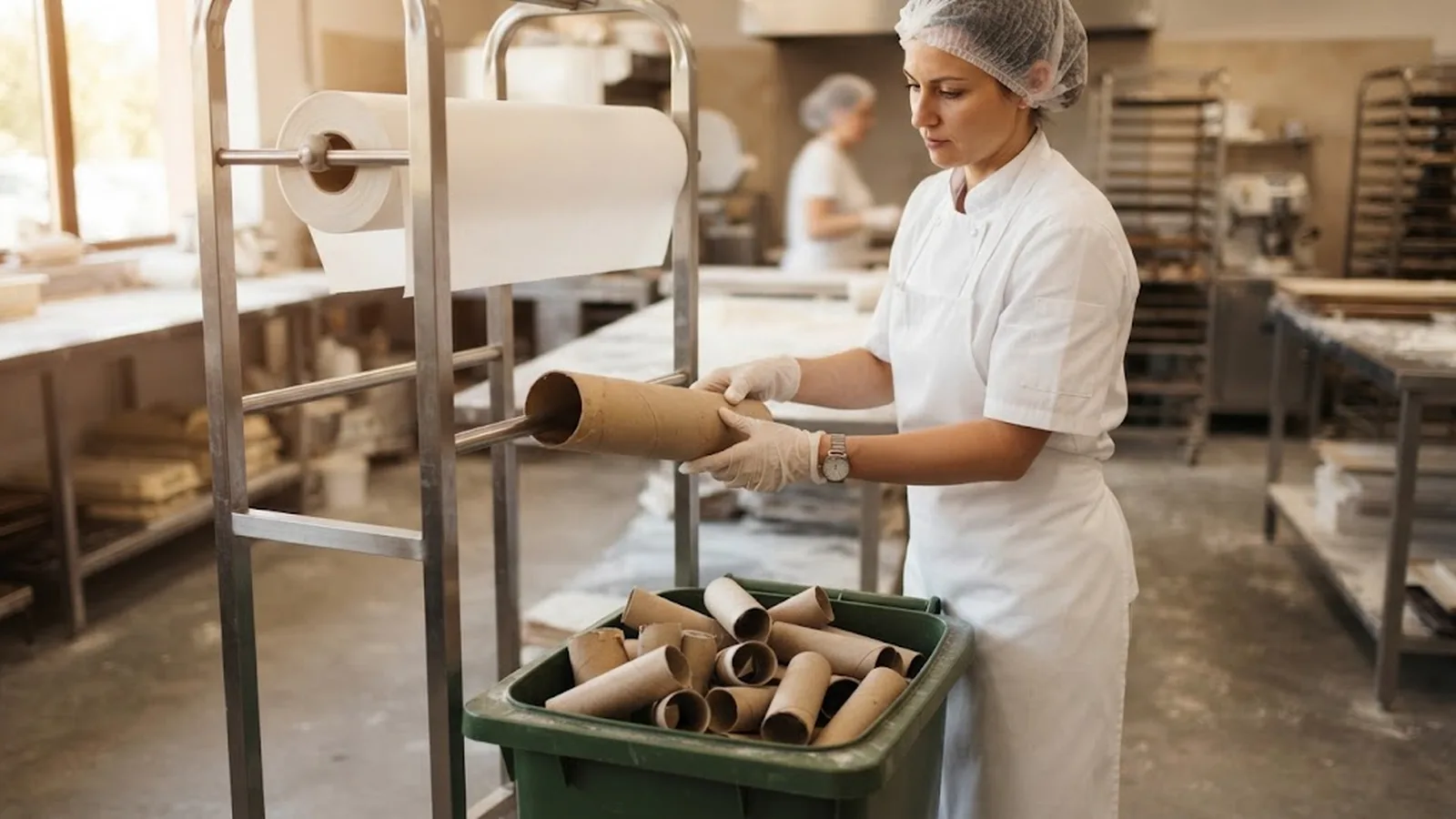
Most baking paper cores are spiral-wound kraft board, and on their own they are fully recyclable with ordinary cardboard. Three things decide whether they actually get recycled. First, the end plugs: solid plastic plugs cannot enter the paper stream and must be pulled out by hand, which is the step plants skip under time pressure — so cores specified with cardboard plugs, or no plugs at all, typically get recycled, while identical cores with plastic plugs end up in general waste. Second, contamination: a core that has sat in a wet, greasy compactor loses its value, which is why a dedicated core bin next to the roll rack outperforms any central recycling point. Third, construction details: buyers should ask the supplier to declare core grammage, adhesive type and plug material so the data can go into packaging reports. None of this requires a premium grade — it requires the waste-stream question to appear in the specification conversation at all.
3. Specifying for Waste Reduction: Cores, Cartons and Palletisation
Packaging waste is specified the same way as product quality: in writing, on the purchase order. The levers that matter are concrete and cheap. For cores: request cardboard or fibre plugs instead of plastic, and state whether plugs are needed at all for your racking. For cartons: set a fill-ratio target so cartons are not half air, ask for one carton size across a programme instead of several near-identical sizes, and prefer cartons with no plastic windows or wax coating. For pallets: right-size the stretch wrap, ask for edge protectors that are cardboard rather than plastic, and consider whether pallet quantities can be increased so fewer wrap events happen per tonne delivered. Each is a one-line change to the packaging section of the specification, and each removes waste permanently rather than managing it afterwards. Suppliers can quote the alternatives quickly — they persist simply because nobody has asked.
4. EPR Fees and PPWR: The Compliance Side of Packaging Waste
For buyers reporting into European markets, packaging waste is no longer only an operational topic. Extended Producer Responsibility (EPR) schemes charge fees per tonne of packaging placed on the market, increasingly modulated so that clearly recyclable packaging pays less and problematic formats pay more. The EU Packaging and Packaging Waste Regulation (PPWR) adds recyclability grading on top: packaging will be assessed against design-for-recycling criteria that determine which formats stay on the market. Practically, buyers need two things from their paper supplier: composition data per component (core board, plug material, carton board, wrap polymer) and weights per sales unit, so reported tonnage is accurate rather than estimated. A supplier who documents these per SKU makes your EPR declaration defensible; a generic "cardboard packaging" figure transfers the risk to you. The factory and certificate library lists the third-party audits and test reports behind these packaging claims.
5. Take-Back, Closed-Loop and On-Site Recycling Options
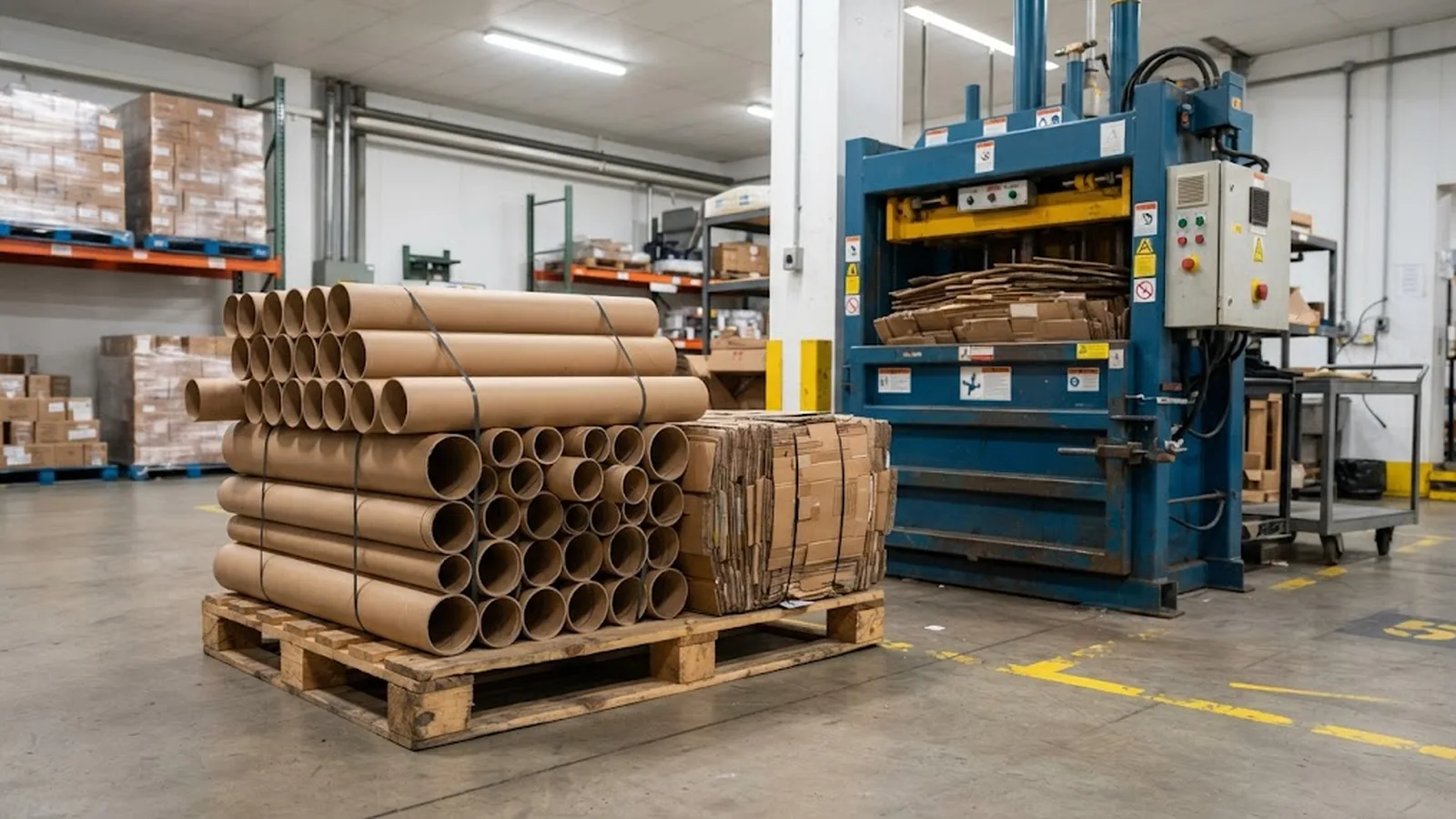
High-volume plants have options beyond the municipal cardboard stream. Cores and clean cartons have real scrap value, and industrial paper recyclers will collect baled material on schedules that suit a production calendar — in many regions, clean kraft cores actually offset disposal costs rather than adding to them. Some suppliers and distributors run take-back arrangements for their own cores, which works best for dense regional delivery patterns. Closed-loop recycling, where recovered fibre returns into new board products, is increasingly marketable: scorecard readers respond to documented recovery rates, not unverified "recyclable" labels. The decisive factors are the same everywhere: keep cores dry and clean, store them in a marked container near the point of use, and bale before collection so transport economics work. A plant that handles cores this way typically recycles the large majority of its baking paper packaging without equipment it does not already own.
FAQ
Are baking paper cores and plugs recyclable with ordinary cardboard?
Kraft spiral-wound cores are recyclable with cardboard in most paper streams, provided they are clean and dry and the end plugs are cardboard or fibre rather than solid plastic. Plastic plugs must be removed before recycling; cores specified without plastic plugs avoid that step entirely. Contaminated or wet cores lose their recycling value and usually end up in general waste.
Does switching to pre-cut sheets eliminate core waste?
Pre-cut sheets and rounds are supplied in counted cartons with no core, so the core and plug streams disappear. Cartons and pallet wrap remain, so the correct comparison is total packaging weight per tonne of paper delivered. For plants with automated dispensing, pre-cut formats often reduce both core waste and handling time on the line.
What packaging data should a supplier provide for EPR reporting?
Per SKU: the material and grammage of each packaging component (core, plugs, carton, inner bag, pallet wrap) and the net weight of each component per sales unit. This lets your EPR declaration use actual figures per packaging category instead of estimates, and it is the same dataset PPWR recyclability assessment will require for European markets.
Can we ask suppliers to remove plastic plugs and reduce stretch wrap without cost increases?
Usually yes. Fibre plugs are a standard alternative in core manufacturing, and wrap reduction typically lowers the supplier's own material cost. Changes that do carry a cost — such as redesigned cartons — are worth quoting against the EPR fee modulation and disposal savings on the buyer's side, which frequently outweigh the packaging price difference over a year.
Conclusion
Packaging waste from baking paper supply is one of the few sustainability targets a buyer can hit with a pen rather than a capital budget. Audit the four streams for a month, specify cardboard plugs and clean carton design into the packaging section of your purchase orders, collect per-SKU composition and weight data so EPR and PPWR reporting rests on real numbers, and route cores and cartons to a clean, baled recycling stream instead of a mixed compactor. Buyers consolidating these changes can review our baking parchment paper manufacturing programme next to their existing specifications, where packaging construction is documented grade by grade alongside the product data. Do that, and the waste line shrinks, the compliance file strengthens, and the next retailer sustainability scorecard has real answers on it.
CTA
LANGMAI supplies wholesale baking paper, cake cups and food packaging paper with packaging construction documented per SKU: core and plug materials, carton fill ratios, component weights for EPR reporting, and recyclable packing options for roll, sheet and die-cut formats. اتصل بنا our team with your volume and destination market to review packaging specifications alongside product performance and compliance documents.