
Introduction
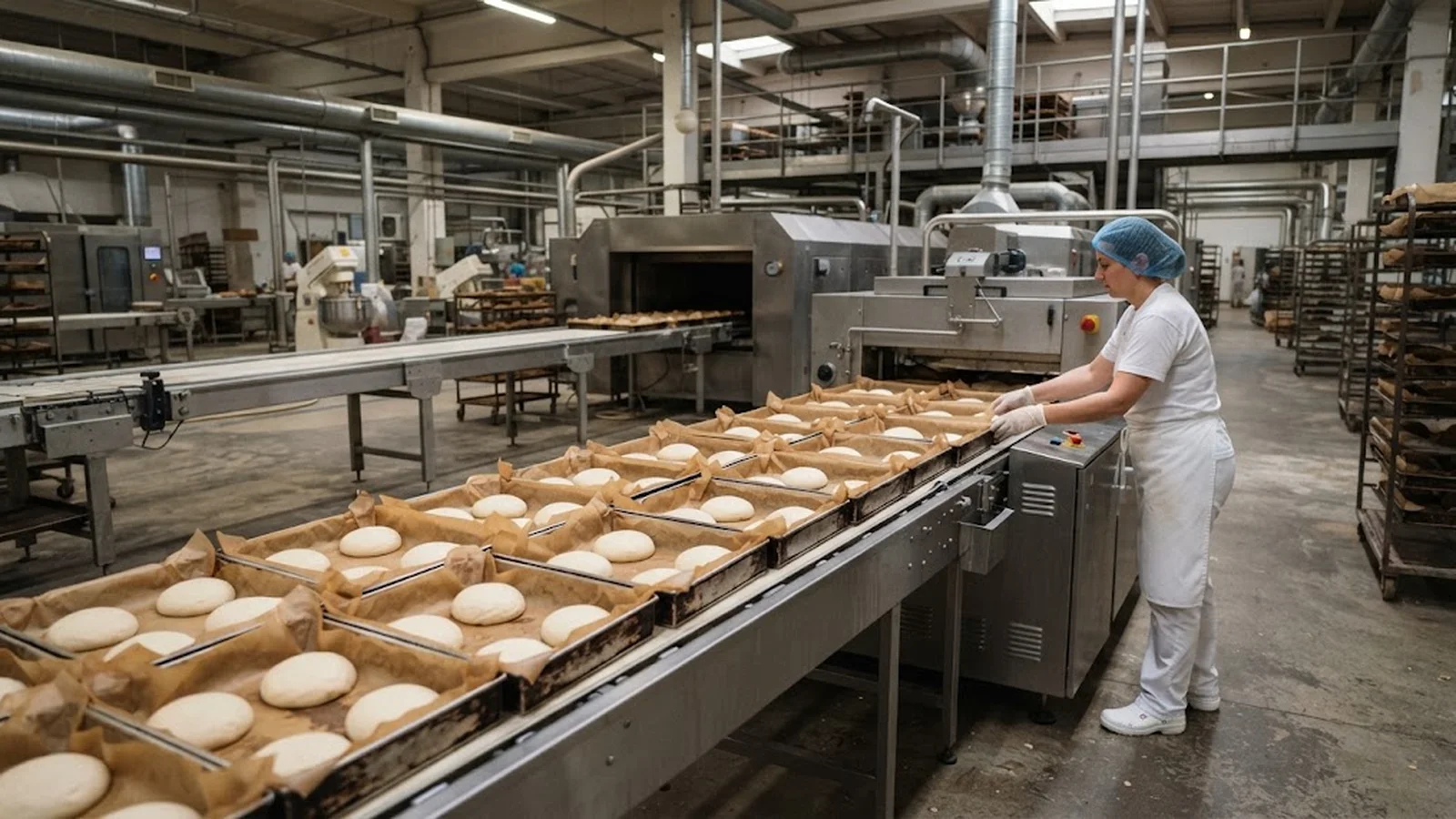
High-volume bread and bun production is a release problem repeated thousands of times per shift. Every pan carries a soft, enriched, often high-sugar dough that must come out clean at speed, and every failed release costs pan wash cycles, re-greasing labour and line tempo. Pan greasing has carried that load for decades, but spray oils leave residue that carbonises in ovens, add cost per pan and create a variable that changes with every operator and every nozzle.
Parchment liners turn release from a labour variable into a paper specification. A correctly specified liner releases the first bake and, on many constructions, the second and third before it is retired, which is why multi-bake lines see the largest cost recovery. The specification that matters is not "parchment" in general but the combination of grammage, coating weight and sheet fit for the pan geometry and dough type in question. Buyers comparing these constructions can review our wholesale parchment paper rolls and sheets programme, where grammage and coating data are published per grade.
This guide covers where liners outperform greasing on bun and bread lines, how construction choices differ between hamburger buns, soft rolls and loaf pans, and what to specify — dimensions, coating, stiffness and packing — before committing to a volume order.
Why Bun and Bread Lines Are Replacing Pan Greasing with Liners
The economics of greasing deteriorate as volume grows. A sprayed pan needs re-spraying for every bake, so a line running three shifts consumes oil, filter maintenance and operator time continuously. Residue builds up on pan edges and oven interiors, raising cleaning frequency and pulling pan replacement cycles forward. Release quality also drifts: an under-sprayed corner sticks, an over-sprayed pan smokes, and both outcomes end in the same place — a bun pulled off-spec.
Liners change the release step into an insert-and-bake step. Release performance becomes consistent because it is determined at the factory by a tested coating, not at the pan by an operator. Sheets can be pre-cut to the pan footprint or supplied as die-cut rounds that drop into the pan base in one motion at panning speed. Waste is contained and dry — used liners stack cleanly for disposal instead of leaving oil film in waste streams — which matters for bakeries working toward audited housekeeping standards.
The comparison shifts cost from consumable oil plus labour to a single priced liner, which makes it auditable. Production teams that run the numbers usually find the crossover point on enriched, high-sugar doughs where greasing alone struggles most. The factory and certificate library lists the third-party audits and test reports behind these constructions, so claims can be verified before a trial.
Matching Liner Construction to Bread and Bun التطبيقات
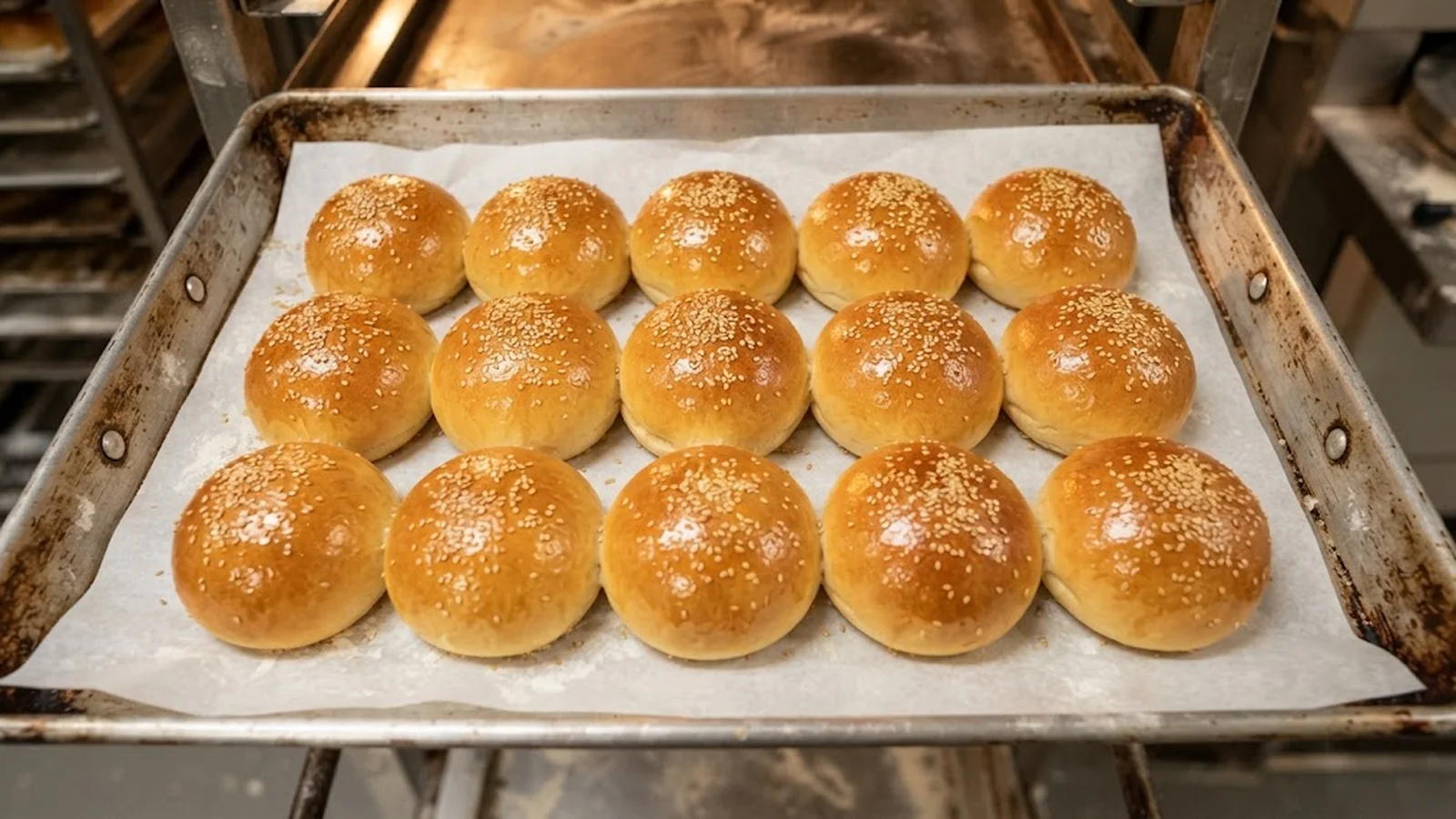
Not every bread application needs the same liner. Hamburger and hot-dog bun pans — typically shallow, flat or lightly domed — are the most common case. Dough sits directly on the sheet, proofs on it, and often carries an egg wash or glaze that caramelises against the liner at the pan edge. Release here depends on coating uniformity more than coating weight: a consistent 0.9–1.2 g/m² silicone distribution releases glazed buns reliably, while patchy coating fails at the glaze line even at higher total weight.
Soft rolls and enriched doughs such as brioche add fat migration. Butter and oil migrate into the sheet during proofing and baking, so the liner needs grease resistance in the base paper, not just silicone on the surface — this is where a heavier base (40–45 gsm) with a double-sided coating earns its premium through second and third bakes. Loaf pans and pullman applications behave differently: the sheet lines the pan interior, contacts dough through a long bake at moderate heat, and needs enough stiffness to hold its position when the pan is filled from a depositor.
Crustier products — artisan-style rolls and par-baked crusts — stress heat tolerance and dimensional stability rather than release. A sheet that stays flat through proofing and bake, without curling at the pan edge, protects the transfer step where automated systems lift buns off trays; here stiffness comes first, coating second.
Specifying Sheets for Bun Trays: Dimensions, Coating and Packing
The specification conversation for a bun line has five variables. Sheet dimension comes first: measure the pan's internal footprint at its tightest point and state tolerance in the RFQ. A sheet that is 2–3 mm oversize will not lift at the corner; a sheet that is undersize leaves exposed greased steel that reintroduces the problem the liner was bought to remove. Standard bun pans are served well by pre-cut rectangles, and round pan bases by die-cut rounds in matched diameters.
Base grammage follows the application: 35–38 gsm for single-bake bun pans, 40–45 gsm where liners are reused across two or three bakes or where dough is heavily enriched. Coating weight and distribution are next — specify the target range, the double-sided requirement where liners are flipped between bakes, and the release test method (dry dough and glazed dough, not oil-based tests) used for acceptance. Stiffness, measured by the sheet's ability to hold a flat plane when handled with one hand at panning speed, closes the paper-side specification.
Packing is the variable that most often undercuts a good specification in practice. Sheets delivered stacked in panning orientation, in counts matched to pan-rack sizes and carton weights the line can actually lift, reduce the handling where liners get creased or misaligned. Buyers branding liners for QSR or retail bun programmes can review our private-label parchment paper supplier options, where sheet size, print and packaging are specified together on one construction. Documentation scope is confirmed per SKU and destination market, as outlined on our baking parchment paper manufacturing programme page, before the volume order is placed.
FAQ
How many bakes can one liner survive on a bun line?
Two to three on a well-matched construction — 40–45 gsm base with double-sided coating — with enriched doughs shortening the count. Validate the number on your dough and bake programme during a trial, then write it into the line's standard work.
Do liners work with egg wash and glazes?
Yes, provided the coating distribution is uniform. Glaze caramels at the pan edge and stresses any patch in the coating, so release testing for glazed products should use the glazed dough, not a plain dough approximation.
Are die-cut rounds or rectangular sheets better for bun pans?
Rectangles match flat bun pans and are the most economical format. Die-cut rounds suit round pan bases and look cleaner where the liner is visible on the finished product, such as retail-packaged buns.
Can one liner serve both proofing and baking?
The same sheet commonly stays with the product from panner through proofer to oven on bun lines. Confirm the sheet's behaviour at proofer humidity during the trial, since moisture uptake can affect flatness at transfer.
What minimum order applies to custom sheet sizes?
Custom sheet dimensions and die-cut formats are cut from jumbo rolls, so MOQs depend on width utilisation and print requirements. Quoting is done per roll, sheet or die-cut format once dimensions and annual volumes are known.
Conclusion
Bun and bread lines buy liners to remove a variable, and the specification determines whether they succeed. Release consistency comes from coating uniformity matched to the dough — glazes and enriched fats are the hard cases — while liner reuse economics come from base grammage and double-sided coating. Sheet dimension and stiffness decide whether the liner survives panning, proofing and transfer without operator correction, and packing format decides whether the line actually uses it as intended.
Because the liner is a construction change on standard parchment rather than a new product category, the way to buy it is the same way to validate it: measure the pan, define the dough, run a two-or-three-bake trial against the greasing baseline, and score release, pan hygiene and liner count per shift. Buyers verifying these specifications can review the certificate library alongside their supplier documentation requests before running the trial.
CTA
Send us your pan dimensions, dough types and bakes-per-shift profile. We will match a liner construction — single-bake or multi-bake, sheets or die-cut rounds, plain or printed — and supply pre-production samples for a controlled trial against your current greasing process.
Sources
- Silicone coating and paper release mechanisms: https://www.sciencedirect.com/topics/food-science/silicone-coating
- FDA food-contact substances framework: https://www.fda.gov/food/food-ingredients-packaging/food-contact-substances-fcs
- European food-contact materials framework (EC 1935/2004): https://eur-lex.europa.eu/legal-content/EN/TXT/?uri=celex%3A32004R1935
- Baking industry production and pan management references: https://www.bakingbusiness.com/