Introduction
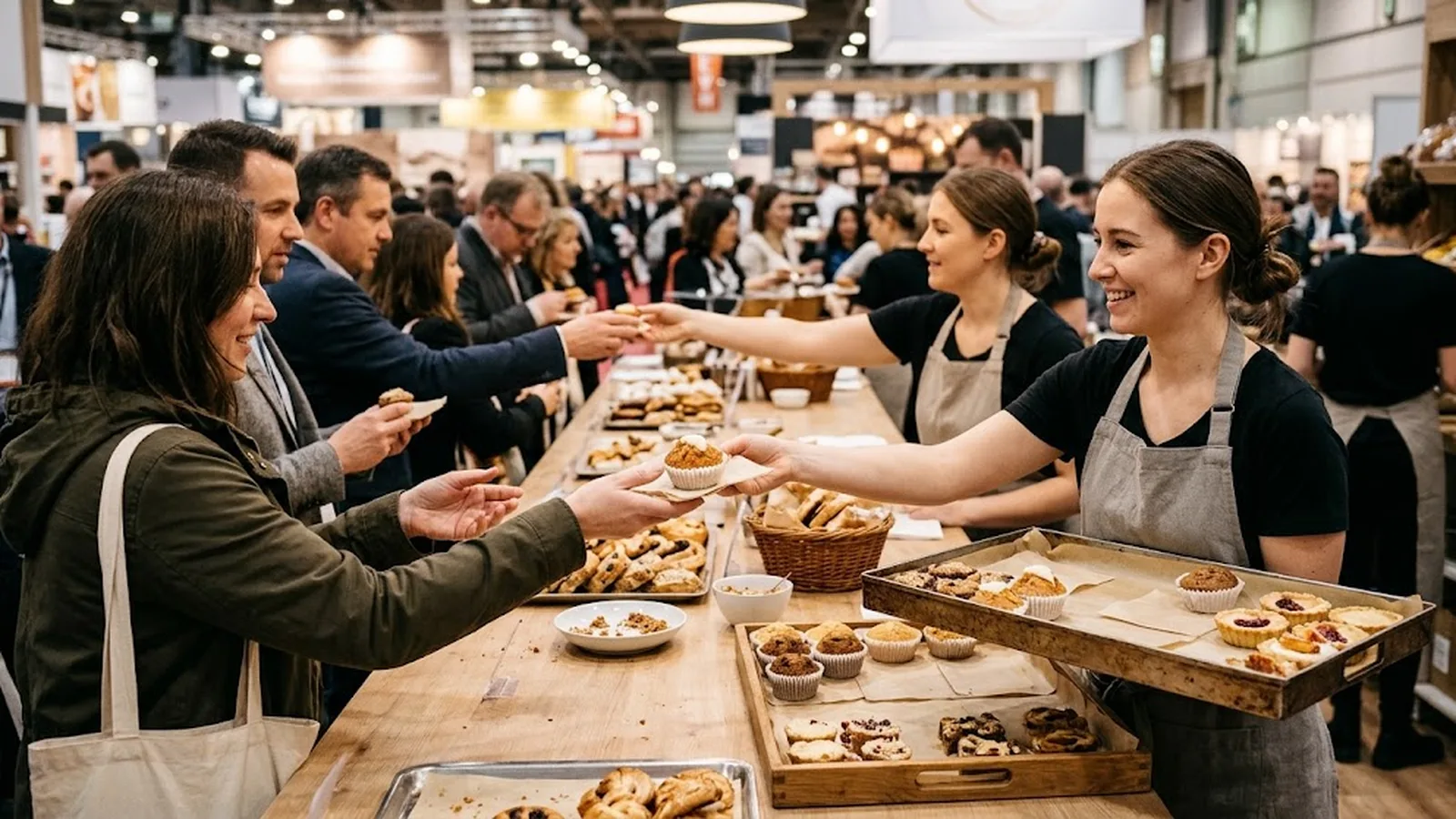
A trade show table has roughly three seconds to convert a passing buyer into a conversation, and in the baking category that conversion happens through a sample served in or on paper. The paper components of a sampling programme — cake cups, pre-cut parchment squares, greaseproof sheets, tray liners — must be specified, ordered, documented and shipped weeks before booth staff ever arrive. Get the specification wrong and the demo fails quietly: cups soak through, sheets curl off the tray, printed branding drifts from the approved artwork. Get it right and the same components do double duty, moving from the expo hall into retail launches and foodservice sampling runs. This guide covers the component list, specifications, commercial terms and compliance documents a sampling kit requires, for the buyer who signs the purchase order.
Why Sampling Presentation Decides Trade-Show ROI
Exhibition budgets go on floor space and stand construction, yet attendees remember what they tasted and how it was presented. A sample served in a fluted paper cake cup photographs cleanly, keeps fingers grease-free and removes the washing-up problem that makes loose samples a hygiene liability on a show floor. A brownie portion on a die-cut parchment round reads as brand-controlled; the same portion on a paper napkin reads as an afterthought. Treat these components as part of the booth's conversion machinery, not last-minute consumables.
There is also an operations argument. Many venues require that unpackaged food be served with tongs, picks or liners, and inspectors at public expos do issue warnings. A kit built around single-serve paper formats keeps the booth compliant by default and lets staff pre-portion product the night before. When one format serves both the expo and the follow-on retail demo programme, the per-event cost drops because the production run is amortised across the whole sampling calendar.
Building the Component List: What Goes Into a Wholesale Sampling Kit
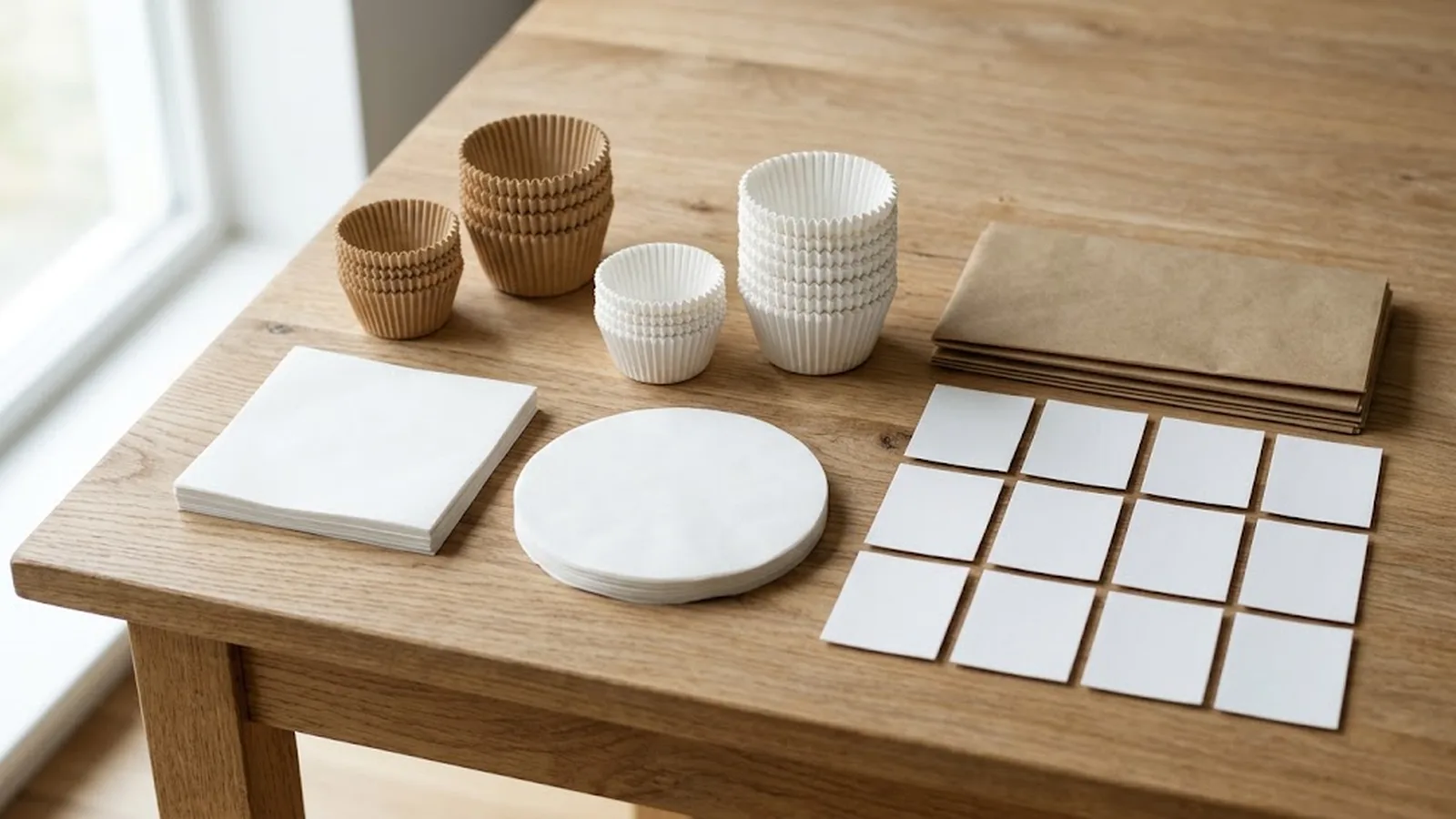
A complete kit covers four paper component groups, each with its own specification questions.
Single-serve cups and liners. Fluted or self-supporting baking cups in 4–5 cm mini and standard sizes hold muffins, cheesecake bites and energy bites; tulip-style cups elevate premium samples and tolerate soft fillings. Wall height and capacity matter more than diameter — a cup 15% undersized turns a clean demo into a stained tablecloth.
Parchment formats for tray presentation. Pre-cut squares and die-cut rounds sit under individual portions, separating product from the tray surface and absorbing surface oils. For buyers consolidating orders, the same construction logic applies to our pre-cut parchment paper sheets and rounds, quoted per sheet size and die-cut diameter. Squares in 10–15 cm sizes are the workhorse; rounds suit round product such as mini tarts.
Greaseproof wrap and basket liners. Where samples are handed directly to visitors, greaseproof sheets or bags keep the hand-off clean and provide a printable surface; hand-held samples need a higher grease-resistance kit level than tray-presented ones.
Supporting items. Tray liners sized to sheet pans and display platters, plus printed picks, round out the kit. Consolidating all four groups with one factory also simplifies colour matching across components.
Specifying Formats, Print and Food-اتصل بنا Grade
The specification conversation with a factory should cover five variables per component. First, format and size: confirm die-cut dimensions against the actual serving trays and portions, not catalogue defaults — a 110 mm round under a 90 mm tart looks fine on paper and wrong on the tray. Second, grammage and coating: tray-presented squares perform well at 35–40 gsm, while components facing sauce or oil fillings need heavier coating weights. Third, print: spot-colour printing with a colour standard beats four-colour process for consistency across reorders. Fourth, artwork for printed cups must be proofed on a physical cup, since fluted walls distort flat PDF proofs. Fifth, food-contact grade for the destination market — a kit shown at a US expo needs FDA food-contact documentation; the same kit in the EU needs the paper and board declaration.
Sampling volumes are small relative to production orders. Many factories carry a sampling-kit order as a rider on a standing contract at production pricing, because demo programmes convert into volume later. Buyers planning a full-year calendar should quote all events at once; commercial terms on our wholesale parchment paper rolls and sheets mirror the MOQ, lead-time and documentation structure described here, and consolidated annual volumes out-price separate one-off orders.
MOQ, Lead Time and Logistics for Demo Season
Timing is the most common failure point. Printed cake cups and custom die-cut shapes typically carry 4–6 week production lead times after artwork approval, plus freight; a buyer who finalises booth plans eight weeks out has a workable timeline, while four weeks means negotiating air freight. Blank stock components fill short-notice gaps — an argument for holding standing inventory of the most-used sizes.
Event quantities ship as consolidated cartons with booth materials rather than container loads, but cartons still need moisture protection — ocean-leg condensation flattens printed cup walls. For multi-country expo programmes, a regional distributor per market can ship from in-country stock, trading distributor margin against per-event freight and customs clearance. The failure mode is clearing customs on a printed food-contact component during show week.
Food-اتصل بنا Documentation for Public Sampling Events
Public sampling raises the compliance stakes: the paper touches food served to uninvited consumers, often in a jurisdiction the brand does not normally sell in. The documentation package per kit should include the food-contact declaration for each paper construction, migration test reports for printed surfaces touching food, and factory quality-system certificates where organisers request them. Exhibition organisers increasingly check these documents during booth food-safety reviews, so keep a single PDF per component, named to match it. For buyers auditing the supply base behind these claims, the factory and certificate library lists the third-party audits and test reports behind them.
A sensible habit is building the documentation set once per kit specification and refreshing annually: components rarely change between events, so a kit approved in spring re-validates for autumn with a document check rather than a new test cycle.
FAQ
What paper components should a bakery trade show sampling kit include?
At minimum: single-serve cake cups sized to the portion, pre-cut parchment squares or rounds for tray presentation, and greaseproof sheets or bags for hand-held samples. Specify each against the actual portion and serving tray dimensions.
What is a realistic MOQ for printed sampling cake cups?
Printed cake cups typically start at 10,000–50,000 units depending on print method and size; blank stock formats can be ordered far smaller. Buyers running a multi-event calendar can consolidate annual volume into one order to reach a better price break.
How far in advance should sampling kit components be ordered?
Allow 8–10 weeks before the event for printed components: 4–6 weeks production after artwork approval, plus freight and customs. Blank in-stock components fill late gaps, so a small standing inventory of the most-used sizes is practical insurance.
Can the same sampling kit be reused across different countries' events?
The components can, but the documentation cannot automatically. Each destination market's food-contact rules differ, so a kit served to the public in a new country needs its declarations checked against that market's requirements first — usually a document review, not a redesign.
Do printed cake cups and parchment squares need separate food-contact test reports?
Yes, when both touch food. Each construction — base paper, coating and ink system — is tested as its own construction. A consolidated kit order from one factory simplifies this, since one specification system covers all components.
Conclusion
A bakery trade show sampling kit is a small procurement project with a disproportionate effect on exhibition ROI. The winning pattern: fix the component list against real portions and trays, specify print and food-contact grade for every destination market on the calendar, consolidate annual volume into one order, and assemble the documentation set once with an annual refresh. Buyers who treat these components with production-order rigour find the kit pays for itself twice — on the show floor, and again in retail demo programmes. For the paper side of these programmes, buyers can review our custom printed baking parchment paper specifications and sample terms before locking the kit specification. For buyers who need to evidence responsible fibre sourcing to European retail chains on the same programme, our EUDR traceability documentation covers the due-diligence records that sit behind each shipment.
CTA
Planning a sampling programme for an upcoming expo or in-store demo season? LANGMAI supplies wholesale cake cups, pre-cut parchment squares, greaseproof sheets and tray liners as a consolidated kit with food-contact documentation per destination market. Request a sampling-kit quotation with component samples for approval before production.
Sources
- U.S. FDA — Food اتصل بنا Substances: https://www.fda.gov/food/food-ingredients-packaging/food-contact-substances-fcs
- European Commission — Materials intended to come into contact with food: https://food.ec.europa.eu/food-safety/food-contact-materials_en
- EFSA — Food contact materials: https://www.efsa.europa.eu/en/topics/topic/food-contact-materials
- BfR — Recommendations on food contact materials (paper and board): https://www.bfr.bund.de/en/