Introduction
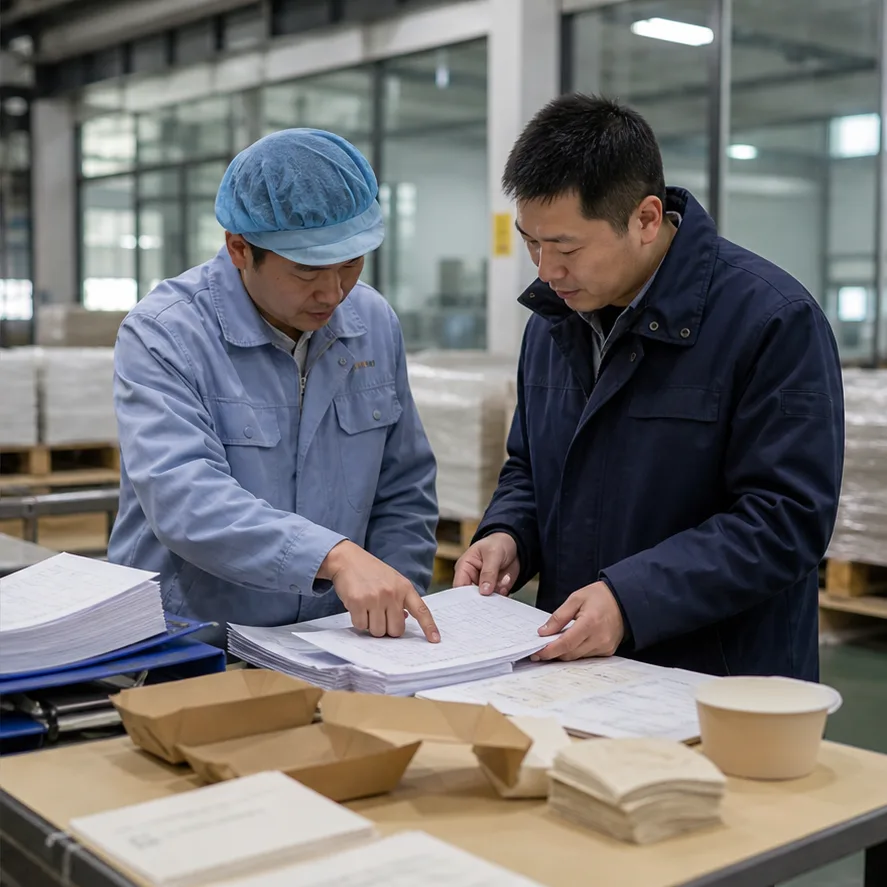
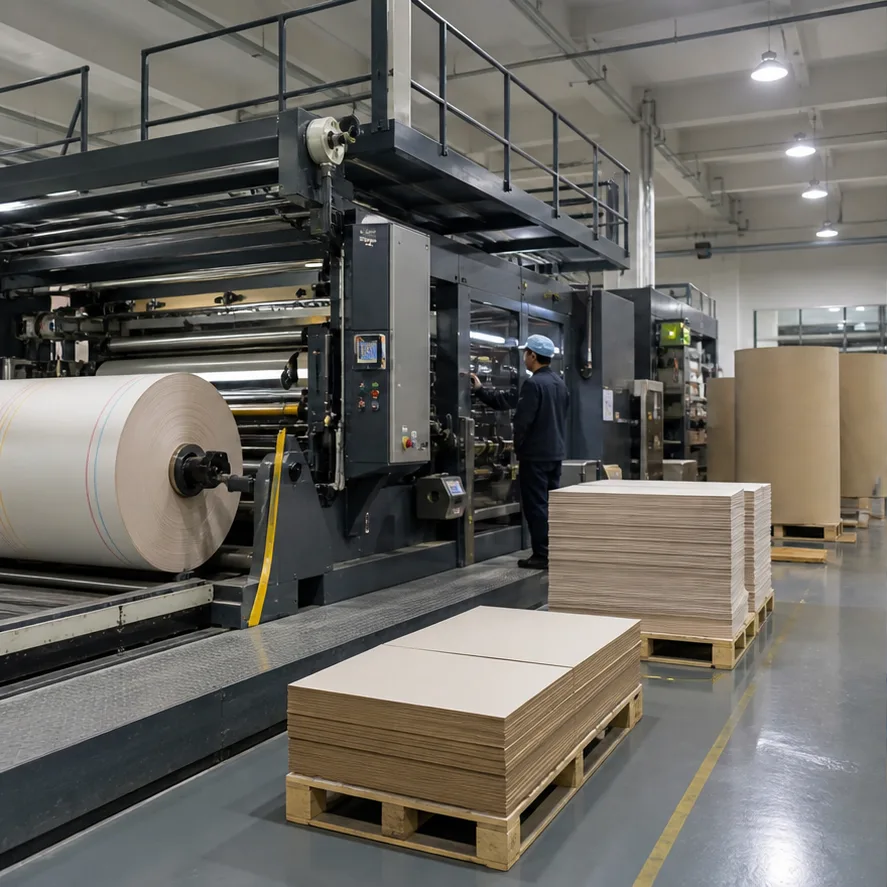
The direct answer is to buy food paper packaging against the real supplier qualification, annual review, change management and investigation of nonconforming food paper, not against a catalog photograph or a lowest-unit-price quote. A buyer should define process steps, material identity, print and coating controls, inspection points, storage and traceability, confirm the the approved paper and functional layers tracked from incoming material to finished carton, run a production-representative an audit exercise using sample records, line clearance, retained samples, deviation handling and corrective-action closure, approve the clean storage, segregation, lot coding and carton release checks that protect the finished item after production, and keep a document file that covers GMP procedure, batch records, inspection plan, calibration evidence, change notice, complaints and corrective actions. This is the practical route for B2B buyers auditing paper packaging manufacturers for food-contact production controls. It also gives procurement, quality and operations one shared reference when the first quotation, sample and production lot are compared. Every document in our compliance library is tied to a specific construction; see how the wholesale parchment paper rolls and sheets programme aligns test reports with the exact grade supplied.
The commercial risk in this category is often hidden between departments. A purchasing team may see a familiar size, a marketing team may see a clean print, and a production team may discover that the item behaves differently once it meets the actual food, machine, storage room or service route. For supplier qualification, annual review, change management and investigation of nonconforming food paper, the important question is whether the finished item stays within the approved use from receiving through disposal. That means discussing the food or beverage, contact time, temperature, humidity, handling, pack opening and destination market before asking a supplier to quote. If any of those assumptions change, the sample and the documents need to be reconsidered rather than silently carried forward. Buyers verifying these specifications can review the certificate library alongside supplier documentation requests.
What Buyers Should Define Before Comparing Suppliers
Start the RFQ with a one-page requirement sheet. State the product name, intended food or beverage, direct or indirect contact, service or cooking condition, target quantity, destination, artwork status, pack format and inspection expectation. Add the dimensions that control fit: process steps, material identity, print and coating controls, inspection points, storage and traceability. For a repeat order, attach the approved sample or drawing and identify which characteristics are critical to function, which are visual preferences and which are commercial options. This avoids a common sourcing error in which a supplier optimizes for an attractive sample while the buyer actually needs stable performance and repeatable carton control. Documentation scope is confirmed per SKU and destination market, as outlined on our baking parchment paper manufacturing programme page.
- Product and application: supplier qualification, annual review, change management and investigation of nonconforming food paper.
- Critical fit: process steps, material identity, print and coating controls, inspection points, storage and traceability.
- Construction: the approved paper and functional layers tracked from incoming material to finished carton.
- Sample method: an audit exercise using sample records, line clearance, retained samples, deviation handling and corrective-action closure.
- Pack-out: clean storage, segregation, lot coding and carton release checks that protect the finished item after production.
- Evidence: GMP procedure, batch records, inspection plan, calibration evidence, change notice, complaints and corrective actions.
Buyer Control Table
| Buyer control | What to specify or ask | Evidence to keep |
|---|---|---|
| Fit and dimensions | process steps, material identity, print and coating controls, inspection points, storage and traceability | Approved drawing, sample measurements and revision code |
| Material and use | the approved paper and functional layers tracked from incoming material to finished carton | Product declaration and use limitations |
| Application result | an audit exercise using sample records, line clearance, retained samples, deviation handling and corrective-action closure | Trial notes, photos, recipe or beverage details and disposition |
| Packaging | clean storage, segregation, lot coding and carton release checks that protect the finished item after production | Pack specification, carton sample and receiving check |
| Supplier control | GMP procedure, batch records, inspection plan, calibration evidence, change notice, complaints and corrective actions | Current documents, lot records and change notice terms |
Material, Food-Contact and Document Review
Material language should be specific. Ask the supplier to identify the paper, coating, ink, adhesive or support components that make up the finished item and to connect that description to the approved SKU. A general statement such as food grade, natural, recyclable or safe is not a substitute for a product-specific use statement. In the EU, Regulation (EC) No 1935/2004 sets general expectations for materials intended to contact food, including avoiding transfer that could endanger health or cause an unacceptable change in composition or organoleptic characteristics. Regulation (EC) No 2023/2006 addresses good manufacturing practice. In the United States, FDA food-contact status depends on the substance and its intended use. Buyers should therefore ask which legal basis, food type, time and temperature assumptions the supplier used, then retain the limitation with the approval record.
Regulatory timing matters as well. The European Commission's 2026 guidance on Regulation (EU) 2025/40 explains that food-contact packaging placed on the EU market after 12 August 2026 must meet the applicable PFAS limits in Article 5(5), subject to the legal scope and other applicable Union rules. That is a current market requirement to verify against the finished packaging and its placing-on-the-market event, not a reason to publish a universal claim about every paper product. Buyers should ask suppliers to identify the exact product scope and evidence used.
Internal review can be organized around four questions: Does the document identify the product? Does it state the intended food and conditions? Does it identify the legal or technical basis? Does it remain current for the supplier, factory and lot being purchased? If any answer is no, place the item in review rather than treating a logo or unsigned marketing paragraph as final approval.
Sample and Application Testing
Do not approve the sample on a desk alone. Build a short application protocol using the buyer's actual supplier qualification, annual review, change management and investigation of nonconforming food paper. Record the supplier sample code, production date if available, food or beverage formula, equipment, temperature or storage condition, contact duration, operator, pack format and result. Inspect the item before use, during the critical step and after cooling, display, transport or service. Note release, odor, staining, deformation, tearing, count, fit, print set-off and customer-facing appearance as applicable. The objective is not to create an invented universal pass limit. It is to establish whether this specific construction performs against the buyer's own approved requirement and whether the result can be repeated with production-representative material.
A useful sequence is: receive and photograph the unopened sample; verify the label and count; measure the critical dimensions; run the agreed application with a control where practical; inspect the food-contact surface and the finished product; pack and move the result through the intended route; then compare the result with the approved drawing and commercial requirement. For food paper packaging, pay particular attention to an audit exercise using sample records, line clearance, retained samples, deviation handling and corrective-action closure. If the supplier sends a revised sample, record what changed and repeat the relevant part of the trial. A buyer should not let a visually similar substitute enter the approval file without a new identity check.
Packaging, Storage and Shipment
Packaging is part of the product decision because the paper or accessory must reach the buyer in the same condition as the approved sample. Confirm clean storage, segregation, lot coding and carton release checks that protect the finished item after production. Ask how inner packs are sealed, how counts are controlled, where lot codes appear, how cartons are palletized and what storage conditions the supplier expects. On receipt, photograph the pallet before opening, reconcile carton and inner-pack counts, inspect edge and surface condition, and keep one carton label with the receiving record. Where the item is sensitive to humidity, compression, odor or dust, agree the storage window and handling route before shipment rather than discovering the limit at the customer's production line.
How to Evaluate the Supplier
Supplier comparison should use a weighted scorecard rather than a single quotation field. Score technical fit, application result, document quality, packaging, communication, corrective-action discipline and total landed risk. For this query, a supplier should be able to explain the approved construction, show how incoming and finished goods are checked, identify the records attached to a lot, and state how changes are communicated. A factory tour can be useful, but a tour is not a substitute for a controlled sample, a clear specification or evidence from the product being purchased. For B2B buyers auditing paper packaging manufacturers for food-contact production controls, the strongest supplier is the one that makes the buyer's own approval and repeat-order control easier.
| Evaluation area | Buyer question | Practical evidence |
|---|---|---|
| Technical fit | Can the supplier explain the critical characteristics? | Drawing, sample record and trial notes |
| Repeatability | How is the same construction controlled in production? | Incoming and finished inspection records |
| Documents | Are the files current and product-specific? | Declarations, reports and revision history |
| Packaging | Will the approved condition survive shipment and storage? | Pack specification, carton sample and receiving check |
| Recovery | What happens when a deviation is found? | Complaint route, corrective action and closure evidence |
Inspection and Release Checklist
Before shipment, define an inspection plan in plain language. It can include identity, dimensions, appearance, print, count, carton condition, lot code and any application-specific checks. Do not insert a fixed AQL number or a guaranteed tolerance unless the buyer has agreed it with the supplier and the product drawing supports it. Instead, name the sample plan, the critical characteristics, the comparison standard and the disposition for a deviation. Keep photos of defects, measurements and the release decision. If an issue is found, quarantine the affected stock, identify the lot, preserve samples and request a root-cause and corrective-action response. This is more useful than accepting a general promise to improve.
Use this release checklist:
- Confirm the SKU, revision, material construction and approved sample.
- Check process steps, material identity, print and coating controls, inspection points, storage and traceability against the current drawing or agreed reference.
- Verify the food, beverage, equipment, storage or service assumptions used in approval.
- Review the product-specific document file, revision date, limitations and lot link.
- Inspect inner packs, counts, carton labels, pallet condition and storage instructions.
- Record any deviation, hold or corrective action before the goods move into normal stock.
Request a product-specific sample and quotation
Compare Quotes on Landed Risk, Not Unit Price Alone
When comparing quotations, separate the unit price from the cost of failure. Include tooling or artwork charges, sample and testing work, inner-pack and carton changes, freight cube, pallet utilization, receiving labor, likely scrap, line interruption, relabeling and the cost of repeating a sample. A more expensive construction can be the better commercial choice if it reduces unstable denesting, damaged presentation, customer complaints or rejected cartons, but that conclusion should come from the buyer's trial and records rather than an unsupported promise. Ask every supplier to quote the same approved specification and to list any assumption that is not included.
Approval and Repeat-Order Workflow
A disciplined approval workflow is: (1) issue the requirement sheet; (2) collect comparable quotations and document lists; (3) receive samples with identity information; (4) inspect and test the samples in the real application; (5) resolve deviations; (6) sign the specification, artwork and pack-out; (7) approve the first production lot; and (8) monitor repeat shipments using retained samples and complaint records. That sequence is practical for global buyers because it keeps commercial, technical and compliance decisions connected. It also creates a clean handoff between sourcing, quality, production, warehouse and customer service.
FAQ
What should a buyer send with an RFQ for food paper packaging?
Send the intended use, food or beverage, destination, quantity, dimensions, artwork status, pack-out and the application conditions. For this category, include process steps, material identity, print and coating controls, inspection points, storage and traceability. A supplier cannot responsibly choose a construction from a product name alone.
Is a supplier declaration enough to approve the product?
It is one part of the file. Match the declaration to the finished sample, intended use, market and current revision, then complete the application and packaging checks that matter to the buyer. If the declaration has limitations, record them rather than treating it as a blanket certificate.
How many samples should be tested?
Use enough production-representative pieces to observe normal variation and the buyer's actual process. The buyer should define the sample plan around the risk and the application, not accept an arbitrary number presented as universal. Keep representative retained samples from the approved lot.
What is the most important supplier question?
Ask the supplier to explain how the approved construction is identified, inspected, packed and kept unchanged between the approved sample and repeat production. Then ask for records that support the answer.
Can LANGMAI quote this requirement?
LANGMAI can review the product type, size, material, artwork, quantity, destination and sample route for the paper packaging categories in its range. Buyers should send the finished use case and document requirements so the quotation is based on an agreed specification rather than a generic catalog description.
Conclusion
The best purchase decision for paper packaging GMP supplier audit is a documented fit decision. Define the use, approve the construction through a real sample, review the food-contact and traceability file, protect the item in transit and release repeat orders against the same reference. That process gives B2B buyers auditing paper packaging manufacturers for food-contact production controls a clearer basis for comparing suppliers and a practical way to contain problems if a shipment or application does not match the approved requirement. Our private-label parchment paper supplier programme is audited against the same standards referenced in this guide.
CTA
Send LANGMAI the product, size, material, quantity, destination, artwork status and application details. The team can review the requirement, suggest a sample route and identify the information needed for a quote-ready specification.
Sources
- U.S. FDA Food Contact Substances
- EUR-Lex Regulation (EC) No 1935/2004
- EUR-Lex Regulation (EC) No 2023/2006 on GMP
- BfR Recommendations on Food Contact Materials
- European Commission guidance on Regulation (EU) 2025/40
- FDA market phase-out of PFAS grease-proofing substances
- EUR-Lex Regulation (EU) 2023/1115 on deforestation-free products